-

Conditions for New Guinea Impatiens to Bloom in All Four Seasons and Flowering-Period Care Methods
New Guinea Impatiens has the characteristics of producing more flowers and a longer flowering period than ordinary domestic impatiens, and it is more tolerant of partial shade, so it is more suitable for indoor cultivation. Below, the editor will share with you how to cultivate New Guinea Impatiens so that its flowering period is longer and its flowers fill the pot? The flowering period of New Guinea Impatiens. The flowering period of impatiens is very long
-

Cultivation Techniques for New Cymbidium goeringii Varieties and Pest and Disease Control Methods
Jiangsu Province independent innovation project new Cymbidium goeringii varieties 'Huang Hudie' and 'Rui He'. Below, the editor of Huinong Network summarizes the cultivation techniques for these two new varieties
-

How to care for New York aster? Detailed guide to care methods and precautions
1. Light management: New York aster likes a sunny and well-ventilated environment and is drought-tolerant, so make sure it gets plenty of sunlight. 2. Watering management: Water New York aster in moderation, not too much, and water according to how dry the soil is; remember, there must be no waterlogging.
-
How to store new tea? Master the correct preservation methods
Every spring when new tea comes on the market, households generally buy it in fairly large quantities, and since they cannot use it all up at once because of the large amount, the following methods can be used for storage and preservation: 1. Quicklime storage. Quicklime storage of tea is the most commonly used and most convenient method of tea preservation. The method is to use a small-mouthed tinplate bucket that is rust-free and odorless, or a dry, clean earthenware jar or pottery pot that is also free of any strange odor (a blue sand jar produced in Yixing is better). Put the quicklime into a cloth bag and seal it to make a lime bag. Before putting in the tea, first roast it briefly over a gentle fire, so that the tea is fully dry
-
How to prevent and control frost damage to young and newly planted tea trees? These seven methods must be mastered
1. Apply winter manure. Young and newly planted tea trees have relatively weak cold resistance, so before overwintering, a heavy application of winter manure should be combined with earthing up and mounding around the base. The fertilizer should mainly be farmyard manure, stable manure and biogas residue, which have a certain heat-preserving effect, along with a certain amount of cake fertilizer, superphosphate and potassium sulfate fertilizer. Winter manure can not only preserve heat and prevent freezing and enhance the tea trees' freeze resistance, but also lay a good foundation for the tea trees' growth the following year. 2. Earth up and mound around the base. Preventing the root crown from freezing is a key measure for protecting young and newly planted tea trees from frost. Therefore, before young and newly planted tea trees overwinter, they should
-

How to plant and water New York aster? A detailed guide to the method
New York aster (Aster novi-belgii) has some particular requirements when it comes to watering during planting. How do you plant New York aster? How do you water it? How to plant New York aster: it can be planted by division, cuttings, sowing and other methods. Division can be done in spring and autumn
-
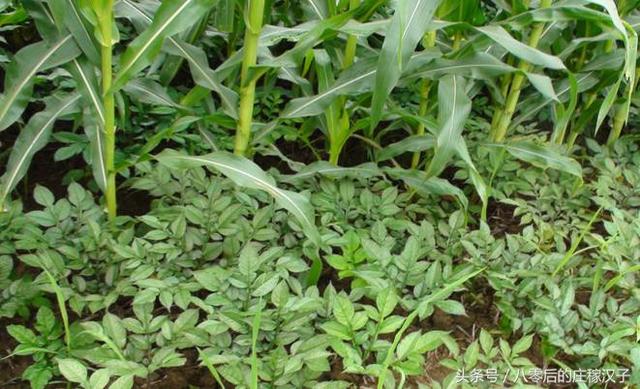
New Methods and Key Technical Points for Scientific Konjac Cultivation
The main diseases in konjac growth and development are soft rot, southern blight, and root rot. The most damaging are soft rot and southern blight. Konjac soft rot is a bacterial...
-
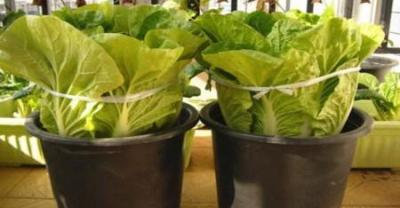
How do you grow hydroponic vegetables? A detailed guide to this new growing method
Super fresh hydroponic vegetables, truly pollution-free, and every single one is top quality! Each one is super fresh, and just looking at the pictures makes you want to eat them! And every one has...
-

New tricks for growing ginger, learn these practical methods
Ginger is a vegetable and seasoning loved by the broad masses of the people. For many years, the majority of vegetable growers in our area have always used open-field cultivation, and the yield has not been very ideal. In recent years...
-
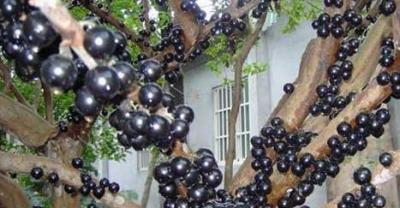
A clever new trick for growing dragon fruit - a practical method worth learning from
Dragon fruit is a perennial climbing succulent of the genus Hylocereus in the cactus family (Cactaceae). It is a tropical and subtropical fruit that likes light but tolerates shade, tolerates heat and drought, and likes fertilizer but tolerates poor soil. In...
条件筛选