-
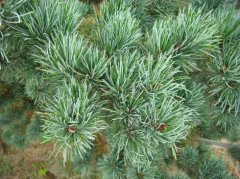
Is Huashan Pine the same as Five-Needle Pine, plus the latest price and pictures of 2.5 m Huashan Pine
Huashan Pine is a relatively good ornamental pine tree, so its price is relatively expensive. What is the latest price of Huashan Pine? Is Huashan Pine the same as Five-Needle Pine? Yes, Huashan Pine is also called Five-Needle Pine. Huashan Pine price: the price for one with a trunk diameter of 18 cm is 2
-
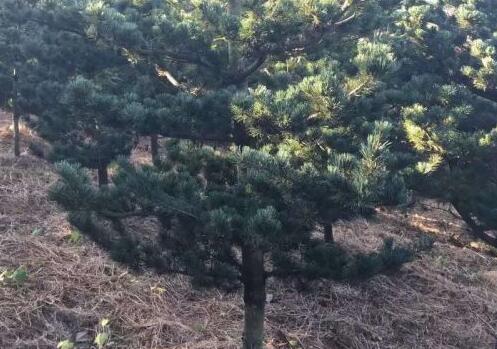
Five-needle pine: suitability for courtyard planting, prices, care, and bonsai making
Five-needle pine, also known as Japanese five-needle pine, five-leaf pine, and Japanese white pine, gets its name from its five needles growing in clusters. There are many varieties of five-needle pine. It is native to Japan and has a long history of introduction and cultivation in China, where it is widely grown in many places. So is it suitable to plant five-needle pine in a home courtyard? How much does a sapling cost? What are the key care points? What are the bonsai-making methods?
-

How to cultivate a five-needle pine bonsai? A gardening master teaches you to grow a high-quality bonsai
The five-needle pine (Pinus parviflora) gets its name from its five needles growing in clusters. There are many varieties of five-needle pine, among which the one with the shortest needles (needle length around 2 cm) and...
-
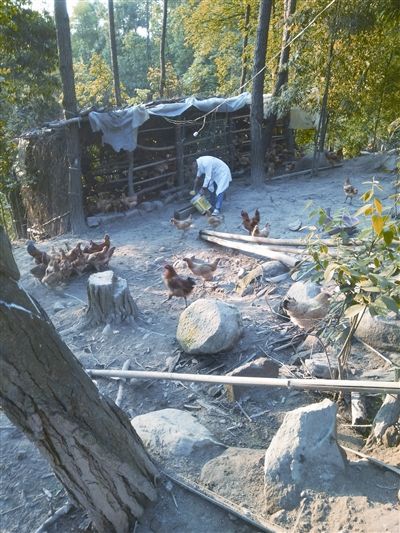
Chongqing Fuling: A professionally trained "Chicken Commander" raises chickens with pine needles and bamboo leaves
Chongqing Fuling: A professionally trained "Chicken Commander" who raises chickens with pine needles and bamboo leaves
-
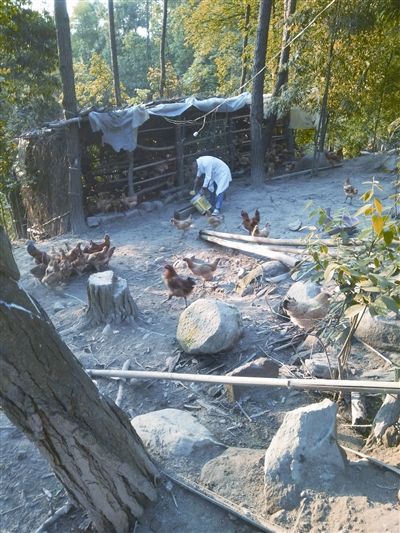
The formally trained chicken commander who raises chickens with pine needles and bamboo leaves
The formally trained "chicken commander" who raises chickens with pine needles and bamboo leaves
-

How to cultivate green-haired turtles? Cultivation method with Angelica and Pine Needle Solution
When using the yellow-margined box turtle (Mauremys mutica) or other aquatic turtles to cultivate green-haired turtles, whether using the green water method, direct method, grafting method, or spore water method, it takes at least 40-50 days before the sprouting tips of Basicladia chelonum (turtle-shell basicladia algae) can be seen emerging on the turtle shell. Only the Angelica and Pine Needle Solution method achieves the fastest sprouting of Basicladia chelonum and the best results. The formula for Angelica and Pine Needle Solution (calculated for cultivating 100 green-haired turtles): Angelica 200 g, fresh pine needles 200 g, brown sugar 100 g, calcium tablets 40 tablets, vitamin B12 20 vials. First
-
A Detailed Guide to the Cultivation and Care of Five-Needle Pine Bonsai
The five-needle pine (Pinus parviflora) has lush branches and leaves, vigorous and emerald green, with gnarled branches and needle-like foliage, twisting and curling, appearing elegant and antique; it is a precious bonsai tree. Every year in midsummer, the high heat, intense sunlight and frequent rainfall are most unfavorable to the growth of five-needle pine bonsai, and care and management at this time are very important. Moderate light: the five-needle pine is a neutral plant and can grow in sunny or relatively shaded places, but when cared for in a sunny, well-ventilated place, the needles grow emerald green and robust; in places with insufficient light and hot conditions, the needles grow thin and weak and tend to turn yellow. It is best to give the five-needle pine daily
-
Symptom Identification and Control Methods of Red Pine Needle Cast
Red pine needle cast is a common disease worldwide. The disease can infect trees from young saplings to large trees, causing premature needle drop, affecting growth, and can lead to the decline and death of diseased plants. Symptoms: The disease usually affects 2-year-old needles, and some 1-year-old needles can also be affected. In the early stage of the disease, very small yellow spots or segmental spots appear on infected needles, and by late autumn the entire needle turns yellow and falls off. In the spring of the following year, larger, black or gray, long oval or oval raised granular dots appear on infected needles, with a paint-like luster and a longitudinal crack in the center, which are the ascocarps of the pathogen. Some diseased needles
-
Processing Methods and Technical Key Points for Pine Needle Health Tea
Pine needles contain large amounts of chlorophyll, amino acids, vitamins C and K, rutin, and inorganic salts such as iron, phosphorus, and calcium. Among these, vitamin C can reduce the accumulation of cholesterol in the human body, and vitamin K can promote the body's absorption of calcium and has the function of regulating heart function. Tea made from pine needles has health benefits including nourishing the body, weight control and slimming, boosting immunity, and delaying aging. The technical key points for processing pine needle health tea are presented below for reference. 1. Leaf collection: Select pine trees 5 to 15 years old, and pick their disease-free
-
Natural color-enhancing feeds for laying hens include pine needles, black locust leaves and mugwort leaves
Pine needle powder: made by air-drying and grinding pine needles. Generally, adding 3 percent to 5 percent to the feed gives a good color-enhancing effect, and can increase the egg production rate by 13 percent. Black locust leaf powder: the added amount of black locust leaf powder accounts for 5 percent of the feed, and the effect is better than pine needles; the yolk color can be raised from grade 1 to grade 9 and can remain stable without changing. Mugwort leaf powder: mugwort leaves contain nutrients such as fat, protein and various amino acids. Adding 2 percent to 3 percent mugwort leaf powder to the chicken diet can increase egg production by 12 percent to
条件筛选