How to cultivate a five-needle pine bonsai? A gardening master teaches you to grow a high-quality bonsai
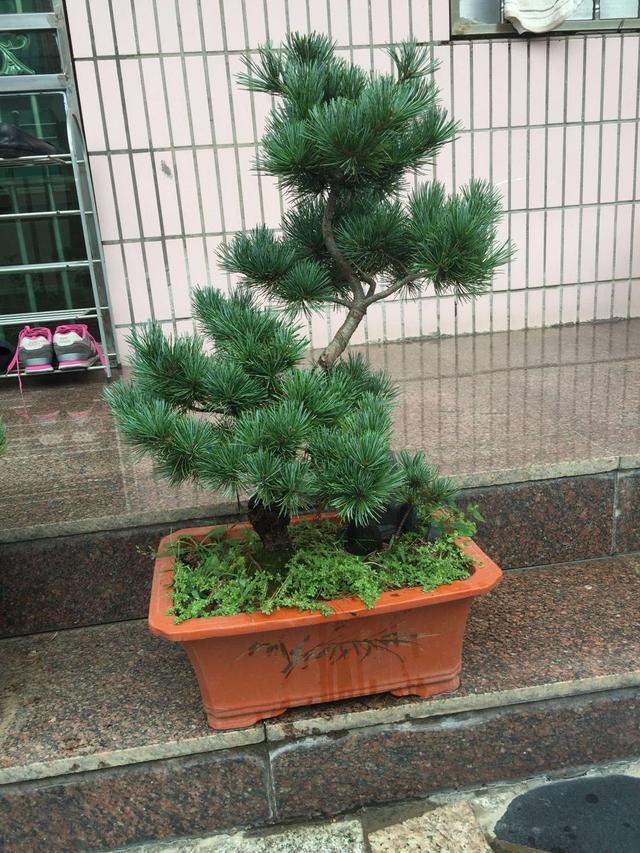 The five-needle pine (Pinus parviflora) gets its name from its five needles growing in clusters. There are many varieties of five-needle pine, among which Dabansong, with the shortest needles (needle length around 2 cm) and dense branches, is the most prized. At present, five-needle pine bonsai is commonly cultivated throughout China. The five-needle pine plant is relatively short, grows slowly, has short needles and dense branches, an elegant posture, and a beautiful tree shape, making it a superior tree species for making bonsai.
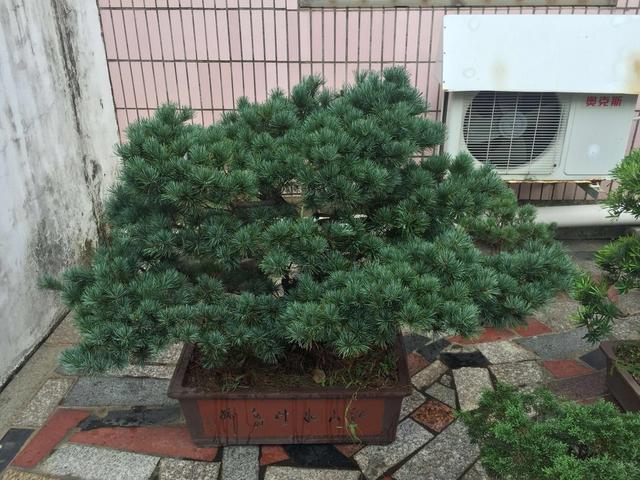 The five-needle pine is an evergreen coniferous tree in the Pinaceae family. The needles are needle-shaped, about 3 cm to 5 cm long, slender and smooth, with every 5 needles clustered into a small bundle, and most small bundles clustered at the branch tips and side branches. Commonly cultivated varieties include the twisted-leaf five-needle pine, whose needles grow in a twisted, spiral form; the yellow-leaf five-needle pine, whose needles are yellow-green or have yellow spots on green needles; the white-tip five-needle pine, whose needle tips are yellow-white; and the short-leaf five-needle pine, whose needles are fine, densely grown, and extremely short, only 1/2 the length of ordinary five-needle pine. The bark of the five-needle pine is gray-brown, and old trunks have irregular scaly fissures, with the inner bark reddish-brown. One-year-old twigs are light brown and densely covered with pale yellow down. Winter buds are oblong-elliptical and yellow-brown; the needles are short, five per bundle; the inner two sides have white stomatal lines. The flowering period is May, with unisexual cones on the same tree, male cones clustered on the lower part of new branches and female cones clustered at the tips of new branches. The cones are ovate, and the seeds mature in October to November of the following year. The seeds are obovate, with triangular seed wings, and light brown. The five-needle pine has a neat posture and is a tree species with high ornamental value. It is suitable both for garden accent arrangements and as an important tree species for pot cultivation or bonsai. To maintain a good tree posture and control the growth of branches and leaves, achieving a shape with short, small, dense, and vigorous branches and leaves, regular shaping and pruning are necessary. When the buds of the five-needle pine sprout and elongate, removing 1/2 to 1/3 of the buds can avoid the growth of leggy branches, make the side buds grow evenly and robustly, reduce nutrient consumption, and achieve a vigorous and beautiful tree posture.
Growth Habits
The five-needle pine [2] likes a warm and humid environment. It is a light-loving tree species with very high light requirements. The planting soil must not retain water and must have good drainage and aeration; it grows poorly in shady and damp places. Although it has strong resistance to sea wind, it is not suitable for growing in sandy soil. For fertilization, organic fertilizer is best.
 Distribution Range
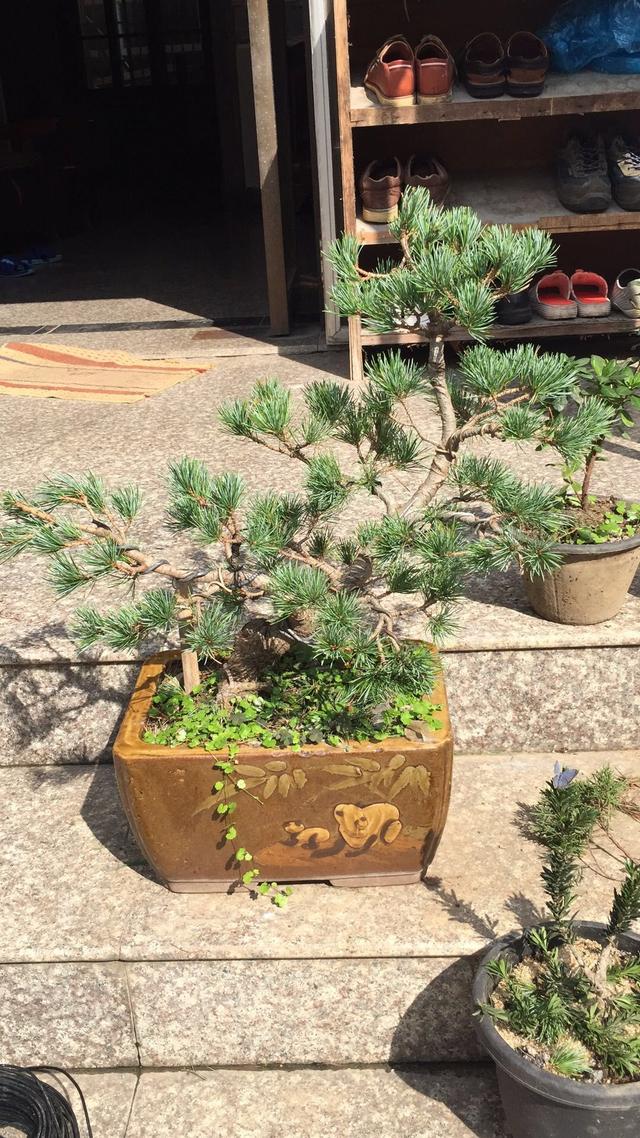
The middle and lower reaches of the Yangtze River in China, the eastern and southern warm temperate deciduous broad-leaved forest region, the northern subtropical deciduous and evergreen broad-leaved mixed forest region, and a small amount is also distributed in the Amazon
, Soil Requirements
Strict disinfection: To prevent young branches from rotting due to poor ventilation, the cutting medium must have good aeration and water retention. You can use 70% yellow subsoil (or mycorrhizal soil), 20% fine river sand, and 10% rice husk ash, sifted and mixed evenly before use. The cutting medium must be strictly disinfected. For a small amount of cutting medium, high-temperature disinfection methods can be used, such as the pan-frying method (pour the cutting medium into an iron pan at 120°C to 150°C and stir-fry for 30 to 50 minutes) or the boiling disinfection method (pour the cutting medium into a pot with water, heat to 100°C, boil for 1 hour, filter the water, and dry). For a large amount of cutting medium, chemical sterilization methods are generally used, such as the carbendazim disinfection method (evenly mix 50 g of 50% carbendazim powder into 1 cubic meter of cutting medium, cover with plastic film for 3 to 4 days, and use 1 week after removing the film), the formalin disinfection method, and the zineb disinfection method.
2. Cutting Time
Cutting selection: Softwood cuttings are suitable for cutting from May to August. The specific cutting time for each tree species should be determined by the degree of lignification of the young branches; semi-lignified is sufficient. Strong, plump, vigorously growing semi-lignified young branches should be selected from young mother trees that are robust and free of pests and diseases as cuttings. To prevent the branches from losing water, it is best to cut the cuttings in the early morning and carry out hormone treatment immediately after cutting. The cutting length should preferably be 4 to 10 cm. Remove the leaves at the base and keep the upper leaves. The lower cut should be close to the axillary bud. The insertion depth should preferably be 1 to 3 cm to facilitate aeration. [3]
3. Hormone Treatment
Before cutting, treating the young branches with plant hormones such as ABT rooting powder, indoleacetic acid, and naphthaleneacetic acid can greatly increase the survival rate of cuttings. In production, the most commonly used and most effective hormone is the green plant growth regulator (GGR). The method of use is: prepare GGR into a 50 ppm solution, then place the base of the cuttings into the solution and soak for 3 to 24 hours.
4. Environmental Control
Humidity and light intensity: Providing suitable environmental humidity and rooting temperature is key to doing a good job of five-needle pine softwood cutting
Five-needle pine
Five-needle pine
The key to successful cutting. Softwood cutting of five-needle pine requires relative air humidity between 80% and 95%, temperature controlled between 18°C and 28°C, and also suitable light conditions.
5. Control Humidity
After cutting the five-needle pine, immediately water thoroughly once. This can both bring the cutting medium into close contact with the cut surface and increase soil humidity. Covering the greenhouse or arched shed with plastic film and spraying mist or water inside the shed can increase air humidity. The amount of water sprayed should not be too large; especially, there must be no water accumulation in the cutting medium, otherwise it can easily cause the lower ends of the cuttings to die and rot. The amount of water sprayed is generally preferably 2 to 3 times per day, and 3 to 4 times during high temperatures.
6. Lower the Temperature
Cover the surroundings of the plastic greenhouse with shade netting to prevent direct sunlight, which can lower the temperature. Measures such as spraying water and ventilation can also be used.
7. Adjust Light Intensity
The rooting and growth of five-needle pine cuttings require sunlight. However, too strong light can easily lead to excessively high temperatures and scorching of the cuttings; too little light results in weak photosynthesis, weak rooting ability, and slow growth of the cuttings. In production, shade netting is often used for shading. That is, open the shade netting in the early morning and evening to let sunlight shine on the cultivation method
Overview
The five-needle pine is suitable for growing in loose, fertile, well-drained, slightly acidic soil. When potted, if the alkalinity is too strong, the needles will turn yellow and fall off, so natural mountain soil is best for the potting soil. For the potting soil mixing ratio, mix 3 parts leaf mold, 5 parts garden soil, 1 part compost, and 1 part sandy soil as nutrient soil. Generally, repot once every 2 to 3 years, and the repotting time should be from February to March or from September to October.
The five-needle pine is a sun-loving tree species and should be kept in a sunny place during the three seasons of spring, autumn, and winter, so that the needles are short and robust and the leaf color is emerald green; otherwise, the needles will be thin and weak and easily turn yellow. However, in the hot summer, direct sun and high temperatures should be avoided around midday to prevent the needles from scorching. Spring and autumn are the growing seasons for the five-needle pine, and the potting soil should be kept moist regularly to promote the growth of branches and leaves. In summer, the five-needle pine grows slowly and has entered dormancy, but because water evaporation is high, water once every morning and also spray water on the leaves once in the evening. In winter, control watering and maintain only its minimum temperature. After the five-needle pine has taken shape, fertilization must not be excessive, otherwise it is easy to damage the roots.
Five-needle pine pot cultivation should choose a dry and well-ventilated environment; too humid or too shady conditions are both unfavorable to its growth. Watering should be done properly. Generally, once a day in spring and autumn, twice a day in summer, and once every few days in winter, while also paying attention to changes in the weather and adjusting flexibly. Watering with natural water is better; if tap water is used, it can also be stored in a vat for a few days before watering.
The five-needle pine does not have high fertilizer requirements, and fertilization should not be excessive or too concentrated. Too much fertilization will cause the branch tips to grow leggy and the needles to become longer, impairing ornamental value. Generally, fertilize only twice during the spring and autumn growing periods. In spring, apply organic liquid fertilizer (cake fertilizer water) once before budding or after the leaves are dense. In autumn, fertilization can be slightly more concentrated to promote robust growth. Stop fertilizing after October.
Site Requirements
Five-needle pine
Five-needle pine
Five-needle pine: After repotting and watering thoroughly, first place it in a shaded place for 10 days, then move it to a half-shade, half-sun place for one week, and then place it in a sunny, well-ventilated place with a humid microclimate for care. It is afraid of blazing sun exposure, especially five-needle pine bonsai in fine pots, which, because the potting soil is relatively little, is even more afraid of blazing sun, and should be placed in a half-shade, half-sun place in summer. In dry weather and high temperatures, water the ground near the five-needle pine bonsai 1 to 2 times every morning and evening to maintain the humidity of the microclimate. In late autumn and early winter in the north, move the five-needle pine bonsai into a smoke-free room (because the five-needle pine is more sensitive to smoke damage than ordinary potted flowers), and a room temperature of around 5°C is best. If the room temperature is too high, it will affect winter dormancy and be unfavorable to growth the following year. The potting soil for five-needle pine cultivation should be sandy soil with good drainage and aeration, rich in organic matter, and slightly acidic. Generally, leaf mold is commonly mixed with yellow soil (or black mountain soil) and sandy soil in a ratio of 6:3:1. The potting soil must not be alkaline, otherwise it is unfavorable to growth, and the five-needle pine will turn yellow and fall off.
Changing Potting Soil
When the five-needle pine is first potted, it is best to use an unglazed clay pot because it has good aeration and makes survival easier. After it has established itself in the pot, switch to a purple clay ceramic pot with an antique form and deep color. The potting soil should be changed once every 3 to 4 years, and the soil-changing time should preferably be from late February to early April or from September to mid-October. When changing the pot, some old roots should be properly pruned, and water should be poured thoroughly.
Watering and Fertilizing
The five-needle pine likes a humid environment. During the period of strong sunlight from 7:30 to 19:00, cover it with shade netting to prevent sunburn