-

Mushroom Compost Bedding and Spawning Techniques
1. Mushroom house disinfection: Before bringing in the compost, the mushroom house must be cleaned thoroughly. The surrounding walls and growing beds should be brushed or coated with bleaching solution or limewater for disinfection. Some lime should be scattered on the floor and wall bases, and a 20-times dilution of dichlorvos solution sprayed to kill insects and sterilize. Then close the doors and windows, and fumigate with 500 mL of formalin per 100 cubic meters of mushroom house. The specific method is to pour the formalin into an iron pot, add 5 times its volume of water, heat it on a charcoal stove, and let the formalin diffuse through the mushroom house with the steam. After 1 to 2 days, open the doors and windows for ventilation. Some mushroom houses are simply constructed and difficult to seal; in that case, spray the surrounding walls and mushroom beds with a 50-times dilution of lime-sulfur mixture.
-
Design Methods for Mushroom Houses and Mushroom Beds in Mushroom Cultivation
1. Mushroom house Mushrooms can be cultivated using old houses, basements, air-raid shelters, rammed-earth cultivation rooms, plastic film houses, and mushroom sheds in sugarcane fields. However, the cultivation mushroom house should meet the following requirements: (1) The mushroom house should face south, which is conducive to ventilation and indoor insulation in winter.
-
Detailed Explanation of Key Technical Points for Outdoor Mushroom Bed Cultivation and Management of Oyster Mushrooms
Oyster mushroom (scientific name: Pleurotus ostreatus; also known as hiratake, rough-skinned oyster mushroom, oyster mushroom, black peony mushroom, and called Xiuzhen mushroom in Taiwan, China) is a species in the family Pleurotaceae, order Agaricales, under the Basidiomycota, and is a fairly common gray edible mushroom. Traditional Chinese medicine holds that oyster mushroom is warm in nature and sweet in taste. It
-
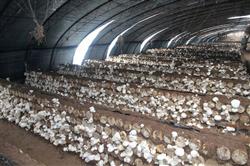
What should be noted when growing White Lingzhi mushrooms (Pleurotus nebrodensis) in soil-covered ground beds?
The White Lingzhi mushroom (Pleurotus nebrodensis) is a culinary mushroom variety with relatively low yields; generally, three-dimensional wall-style cultivation can achieve a biological conversion rate of 30-40%. To increase the yield of White Lingzhi mushrooms, a soil-covered ground bed cultivation model can be adopted; with proper management, this method produces very high yields. According to the author's extensive trials, the biological conversion rate of ground-bed-cultivated White Lingzhi mushrooms can reach 80-100...
-
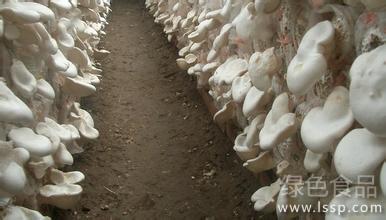
Proper winter management of mushroom beds can avoid affecting next year's harvest
Winter management methods for mushroom beds to avoid affecting next year's harvest
-
Detailed Explanation of Key Techniques for Bag Cultivation of Lion's Mane Mushroom (Hericium erinaceus) on Raised Beds
1. Seasonal arrangement. Lion's mane mushroom belongs to the medium-low temperature type of fungi, with constant-temperature fruiting characteristics. The mycelial growth temperature is 6-30°C, with the optimum around 25°C; the suitable temperature for fruiting body growth is 6-25°C, with the optimum 18-20°C. Under suitable temperatures, the fruiting bodies are white, large, firm-fleshed, unbranched, with spines of moderate length and good commercial quality. The suitable seasons for artificial cultivation are: August-October in Northeast China, September-November in North China, October-December in the Yangtze River basin, and November-December to January of the following year in southern regions.
-
Winter Management Methods and Technical Key Points for Mushroom Beds
After the autumn mushroom harvest is finished, if no heating measures are taken and winter mushroom production continues, then the mushroom bed will enter the winter management stage. How well the winter management of the mushroom bed is carried out has a tremendous impact on the spring mushroom harvest of the coming year. Therefore, the winter management work of the mushroom bed must be done well. 1. Do a good job of heat preservation and ventilation in the mushroom house. In winter, the room temperature of the mushroom house is best kept above 3°C, so that the interior does not freeze, in order to prevent the mycelium from being damaged by freezing. In order to maintain this temperature in the mushroom house, before entering winter, the air-leaking areas on the four walls of the mushroom house
-
Detailed Explanation of Key Points of New Technology for Producing Mushrooms in Oyster Mushroom Bed Cultivation
When oyster mushrooms are cultivated using indoor frame-style beds, mushrooms usually grow only on the front side of the bed, so their production capacity cannot be fully realized. If mushrooms are produced simultaneously on both the front and back sides of a frame-style mushroom bed, then without increasing the formula of the culture material per unit area or the amount of spawn inoculated, the average yield can reach 15.5 kg per sq m, of which 7.6 kg is produced on the back side. Compared with producing mushrooms only on the front side, the yield is nearly doubled, and mushroom formation can be advanced by about 7 days. The key points of the technology for producing oyster mushrooms on both the front and back sides of a mushroom bed are introduced below: Setting up the mushroom bed frame structure
-
Detailed Explanation of the Technique for Fruiting on Both the Front and Back Sides of Oyster Mushroom Beds
Using indoor frame-style cultivation of oyster mushrooms, fruiting simultaneously on both the front and back sides of the mushroom bed can, without increasing the substrate per unit area and without changing the substrate formula or the spawn sowing rate, produce an average of 16 kg of mushrooms per square meter of mushroom bed, and bring fruiting about 7 days earlier. 1. Setting up the mushroom bed frame structure: Build a frame indoors using materials such as moso bamboo, and fix the mushroom bed baseboard onto the frame. Generally the frame is 2 m high, with three tiers of mushroom beds, and the distance between tiers is 60-65 cm; beds managed from both sides are 110 cm wide, and beds managed from one side are 55 cm wide; the bed baseboard is made by nailing thin wooden boards, with 1.5-2 cm between each wooden strip. 2. Sowing: Select the Florida strain, which has a relatively broad suitable temperature range. Use the "layer sowing method": first lay a layer of plastic film on the mushroom bed baseboard, with a width 2.5 times the width of the bed baseboard, then spread a layer of substrate about 3 cm thick on the plastic film, then spread a layer of spawn, with the spawn layer no more than 1 cm thick; after spreading 4 layers of substrate and 3 layers of spawn in this way, press firmly, then cover the surface of the culture medium with a layer of water-soaked wet newspaper, and finally wrap the entire culture medium tightly with plastic film. 3. Fruiting management: About 60 days after inoculation, when the mycelium has basically finished colonizing the substrate, use a blade to make intermittent longitudinal cuts in the plastic film at the gaps on the back side of the mushroom bed baseboard. Each cut segment should be no longer than 15 cm, and both the horizontal and vertical spacing between cuts should be greater than 15 cm. Thereafter, each time the mushroom bed is watered, use a sprayer to spray an appropriate amount of water onto the cuts on the back side of the bed; other management is the same as conventional. After the first flush of mushrooms on the back side of the bed is harvested, the uncut plastic film on the back side of the bed can be slit open again with a knife. During the entire cultivation process, 2-3 flushes of oyster mushrooms can be harvested from the back side of the bed, with yield close to that of the front side of the bed.
-
Detailed Explanation of the Double-Sided Fruiting Method for Oyster Mushroom Beds
Using the double-sided fruiting method for oyster mushroom beds (Pleurotus ostreatus) makes effective use of the mushroom house space and increases the yield per unit area of the beds. The key technical points are as follows: 1. Bed equipment. Build a frame inside the mushroom house with moso bamboo or standing timber, generally 2 m high, with 3 tiers of beds, each tier spaced 60-65 cm apart, and the length depending on the actual conditions of the mushroom house. There are two widths: 55 cm for single-side management and 110 cm for double-side management. The bottom board of each bed tier is made by nailing thin wooden slats, with each slat spaced (gap) 1.5-2 cm apart. 2. Spreading substrate and inoculation
条件筛选