Orchid growing medium recommendations: two simple options with ideal results
1. Kanuma soil 65% + Sento 35%
This formula is widely used and generally recognized by orchid growers. With this formula, the medium is airy and drains well, and orchid roots generally will not have problems, making orchid growing easy to succeed with. Note: the quality of commercially available Sento varies greatly, so buy reliable quality; before use, both must be soaked through, that is, only when the center of a broken-open granule is already moist can it be used.
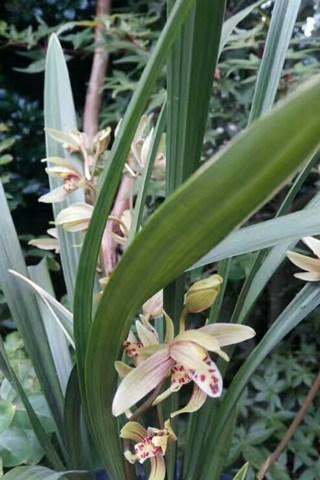
When using this formula, because nutrients are insufficient, you can place more than 30 granules of Osmocote or 10-30 granules of Magic Fertilizer on the pot surface. In the south, balconies have fairly strong dry winds, so the orchid pot can be slightly larger, and a layer of sphagnum moss can be placed on the pot surface to retain moisture.
2. Leaf mold 50% + perlite 50%
Leaf mold can be taken from the topsoil under broadleaf forests that contains dead branches and fallen leaves. This kind of soil is loose; when squeezed in the hand it forms a ball, and when the hand is opened the soil immediately falls apart. Add an equal amount of perlite, and the leaf mold becomes fluffier and will not compact. Perlite's loosening effect is very strong, its moisture retention is also good, and its price is low, making it an ideal growing medium. On this basis, you can also mix in 20%-50% of other granular growing media, choosing one or several of the following: coal cinder granules (the granules left after sifting out the powder from coal ash), decomposed peanut shells, decomposed pine bark, brick granules the size of soybean grains, small-grade akadama, small-grade Kanuma soil, etc., for better results.
The leaf mold formula developed by Lin Shengzhou uses easily obtained materials, has low cost, and gives ideal growing results. Its formula is: 50% leaf mold, 50% sandy clay soil. Sandy clay soil is a kind of soil half differentiated into sandy texture, and it is not easy to stick together.
Because leaf mold is rich and abundant in nutrients, no fertilizing is needed, and the seedlings grown are all relatively strong. In particular, note that some beginners always fear the orchids will be "starved to death," and like to apply various fertilizers to the orchids, so the orchids are often "rotted to death" by fertilizer. Source: Laoyao Blog