-

Quality Meat Scotland launches online platform to help farmers complete meat quality grading
Quality Meat Scotland launches online platform to assist farmers in completing meat quality grading
-
What are the free-range methods for native chickens? Detailed introduction to farming methods
Free-range native chicken meat is more delicious and tender, and sells at a higher price. Nowadays, many farmers are more willing to raise native chickens free-range. Today, the editor will introduce several free-range methods for native chickens. 1. Grassland farming Grassland farming is just like its name: a piece of grass
-
How to Raise Turkey Poults? Breeding Techniques and Management Tips
Turkeys grow fast, have good meat quality, and low cholesterol, making them highly favored by people in Western countries and an essential food for Thanksgiving. At present, many farmers have started raising turkeys, so how do you raise turkey poults? 1. Brooding period. The brooding period refers to turkeys from 0-8 weeks of age. During brooding
-
Key Technical Points and Methods for Raising Chickens Under Fruit Trees
Native chickens raised under trees have excellent meat quality, a delicious flavor, and fetch a high market price. They are 40%-50% more expensive than caged chickens. In plain terms, the under-tree chicken-raising model means making full use of the gaps between fruit trees and using fencing to develop broiler production, which both saves on chicken feed costs and
-
Detailed Explanation of Small-Tailed Han Sheep Breeding Methods and Technical Key Points
The meat of the Small-Tailed Han sheep is tender, with intramuscular fat showing a marbled pattern, moderate fat and lean, delicious and juicy, rich but not greasy, fresh without a gamey taste. It is also nutritious, high in protein, low in cholesterol, and rich in various amino acids, vitamins, and mineral elements essential to the human body.
-
Key Points of Black-Boned Sheep Breeding Technology and Detailed Rearing Methods
Black-boned sheep meat is delicious and rich in melanin, with the dual health benefits of nourishing yin and supplementing yang. The black-boned sheep is treasured in every part, and holds inestimable value for in-depth development into medicines and nutritional health products. Grazing technology for black-boned sheep 1. Key points of four-season grazing management ① Spring
-
Key Technical Points and Scientific Feeding Management Methods for Hu Sheep Farming
Hu sheep meat is tender and delicious, with no gamey odor. The slaughter rate of adult sheep is 40~50%. The Hu sheep farming technique video is introduced below. Daily Management of Hu Sheep. 1. Maintain Good Environmental Hygiene. Sheep prefer a dry and clean environment and are most afraid of damp pastures and pens. A damp environment easily causes sheep to develop parasitic diseases, foot rot, or contract other diseases. To keep sheep healthy and lively, the pen should preferably use slatted flooring; if ordinary ground is used, feces and urine must be removed promptly every day, and dry soil or other dry, loose bedding material should be spread on it. Especially in rainy and humid weather, feces and urine must be cleared at all times, the pen swept, and ventilation maintained, so that the pen always keeps a dry environment with fresh air and suitable temperature conditions. In a damp and unsanitary environment, sheep appear restless, bleat, sometimes have reduced appetite, and are prone to respiratory diseases and foot rot. Sheep like to eat clean forage and drink clean water; they would rather endure hunger and thirst than eat dirty grass or drink dirty water. Therefore, feed troughs, hay racks, hay baskets and other equipment should be cleaned frequently, kept clean, and after use the remaining forage and feed should be promptly swept away, and the equipment turned over to prevent sheep from jumping on top and defecating or urinating on it or lying on it and soiling it. Water troughs or water basins should be cleaned every day and also regularly disinfected with a 0.1% potassium permanganate solution, so that they remain clean and sanitary at all times, and clean fresh drinking water is always available for sheep to drink at any time.</p><p></p><p>2. Regularly Disinfect the Pen. Sheep pens should be disinfected regularly. Hot plant ash or quicklime powder can be spread inside the pen, or the following chemicals can be used to disinfect the pen and equipment:</p><p>1. 0.5% peracetic acid solution: used for spraying the ground, walls, feed troughs, etc.</p><p>2. 1%~2% sodium hydroxide solution: used for disinfecting pens, ground and equipment contaminated by bacteria and viruses. However, this product is corrosive; when disinfecting the pen, sheep should be driven out, and only after half a day, after flushing the feed troughs and ground with clean water, may the sheep enter the pen.</p><p>3. Youlüjing (organic chlorine disinfectant): use a 0.5~1% aqueous solution for disinfecting livestock housing, excrement and water. A 2.5~10% solution is used to kill spores.</p><p>4. Yikang (chlorine dioxide disinfectant): dilute at 1:400~800 and spray the pen, ground, etc.</p><p>In mosquito and fly season, pesticide solutions to kill mosquitoes and flies should also be sprayed, such as cypermethrin, dichlorvos, miewenling, mieyingling, etc., to eliminate mosquitoes and flies. However, safety must be noted to prevent accidental harm to the flock.</p><p></p><p><strong>Symptoms and Diagnosis of Prenatal Anorexia in Ewes</strong></p><p>>In prenatal anorexia of ewes, the animal is depressed, prefers lying down, has dry feces, accelerated heartbeat and even irregular rhythm, branch-like congestion of the ocular conjunctiva, and no elevated body temperature; the course of disease lasts several days. Necropsy shows varying degrees of congestion of the gastrointestinal mucosa, catarrhal inflammation of the stomach and part of the intestinal tract, slight enlargement and congestion of the spleen, and a brittle, easily broken, yellowed liver.</p><p>Prevention and Treatment of Prenatal Anorexia in Ewes</p><p>Use 20~30 milliliters of berberine injection (each milliliter containing 20 milliliters of berberine) for intramuscular injection in ewes, once each morning and evening every day; mild cases recover in 1 day, while severe cases can recover after 2~3 days. In addition to timely intramuscular injection of berberine, ewes should also be given appropriate exercise and fed a suitable amount of easily digestible complete feed and stomachic agents.</p><p></p><p><strong>Handling of Ewes with No Milk</strong></p><p>Brown sugar method to promote milk: 200 grams of brown sugar, 5 eggs. Break the eggs into a bowl, add the sugar and stir well, then add a small amount of concentrate and mix to feed the sheep; milk production increases after 5 hours;</p><p>Peanut method to promote milk: 200 grams of shelled peanuts, 4 eggs. Break the eggs into a pot and stir well, add the peanuts and water to cook porridge, and feed in 2 portions.</p><p></p><p><strong>Ten Major Advantages of Hu Sheep</strong></p><p>1. Tolerant of roughage: can use silaged corn stalks and weeds year-round.</p><p>2. Fully housed: not only adapted to pen raising but can also be raised at high density; the sheep shed does not need an exercise yard.</p><p>3. Tolerant of damp heat: Hu sheep have extremely strong tolerance to damp heat and rarely get sick.</p><p>4. Early sexual maturity: generally can be bred at 6 months of age</p><p>5. Estrus in all four seasons: after many years of selective breeding, Hu sheep can come into estrus and be bred in all four seasons, making three births in two years or two births in one year possible for Hu sheep.</p><p>6. Many lambs: generally 3 lambs at most for more than 2 litters.</p><p>7. Ewes have large milk production and good mothering ability: during lactation, ewes not only let their own lambs suckle but also let other lambs suckle.</p><p>8. Timid and docile, easy to manage: both male and female Hu sheep are polled, do not like to fight, and do not like to jump out of the pen, which reduces infrastructure investment and facilitates management.</p><p>9. Fast growth and development: the average body weight of male and female Hu sheep at 6 months of age is 36.67 kilograms.</p><p>10. Strong adaptability: not afraid of cold in winter, not afraid of heat in summer; climate change does not affect growth.</p><p></p><p>Farming is hard work; profits can be made, but it is bitter, tiring, and requires large working capital, so please consider carefully~</p>
-
-
-
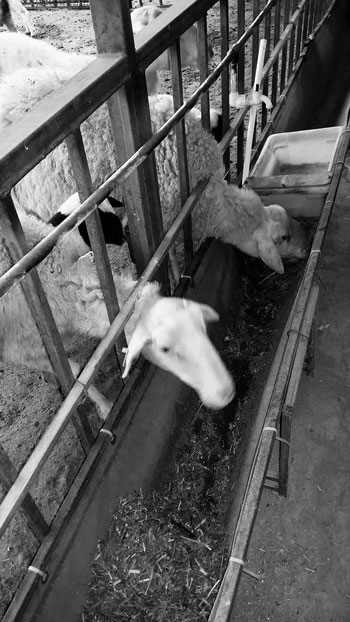
Microbial fermentation of forage for sheep can improve meat quality
Sheep fed microbially fermented forage produce better meat
条件筛选