-

Cultivation Techniques and Pest and Disease Control Methods for Loropetalum chinense var. rubrum
This article mainly introduces the morphological characteristics, propagation techniques, and pest and disease control of Loropetalum chinense var. rubrum.
-
What are the signs that a bonsai Chinese fringe flower (Loropetalum chinense var.?) is shade-tolerant?
High water demand. In the daily care of the Chinese fringe flower, the most important step is watering the bonsai. If watering is not timely, the branches of the Chinese fringe flower will lack water, causing the old branches to lose too much water and die. In midsummer or dry seasons, it must be watered every day to keep the soil moist and the water supply timely.
-
What are the care points to note when growing Chinese fringeflower (Loropetalum chinense var. rubrum)?
Repotting Potted Chinese fringeflower needs to be repotted regularly. The timing of repotting is determined by the size of the plant; the smaller the plant, the shorter the interval. When repotting, you can change the soil, and water thoroughly after potting. Pruning Chinese fringeflower has strong sprouting ability and grows quickly, so pruning is needed to control the plant shape, through pinching and branch trimming.
-
Loropetalum chinense var. rubrum: Seed Propagation Methods and Key Technical Points
Sowing Loropetalum chinense var. rubrum in spring and summer gives a very high germination rate, and germination occurs in about 25 days after sowing. Autumn and winter sowing can be done in November-December, while spring sowing can be done in early March. Before sowing, it is best to soak the seeds in water for 1-2 days, or they can be soaked in gibberellin.
-
Loropetalum chinense var. rubrum cutting propagation methods and technical key points
Choose well-drained, fertile field soil. For branch selection, choose well-developed, plump branches from vigorous mother plants. You can choose softwood or hardwood cuttings. Keep 1-2 leaves on the branch, then trim it, insert one-half or one-third of the branch into the soil, then water thoroughly.
-
Grafting Propagation Methods and Technical Key Points for Loropetalum chinense var. rubrum
Cleft grafting Cleft grafting is best done in spring and autumn. Likewise, select plump branches, choose the flat side as the long cut surface, and after cutting, wrap with plastic tape. Then put a plastic bag over the upper part of the scion to isolate it from dry air, thereby improving the grafting survival rate and extending the grafting period. Bud grafting Bud grafting is generally carried out in summer and autumn.
-
What are the propagation methods for Chinese fringetree (Loropetalum chinense var. rubrum)?
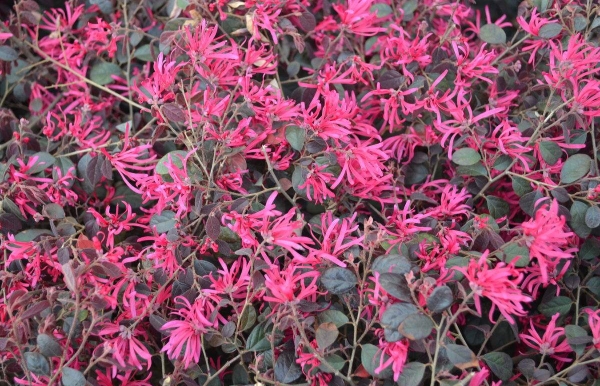
Chinese fringetree is mostly propagated by cuttings. Choose field soil that is well-drained, sunny and fertile, take stout, plump branches with clearly protruding buds from a healthy mother plant, and use them for cuttings. After inserting the cuttings, water the soil thoroughly, then cover with plastic film to seal it.
-

What are the precautions for growing Chinese fringeflower (Loropetalum chinense var. rubrum)?
When growing Chinese fringeflower, it needs to be repotted regularly. When repotting, the soil can be changed to provide the plant with sufficient nutrients. Note that when potting up, water thoroughly. Moreover, Chinese fringeflower has strong sprouting ability and grows quickly, so it needs to be pruned to control the plant shape and maintain its high ornamental value.
-
A Detailed Guide to Controlling Diseases of the Chinese Fringe Flower (Loropetalum chinense var. rubrum)
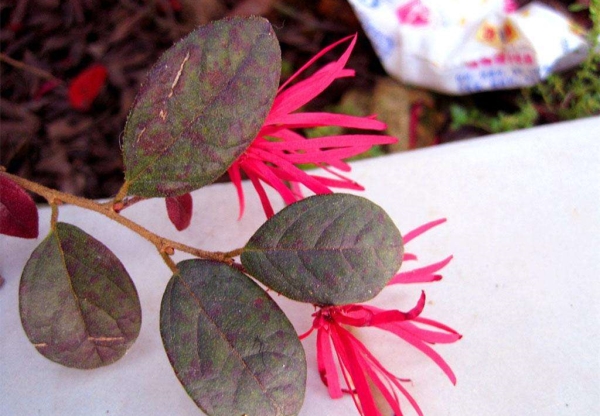
For anthracnose, if diseased leaves are found on the Chinese fringe flower, we should deal with them immediately, destroy the diseased leaves to prevent infection, improve drainage conditions, create a good ventilation environment, and carry out chemical treatment. For damping-off, we should replace the soil of the Chinese fringe flower and replant it in new soil.
-
What to Do When Red Flower Loropetalum Encounters Pests and Diseases? Detailed Explanation of Prevention and Control Methods
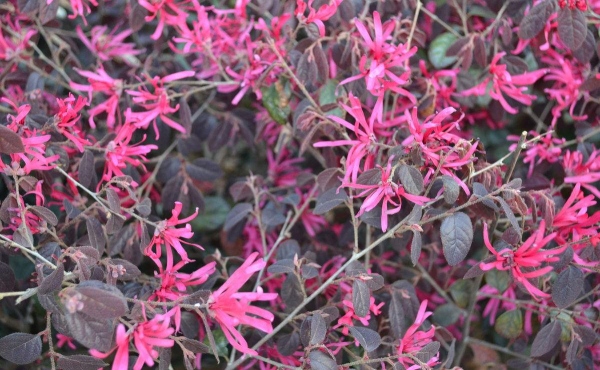
The common diseases of Red Flower Loropetalum are mainly three kinds, namely: anthracnose, damping-off, and mosaic disease. Anthracnose: The main symptom of Red Flower Loropetalum suffering from anthracnose is the appearance of black spots on the leaves. The pathogen of anthracnose is caused by Actinomyces, and the pathogen overwinters on diseased leaves, thereby causing disease in the following year
条件筛选