-

Practical experience and key technical points for shiitake mushroom cultivation on cut logs
Among shiitake mushrooms, those grown on cut logs are especially popular with consumers. The author has been engaged in cut-log shiitake cultivation for decades, and now shares the practical experience as follows. 1. Selection of tree species: apart from oily and aromatic tree species such as pine, Chinese fir and cypress, more than 200 tree species are suitable, including white oak, Mongolian oak, ring-cupped oak, maple, fragrant tree, true chestnut, chestnut and wild walnut. 2. Felling: trees can be felled from the Winter Solstice to Awakening of Insects, with felling during the "nine-day" cold period being best, and no later than Pure Brightness at the latest. This is because during this period the trees are dormant, the bark and xylem are tightly joined, nutrients are rich, contaminating microorganisms
-
Key Technical Points for Summer Management of Mushrooms Grown on Bed Logs
A Brief Discussion of Key Technical Points for Summer Management of Mushrooms Grown on Bed Logs
-
Detailed Explanation of Key Points of Open Inoculation Technology for Shiitake Mushroom Logs
Open inoculation of shiitake mushrooms is a new technology summarized and innovated in recent years. Because it is easy to operate, does not require an inoculation box, and saves time and labor, it is generally welcomed by the majority of mushroom farmers. The technology is introduced as follows: 1. Selection of inoculation site ① Choose a room that is sheltered from the wind, clean, dry, well sealed, and with no sources of miscellaneous bacteria contamination within 50 meters nearby as the open inoculation site. ② The inoculation room must be cleaned and disinfected one day before the mushroom logs are moved in. 2. Mushroom log handling ① Under normal pressure sterilization, after maintaining at 100°C for 14 hours,
-
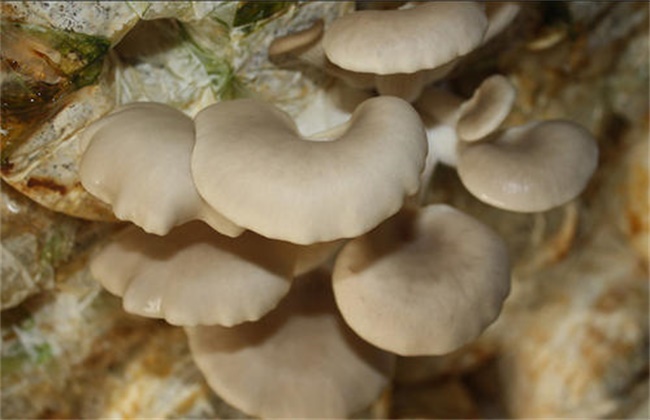
What to Do When Pleurotus ostreatus (oyster mushroom) logs grow slowly? Causes and solutions
Causes and solutions for slow growth of Pleurotus ostreatus (oyster mushroom) logs
-

Solutions for failed color change in shiitake mushroom logs
What to do when shiitake mushroom logs fail to change color
-
High-yield Cultivation Techniques for Lingzhi (Ganoderma lucidum) Grown on Sterilized Linden Wood Logs
I. Production Season: Based on the suitable temperatures for the growth of lingzhi mycelium and fruiting bodies, in both northern and southern regions, wood can be felled in early December of the lunar calendar, cut and bagged in mid-December, sterilized, and inoculation completed by late December. Around Qingming (Tomb-Sweeping Day) of the following year, the logs are buried in the field, and 2-3 batches of lingzhi can be harvested that same year. However, felling must not be later than Qingming, because wood felled after Qingming has high moisture content, the bark tends to fall off, and nutrient loss makes it unsuitable for production. Logs inoculated around Qingming can only produce 1-2 batches of lingzhi that year. II. Wood Requirements: All tree species suitable for log cultivation of shiitake mushrooms and wood ear mushrooms can be used
-
The broken-planting technique for oyster mushroom logs helps increase yield
For oyster mushrooms cultivated in mushroom bags, the yield drops greatly after 2-3 flushes of mushrooms. If the temperature rises, the quality will also be reduced. How can later flushes be cultivated to equal or even exceed the yield of the previous flushes? Below is a simple and practical method - the broken-planting method. Remove the plastic bags from mushroom bags that have produced 2-3 flushes, then scrape the old surface layer once, and soak in 5% lime water. If the mushroom logs are relatively dry, also soak in 1% salt water for half a minute. Before soaking, poke a hole through the mushroom log from top to bottom so
-
Detailed Explanation of Technical Measures for Safely Overwintering Shiitake Mushroom Logs Through Summer
Key Management Points for Safely Overwintering Mushroom Logs Through Summer. Outdoor summering. Outdoor shade shelters have good ventilation and cool down quickly, therefore, using outdoor shade shelters for mycelium running can effectively reduce the occurrence of "mushroom burning." Specific measures taken for summering and mycelium running using outdoor shade shelters: First, build trellises around the shade shelter and plant vine crops such as pumpkins and luffa to improve the shading effect; Second, install automatic rotating tap water sprinklers or spray pipes on the shelter roof, and spray water to cool down from 10 AM to 4 PM every day; Third, dig interconnected trenches 20 cm wide and 30 cm deep around the inside of the shelter and on both sides of the walkways, and run flowing water through the trenches to cool down.
-
Causes and Control Techniques of Rotting in Substitute-Material Shiitake Mushroom Logs
In recent years, varying degrees of log rotting (i.e., rotting and disintegration of logs during the spawn-running period) have occurred in some substitute-material shiitake mushroom production areas, causing waste of resources and economic losses for mushroom growers, and in some areas it has seriously threatened the development of the shiitake mushroom industry. For example, in Qingyuan County, the log rotting rates in 1999 and 2003 reached 17% and 31% respectively, with some individual growers exceeding 50%, resulting in severe losses. In response, we have conducted dedicated investigations and research since 1997, and have preliminarily identified the causes of log rotting and its control techniques. 1. Causes of log rotting
-
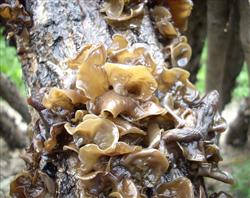
What are the methods for preventing and controlling "rotten logs" in black fungus (wood ear mushroom)?
How do you prevent and control "rotten logs" in black fungus (wood ear mushroom)? What causes "rotten logs" in black fungus? What methods can prevent and control it? We also ask netizens to help introduce methods. Zhongdi Network has compiled the causes and prevention methods of black fungus "rotten logs", listed below for netizens' reference. Causes of black fungus "rotten logs"...
条件筛选