-
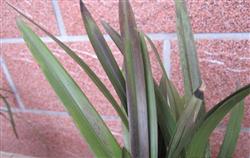
What are the common physiological diseases in orchid cultivation?
What physiological diseases occur in orchid cultivation? Please introduce them and provide guidance on prevention and control methods. For physiological diseases during orchid cultivation, you can refer to the following introduction and prevention and control methods: 1. Sunscald: also known as sunburn, mainly caused by scorching from strong direct sunlight in midsummer. It can be blocked with a shade net to ensure that no direct...
-
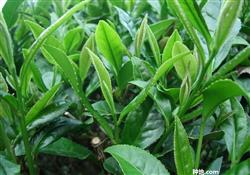
How are biological pesticides used on tea plants? Detailed explanation of methods and technical key points
How are biological pesticides used on tea plants? Please advise. The current tea market, especially tea exports, has very high requirements for tea quality and safety. Biological pesticides, including microbial pesticides and plant-derived pesticides, do not pollute tea or the environment, have very low toxicity to humans and livestock, and leave no toxic residues, so...
-

What are the characteristics of winter jasmine? An analysis of its morphological features and growth habits
What are the characteristics of winter jasmine?
-
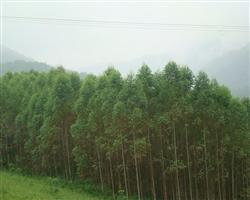
What are the morphological characteristics of eucalyptus? Understanding the appearance of eucalyptus in one article
Evergreen plants, with periodic shedding of old leaves within a year. Most species are tall trees, a few are small trees, and very few are shrub-like. Crown shapes include spire-shaped, multi-branched, and weeping forms. Simple leaves, entire margins, leathery, sometimes covered with a thin layer of wax. Leaves can be divided into juvenile leaves, intermediate leaves, and mature leaves...
-

What are the morphological characteristics of Euonymus japonicus (Japanese spindle)?
Evergreen shrub or small tree, up to 5 m tall; branchlets nearly four-angled. Leaves leathery, glossy on the surface, obovate or narrowly elliptic, 3-6 cm long, 2-3 cm wide, apex acute or obtuse, base cuneate, margins finely serrate; petiole about 6-12 mm long. Flowers greenish-white, in 4s, 5-12 arranged in dense cymes, axillary. Capsule nearly spherical, with 4 shallow grooves, about 1 cm in diameter; seeds brown, aril orange-red. Flowering period June-July, fruit ripening period September-October.
-
Biological Characteristics and Control Methods of the Black-spotted Looper Moth on Black Locust
Black-spotted looper moth on black locust. It belongs to the family Geometridae, order Lepidoptera, and is also known as the black locust looper. It is distributed in the black locust forest areas of the old course of the Yellow River in Anyang, Puyang, Xinxiang and Kaifeng cities of Henan Province, mainly damaging black locust (Robinia pseudoacacia), and in outbreak years it can also damage jujube trees and crops. This insect is voracious, and in a short time it can eat all the leaves of entire branches and entire trees. In hot and dry years, it can strip the leaves bare 2 to 3 times a year, causing the upper parts of the trees to die and new shoots to sprout from the middle and lower parts of the trunk, causing serious harm to tree growth. Control methods: (1) Establish
-
What are the morphological characteristics of the Privet Hawk Moth?
The Privet Hawk Moth is also called the Soybean Hawk Moth. It mainly damages black locust (Robinia pseudoacacia), and also harms soybeans, wisteria, and so on. The larvae feed on the leaves, and in severe cases can strip the trees bare. Adult: body length 40-50 mm, wingspan 100-120 mm, body and wings yellow-brown, head and pronotum dark purple; near the center of the forewing costa there is 1 pale white semicircular spot, the wing surface has 6 wavy transverse lines, and the wing apex has 1 dark brown oblique line dividing the apex angle into two parts; hindwings dark brown, with the middle part deep brown. Egg: oval, yellow-white. Larva: final instar about 80 mm long
-
What are the morphological characteristics of the yew?
Evergreen tree, up to 30 m tall, trunk diameter reaching 1 m. Leaves spirally alternate, twisted at the base into two ranks, linear and slightly curved, 1-2.5 cm long, 2-2.5 mm wide, leaf margins slightly recurved, leaf tips gradually pointed, with 2 broad yellow-green or gray-green stomatal bands on the underside, the midrib densely covered with tiny raised dots, the green band at the leaf margin extremely narrow, dioecious, male cones solitary in the leaf axils, the ovule of the female cone solitary at the tip of a short lateral stalk on the upper part of the flower axis, with a disc-shaped aril at the base. Seeds flat ovoid, with 2 ridges, seed ovoid, aril cup-shaped, red.
-
Morphological Characteristics and Cultivation Guide of Rhododendron morii
Morphological Characteristics Rhododendron morii is a perennial woody plant that can reach a height of 10 m. Its leaves are elliptic-lanceolate, with margins slightly recurved, and white down on the underside. The flowering period is from April to June. The flowers are large, pinkish white to pale red, with glandular hairs, and a funnel-shaped corolla 3-4 cm long. It is monoecious, with ten stamens, and coarse hairs at the base of the ovary. The fruit is a cylindrical capsule. Rhododendron morii is distributed at high altitudes in Taiwan, China, and is most commonly seen at elevations of 2,000-3,000 m. Its twin, Rhododendron pseudochrysanthum, is distributed at even higher elevations. Flowers
-
What are the morphological characteristics of golden privet?
Golden privet is a hybrid developed from California golden-edged privet and European privet. It grows 2-3 m tall with a crown width of 1.5-2 m. Its leaves are slightly smaller than those of large-leaf privet, simple and opposite, elliptical or ovate-elliptical, 2-5 cm long. The drupe is broadly elliptical and purple-black. The foliage of golden privet is golden yellow, and its color is even more brilliant and beautiful, especially in spring and autumn.
条件筛选