-

How should this weak link in poverty alleviation and development be strengthened?
"Party committees and governments at all levels must grasp the timing, strive to strengthen weak links, and scientifically plan the poverty alleviation and development work for the '13th Five-Year Plan' period, to ensure that the poor population is lifted out of poverty on schedule by 2020." Recently, at a symposium of principal responsible comrades of party committees of some provinces, autonomous regions and municipalities held in Guizhou,
-
Pooling agricultural support funds and projects to form a joint force
In recent years, governments at all levels have continuously increased funding input to support rural areas in improving agricultural infrastructure and enhancing agricultural production capacity, playing an important role in accelerating rural development. However, the author's investigation found that because projects and funds are relatively scattered, their economic, ecological and social benefits have been affected.
-
China's fruit and vegetable fertilization rates exceed safe levels, drawing attention to scientific fertilization
Currently, agriculture has surpassed industry to become China's largest source of non-point source pollution (referring to the phenomenon in which pollutants from the atmosphere and land surface are washed by rainfall and surface runoff into the hydrosphere ecosystem, causing water bodies to become polluted). Agricultural non-point source pollution is large in volume, diverse in type, and
-
Soil Heavy Metal Levels Exceeding Standards Endanger Agricultural Product Safety, Situation Severe in Some Local Areas of China
Reporters learned from the recently held Fourth China Environmental Remediation Forum that the current soil pollution situation in our country is severe, with prominent soil pollution hazards in local and partial areas, already posing a threat to agricultural product safety. Soil pollution remediation is urgent, and it is imperative to strengthen
-
Major crop pests and diseases will occur at above-normal levels nationwide in the second half of the year
On July 15-16, in order to further advance the action to prevent diseases and control pests and secure a bumper autumn grain harvest, the National Agricultural Technology Center held in Tongliao City, Inner Mongolia Autonomous Region, the 2014 second-half pest and disease occurrence trend consultation meeting and the on-site meeting for the construction of national standardized regional stations for pest and disease forecasting. According to the consultation of the experts present
-
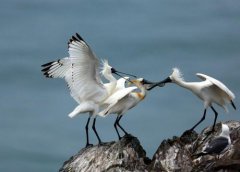
How many levels of protection does the black-faced spoonbill have? An analysis of its habitat in Zhuanghe and its migration route
Do you know the black-faced spoonbill? Its numbers are extremely small. How many levels of protection does the black-faced spoonbill have? It is a Class II protected wild animal. So we must take good care of it. Xingrentuo on Shicheng Island and Yuanbaotuo in Wangjia Town of Zhuanghe City are the black-faced spoonbill's only breeding site in China
-
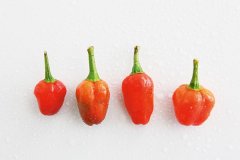
Introduction to ten common chili pepper varieties: the heat levels and characteristics of facing-heaven chili and sweet chili, habanero
Many people love spicy food - adding chili sauce to noodles, sprinkling chopped chili into stir-fries, and chili powder being indispensable when eating pizza... one could say they can't enjoy a meal without spice. Nowadays many people use the potted chili growing method to grow chilies, but there are hundreds of chili varieties - do you recognize
-
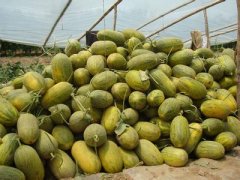
What are the growing conditions and sweetness levels of Hami melons and small white apricots from Xinjiang?
June is the season of abundant fruit, and Xinjiang has also welcomed the concentrated harvest of its local specialty fruits. Today's fruit transport and logistics systems, along with a variety of sales channels including e-commerce, are becoming increasingly sophisticated, driving Xinjiang fruit to travel ever farther. Hami melon cultivation and open-field
-
How many levels of protection does the yew have? Latest protection level explained
The yew is also known as purple yew, selaginella, oriental arborvitae, red bean tree, guanyin fir, etc. It is a tree of the genus Taxus in the family Taxaceae. Because under natural conditions the yew grows slowly and has poor regeneration capacity, for a long time no large-scale
-
Are Pigeons Protected Animals? Understanding Pigeon Protection Levels in One Article
Pigeons are a common type of bird, widely kept all over the world. Pigeons are also known as "doves of peace." The emblem of the International Year of Peace is a design of an olive branch surrounding a pair of hands releasing a pigeon, symbolizing peace and friendship. And some friends are
条件筛选