-

Key Points of Feeding and Management Techniques for Suckling Piglets
The feeding and management of suckling piglets mainly involves grasping the three feeds (colostrum feeding, starter feeding, and vigorous feeding) and passing the three critical stages (the newborn stage, the supplementary feeding stage, and the weaning stage). 1. Grasp colostrum feeding well and pass the newborn stage well (1) Implement attended farrowing, do a good job of delivering the piglets, prevent piglets from being crushed to death, freezing to death, or dying in the womb due to dystocia, and reduce piglet mortality; (2) Promptly rescue "apparently dead piglets"; artificial respiration may be performed, or the "apparently dead piglets" may be immersed in warm water at 35-40°C with their heads above the water surface, or iodine tincture, alcohol, or ammonia water may be applied to the piglets' nostrils for medicinal
-
Detailed Explanation of Efficient Production Technology for Phalaenopsis Test-Tube Plantlets
Phalaenopsis is an orchid with high ornamental value, known as the "Queen of Orchids." Its plant form is very peculiar, being a monopodial epiphytic orchid, with roots that prefer to be exposed above the potting medium or extend out of the bottom of the pot, absorbing water and nutrients from the air. The flower stalk emerges from the leaf axil, curving in an arc, possessing great curvilinear beauty. The stalk has nodes, and flowers bloom on the upper nodes, opening one after another in succession. Flower colors vary endlessly, including crimson, pure white, light purple, goose yellow, and azure blue, among others; some varieties have bicolor or tricolor flowers with stripes or variegation,
-
Detailed Explanation of Key Techniques for the Cultivation and Management of Phalaenopsis Test-Tube Plantlets
I. Acclimatization and Removal from Flask for Planting of Test-Tube Plantlets 1. Acclimatization To increase the survival rate of Phalaenopsis test-tube plantlets, the plantlets must first be strong. Before removing the plantlets from the flask, they must first undergo acclimatization. When the plantlets have three leaves, place them in diffused sunlight and expose them evenly for about 20 days, so that the test-tube plantlets grow more robustly and can adapt more quickly to external environmental conditions after being removed from the flask. 2. Removal from Flask Great care must be taken when removing the plantlets from the flask. First pour a small amount of water into the culture flask, then gently shake the flask. After the solid culture medium is loosened, use long tweezers to take out the orchid plantlets, minimizing damage to the orchid
-
What are the methods for keeping piglets warm when they are born in winter?
When sows give birth in winter, the cold weather affects piglet survival, especially for rural free-range households, which have neither farrowing crates nor warming facilities, so the survival rate of piglets born in winter is relatively low. For experienced sow breeders, building a small warm nest for newborn piglets is a good method to improve piglet survival and increase breeding returns. Below is an introduction to how to build a small warm nest for piglets: Before the sow gives birth, on one side of the pig pen, preferably in a sheltered, sunny spot, build a small nest 1 m long, 1 m wide and 50 cm high, and connect it to the pig pen with an opening for the pigs to pass through.
-
Wuchang rice drinks fruit juice and takes calcium tablets to grow into ecological rice
Have you ever heard of a rice nutrient solution that people can drink? The fruit enzyme made by Liang Yingfen of Wuchang City, Heilongjiang Province, is drinkable by people. She used her homemade nutrient solution to replace rice foliar fertilizer, and the organic rice she produced was praised by experts for its high nutritional value. Liang Yingfen is a Korean ethnic farmer from Minle Township, Wuchang City. A rice blast disease in 2004 nearly wiped out all 6 mu of rice in her family. After many years of working with rice, Liang Yingfen realized that continuing to use chemical fertilizers and pesticides was very dangerous. The soil was getting poorer the more it was farmed, crop diseases and pests were increasing, and especially the residues of chemical
-
What are the key points for raising spring piglets?
Sows are mated and conceive in October to November, and the piglets born in February to March of the following year are called spring piglets, also known in some places as twelfth-month piglets. Choosing to raise spring piglets can bring relatively good economic returns. This is because sows have a high conception rate when mated in October to November, the outside temperature is relatively low in late pregnancy, the sows have a strong appetite, and the embryos can obtain rich nutrition, so the piglets born are heavy and have a high survival rate. In addition, because the sows have a strong appetite, they produce plenty of milk of good quality, the piglets develop robustly, have a heavy weaning weight, and accordingly gain weight quickly.
-
How to raise pullets for egg production successfully? Detailed explanation of key technical measures
When chicks are 7 weeks old, they are moved into the growing house and enter the growing stage. Whether this stage is successful or not largely determines the physique and laying performance of laying hens after sexual maturity. Therefore, to raise high-yielding replacement laying hens that meet breed requirements, the key link is to do a good job in the feeding and management of growing chickens. 1. Do a good job in disinfecting the environment inside and outside the chicken house to create a relatively safe living environment for the flock. Many diseases on laying hen farms are caused by horizontal transmission. Therefore, disinfecting the chicken house, the surrounding environment, and the chickens themselves to cut off the links of horizontal disease transmission is an effective way to control disease occurrence and reduce chicken deaths. The specific technical measures taken are: ① Two weeks before introducing the chickens, first thoroughly clean and wash the chicken house, then wash and disinfect it with disinfectants such as Baidusha or Aidifu. ② Use formalin plus potassium permanganate for fumigation disinfection at a ratio of 30 ml plus 15 g, keep it sealed for 1-2 days, and pay attention to increasing the temperature and humidity of the chicken house to improve the disinfection effect. ③ One day before introducing the chickens, spray disinfect once with Youlüjing or iodine preparation disinfectant, and disinfect the floor with a 1%-2% caustic soda solution. ④ After introducing the chickens, carry out disinfecting with chickens present 1-2 times per week, alternating disinfectants to avoid the emergence of drug resistance. In seasons with frequent disease, disinfect 2-3 times per week. In hot summer, disinfect once a day, which can also play a certain role in preventing heatstroke and cooling.
-
Detailed Explanation of Cold Protection and Warming Methods for Winter Piglets
The suitable temperature for piglet growth is: 34-30°C at 1-3 days of age, 30-28°C at 4-7 days of age, and 25-22°C at 15-30 days of age. Winter temperatures are low, so the following cold protection and warming measures should be taken for piglets. 1. The pen should be prepared for cold protection and insulation before winter, repair doors and windows in time, and fill in drafty holes and gaps. For open-style farmer pig pens, windbreak cloth curtains sewn from woven fabric or feed woven bags should be used to block the windward positions, minimizing ventilation as much as possible and preventing north wind and rain from directly penetrating from outside, so as to raise the temperature of the pig pen.
-
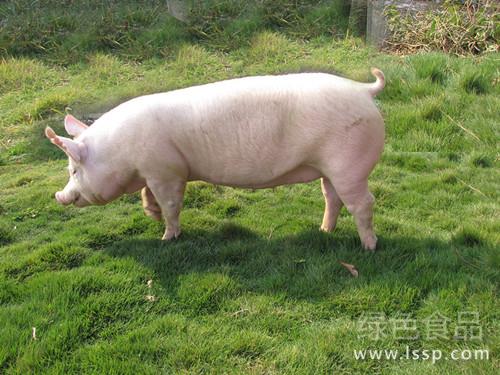
Nutritional Requirements and Feeding Methods for Pregnant Sows: Only with Sufficient Nutrition Will Piglets Be Healthy
Only with Sufficient Nutrition Will Piglets Be Healthy: Nutritional Requirements and Feeding for Pregnant Sows
-

How to prevent sows from crushing piglets to death? These methods are very practical
Methods to prevent sows from crushing piglets to death
条件筛选