-

Experimental Study on Factory-Scale Rapid Propagation Technology of Potato Test-Tube Plantlets
For many years, farmers' own propagation, self-breeding and seed retention have caused potato yields to decline year by year during production, quality to deteriorate, and commercial appearance to worsen. Scientists have proven through research that virus infection and its accumulation in tubers are the main causes of potato "degeneration." To solve the problem of severe degeneration and reduced yield of the main potato cultivars in our city, our institute made virus-free potato production a key experimental project and conducted experimental research on the problems existing in virus-free production, thereby utilizing resources and reducing production costs.
-
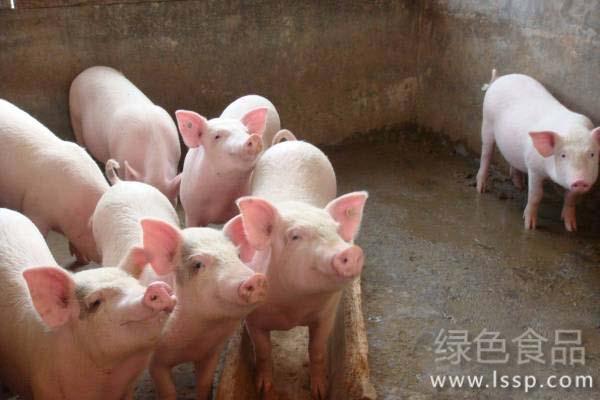
How to treat nutritional anemia in piglets? Detailed explanation of causes and treatment methods
Causes and treatment methods of nutritional anemia in piglets
-
What medicine is used for rabbit bacterial dysentery? Sanhuang tablets can treat it
Sanhuang tablets are an inexpensive and commonly used Chinese patent medicine, made from three herbs: rhubarb (Rheum officinale), coptis (Coptis chinensis), and skullcap (Scutellaria baicalensis). They are used to treat acute bacterial dysentery in rabbits. Each sick rabbit is given 1 Sanhuang tablet orally per dose, and young rabbits half a tablet, taken with warm boiled water. 3 times a day, for 3 consecutive days, and the effect is remarkable. Pregnant female rabbits must not take it.
-
Causes and Treatment of Trembling in Newborn Piglets
Trembling in newborn piglets is mostly caused by infection with porcine circovirus type 1 during pregnancy. Sometimes porcine circovirus type 2 can also cause this phenomenon. The infection causes impaired myelin development of the nerve fibers in piglets and impaired nerve conduction, resulting in "jumpy pig disease." It can be treated by assisted nursing. Keepers help the piglets find the teats; as long as they get milk, these piglets can recover over time.
-
How to make delicious baileng mushroom fish fillets? Detailed recipe shared
Ingredients: 1800 g snakehead fish, 250 g white baileng mushroom. Auxiliary ingredients: 400 g celtuce, 2 fresh pointed red chilies, 2 g refined salt, 3 g mushroom essence, 1 g pepper powder, 100 g yellow wine, 200 g dry cornstarch, 1 egg, 10 g dark soy sauce, 50 g abalone sauce, 25 g seafood sauce, 5 g tomato ketchup, 200 g chicken stock, 50 g white sugar, 20 g wet cornstarch, 500 g refined oil, 100 g chicken oil, 5 g minced garlic, 5 g sesame oil. Method: 1. Slaughter the snakehead fish, remove the guts
-
How to improve the quality of piglets? Practical breeding methods to share
Piglets have an imperfect digestive function, an underdeveloped enzyme system, and a lack of innate immunity, with poor digestion and disease resistance, making them susceptible to infections that affect their growth and development. Choosing good breeding sows: generally speaking, piglets with a high birth weight have strong resistance and grow quickly, and this trait is highly heritable. Therefore, when selecting sows to retain, litter selection must be carried out, choosing piglets from the litter that are well developed, have many and neatly arranged teats, and a good body type for breeding use. In addition, within the same breed, large individuals among sows can better
-
Detailed Explanation of the Processing Technology for Fresh-Brined Red Drum Fish Fillets
The scientific name of the red drum (Sciaenops ocellatus) is the spotted weakfish, belonging to the genus Sciaenops, family Sciaenidae, order Perciformes. It is a eurythermal and euryhaline fish, with a suitable temperature of 10-30°C, optimally 18-25°C. It has been reported to tolerate low temperatures of 2°C. Its salinity tolerance range is very wide, and it can grow normally in freshwater, brackish water, and seawater. It is a carnivorous fish. In natural waters, it mainly feeds on shellfish, cephalopods, small fish, etc. In artificial rearing, compound feed can be used. The red drum has few diseases and grows quickly. According to reports,
-
6 reasons piglets grow slowly, pig farmers should learn about them early
1. Improper weaning: Farmers often use the one-time weaning method, and the piglets are sold immediately after weaning, causing the piglets' original living conditions - centered on the mother and living together with littermates in a stable and comfortable environment - to suddenly change, making it difficult for them to adapt for a time and affecting weight gain. The number of sucklings given to piglets should be gradually reduced 5 to 6 days before weaning until weaning is complete. 2. Delayed supplementary feeding: If piglets are not given supplementary feed in time during the suckling stage, they cannot eat well after weaning, resulting in slow growth and stunted development. Generally, supplementary feeding should start when piglets are 10 days old
-
Dried fish fillets
1. Raw materials: Fresh monkfish is preferred; fish of poor freshness but without a putrid odor, and of varying sizes, can all be processed. Generally, those under 2 kg are suitable for splitting open into fillets, freezing or drying; those over 2 kg, after splitting, can have the tail muscle removed to make meat strips. 2. Splitting: Place the rinsed fish body on a cutting board, belly facing up, head toward you, use a knife to cut from the neck along the midline of the belly to the tail, then bring the knife back to cut open the fish head, split open both gills to make a fully opened fillet, remove the internal organs, then from the flesh side
-
What nutritional points should be noted when raising piglets in spring and summer?
From March to June, temperatures gradually rise, which is exactly a favorable period for developing pig production. Four issues should be noted in feeding. First, pay attention to temperature changes. In spring and summer, temperatures vary greatly, there is more rain, and humidity is relatively high. Pigs prefer a dry environment, have little fat tissue, and piglets are prone to feeling cold. Therefore, the temperature inside the shed and the dry environment of the pen should be maintained. Second, pay attention to increasing protein feed. Especially for piglets that have undergone long-distance transport, because they are stimulated by wind, cold, and the bumps of vehicles and boats, some piglets
条件筛选