-

A Detailed Explanation of the Cold Hardiness of the Aromatic Wood Plant and Its Leaf-Dropping in Winter
As an evergreen shrub or small tree, the Aromatic Wood plant is favored by many gardening enthusiasts for its unique ornamental value and fresh fragrance. However, questions about its cold hardiness and whether it drops its leaves in winter often trouble friends who want to plant or care for the Aromatic Wood plant. The Aromatic Wood plant is native to North America and parts of Asia
-

Which large-leaf green plants with good meanings are suitable for the living room?
When growing evergreen plants at home, besides looking good, they should also carry beautiful meanings. In the past two years, it has become very popular to grow plants with broad leaves at home. On one hand, they can enhance the overall style of the home; on the other hand, there is also the saying that large leaves bring wealth. The following are several large-leaf green plants. They are not only extremely attractive but also quite
-

What is the difference between heartleaf philodendron and pothos, and which one is easier to grow?
I believe many households keep one or two pots of evergreen plants, especially families that have just finished renovating and want to rely on plants' natural ability to purify indoor air. However, as greenery plants, heartleaf philodendron and pothos are the two most commonly confused purchases, because they look very similar and at a glance you really cannot tell them apart right away. So how
-

Rare Wild Single-Leaf Clematis Appears in Zhoushan Town, Yongkang, with More Than 200 Flowers on a Single Plant
Single-leaf clematis is a provincially key protected plant that blooms only in winter and is also called "snow bloom." Recently, a provincial forestry local expert discovered a rare wild single-leaf clematis in Zhoushan Town, Yongkang City, and it produced more than 200 flowers, which is truly rare. Single-leaf clematis is a perennial herbaceous vine of the class Dicotyledoneae, family Ranunculaceae.
-

Phalaenopsis needs appropriate summer heat relief in summer to avoid leaf scorch and plant dehydration
In the scorching summer, for friends who love flowers, how to ensure that the Phalaenopsis at home safely passes through summer is undoubtedly an important topic. As an elegant and delicate flower, Phalaenopsis faces considerable challenges from the high temperatures and strong sunlight of summer. Does Phalaenopsis need appropriate heat relief in summer? And how can leaf scorch be avoided?
-

Is a whole pot of Phalaenopsis with dried leaf tips a physiological phenomenon, and what should be done?
Among the many ornamental flowers, when carefully tended Phalaenopsis shows dried leaf tips, it truly makes flower lovers very anxious. The first thing we need to understand is whether dried leaf tips in Phalaenopsis are actually a physiological phenomenon. Strictly speaking, dried leaf tips in Phalaenopsis are not a normal physiological phenomenon. A normally growing Phalaenopsis should have leaves that are emerald green,
-
How to Propagate Succulents from Leaf Cuttings: Methods and Steps
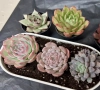
Who else knows the joy of turning one plant into many! Today I'll walk you through how to propagate succulents from leaf cuttings, step by step, so even beginners can easily achieve "succulent freedom"! Leaf selection criteria: choose thick, plump leaves free of pests and diseases, and gently wiggle them left and right to remove them whole, keeping the growth point intact. Pitfalls to avoid: discard any leaves that are shriveled, turning to mush, or have black spots. Drying the leaves
-
What is the difference between leaf buds and flower buds on a Phalaenopsis orchid?
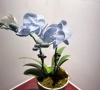
The Phalaenopsis orchid is a highly ornamental flower, and being able to tell its leaf buds from its flower buds is crucial for orchid growers. This not only relates to judging the plant's growth stage but also directly affects the formulation of care strategies. Below is a detailed introduction to the differences between the two. 1. Growth position: The leaf buds and flower buds of the Phalaenopsis orchid have relatively
-

Why Are the Leaf Tips of Phalaenopsis (Moth Orchid) Drying Up? A Look at Physiological Causes
Many people have kept a Phalaenopsis, or moth orchid, at home. When it comes to care, some grow theirs into a dazzling display of blooms, while others watch their plants develop all sorts of leaf problems over time, such as yellowing and drying up. Could these be normal physiological phenomena? Generally speaking, when moth orchid leaves turn yellow or dry up, the cause lies in the growing environment or
-

A Detailed Guide to Phalaenopsis Division Methods and Root and Leaf Number Requirements
When the Phalaenopsis in your home grows lush and full, propagating it by division not only increases the number of plants but also promotes the healthy growth of both the mother plant and the new plants. However, the division process requires mastering scientific methods, especially the control of root and leaf numbers, which directly relates to the success rate of division. Phalaenopsis division should be carried out when the plant is growing vigorously and
条件筛选