-

Timely Control of the Rice Leaf Roller Is Essential and Cannot Be Delayed
The rice leaf roller is one of the major rice pests in our province. Its larvae damage the leaves, turning rice leaves into a mass of withered white. Especially when it attacks at the booting or heading stage, it will cause a sharp decline in rice yield. This pest has seven generations a year, and the second-generation larvae are the most numerous and cause the most serious damage to early rice. If control is not timely, it will break out in a major outbreak during the heading period, causing incalculable losses. For forecasting the rice leaf roller, the appropriate control timing should be determined based on the forecast of the occurrence period. Based on past conditions, investigation should begin 4 days after the peak of the moth flight
-
What are the damage symptoms of the jujube leafroller? A quick guide to identification
Damage symptoms of the jujube leafroller
-
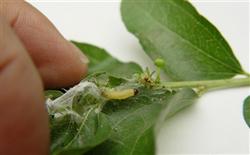
What are the control methods for the jujube leafroller?
What damage does the jujube leafroller cause? How is the jujube leafroller controlled? We also ask netizens with experience in controlling the jujube leafroller to help explain. The jujube leafroller mainly damages the leaves, flowers and fruits of jujube trees, seriously affecting the yield and quality of jujubes. Therefore, Zhongdiwang has compiled the damage caused by the jujube leafroller and its control methods, listed below for netizens' reference....
-
Detailed Explanation of the Occurrence Patterns and Control Techniques of the Jujube Leafroller
The jujube leafroller belongs to the family Tortricidae, order Lepidoptera. The jujube leafroller damages the leaves, flowers, and fruits of jujube trees, seriously affecting the yield and quality of jujube. The jujube leafroller has a single feeding habit, only damaging jujube trees and wild sour jujube, with larvae feeding on jujube leaves, flowers, and fruits. It produces 3 generations per year, overwintering as pupae in cocoons under old cracked bark and in clods of soil around the trunk. In the following year, eclosion begins in late March, with the peak of eclosion in early April; adults are strongly phototactic, and eggs are laid singly on smooth twigs and leaves. The first-generation larvae hatch in early May (before the Beginning of Summer)
-
Detailed Analysis of the Occurrence Patterns of the Jujube Leafroller
Occurrence Patterns of the Jujube Leafroller
-
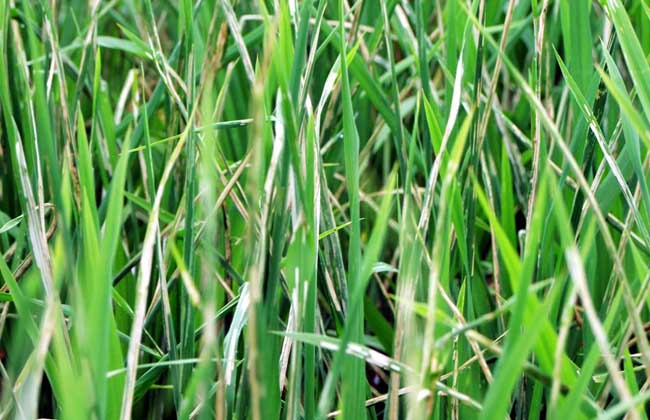
Detailed Explanation of Key Points for Rice Leaf Roller Control Techniques
Rice Leaf Roller Control Techniques
-
What are the control methods for the rice leaf roller?
Rice leaf rolling is caused by the rice skipper and the rice leaf roller. For controlling the rice leaf roller, 34% profenofos-fluorine emulsifiable concentrate is a new-generation insecticide. This product is a new compound ultra-long-acting insecticide with a broad insecticidal spectrum and stable efficacy. Field trials show that spraying 50 ml per mu diluted in 40 kg of water, with a treatment interval of 23 days, achieves a control effect of over 95%, requires 2 fewer applications than conventional pesticides, reduces pesticide cost by more than 50%, and can save 2/3 of labor, truly delivering labor savings, cost reductions, and improved quality and efficiency.
-
A Detailed Explanation of the Occurrence Patterns and Control Methods of the Jujube Leafroller
The jujube leafroller, also known as the jujube sickle-winged tortrix moth, commonly called the leaf-sticking worm, is one of the important pests of jujube trees. The larvae spin silk to roll leaves for feeding, rolling leaves longitudinally into a dumpling shape, or using silk to bind several leaves together. The larvae also bore into and feed on fruit attached to leaves, greatly affecting yield. 1. Occurrence patterns This pest has 3 generations per year, overwintering as pupae in rough bark crevices on branches and trunks. Adults hide by day and emerge at night, are strongly phototactic, and lay eggs 1 to 2 days after emergence; eggs are mostly scattered on smooth small branches and jujube spurs. The egg stage lasts 10 to 25 days, and the first-generation larvae occur
-
What pesticide gives the best control effect against older larvae of the rice leaf roller?
Chlorpyrifos and abamectin-monosultap are effective agents for controlling the rice leaf roller, but they must be applied during the 1st-2nd instar young larval stage (at this stage the rice leaf roller has not yet rolled leaves and caused damage, or has just begun rolling the leaf tips and causing damage), when the rice in the field has just begun to roll leaves. For rice leaf roller larvae of the 3rd instar and above, on the one hand they are protected because they are wrapped inside the rice leaves, and on the other hand they are insensitive to nereistoxin-type pesticides such as monosultap and to organophosphorus pesticides such as chlorpyrifos, methamidophos and monocrotophos, so the control effect after spraying is poor. Relatively speaking, older rice leaf
-
A Detailed Explanation of the Occurrence Patterns and Control Methods of the Jujube Leafroller
The jujube leafroller belongs to the order Lepidoptera, family Tortricidae. Common names include leaf-tying worm, leaf-sticking worm, leafroller, and so on. It occurs and causes damage to varying degrees in most jujube-growing areas nationwide, and is one of the major pests of jujube trees. I. Damage characteristics: The jujube leafroller uses its larvae to spin silk and damage buds, leaves, flower buds, flowers, and fruits. Especially the third-generation larvae, which are in the fruit-coloring period, often glue jujube leaves and jujube fruits together with thin silk, and within this shelter gnaw at the jujube skin and flesh at the fruit stalk, causing a large number of fallen and rotten fruits. II. Life habits: In Shandong, He
条件筛选