-
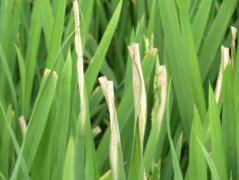
Success in Controlling Rice Bacterial Leaf Blight: Xingda Releases 2 Disease-Resistant Rice Varieties
Rice bacterial leaf blight, be gone! Xingda releases 2 disease-resistant rice varieties. Do you know which two rice varieties they are? Let's take a look. When farmers grow rice, what they fear most is encountering bacterial leaf blight, rice blast and sheath blight. The appearance of these diseases means reduced yields and affected rice qual
-

Causes, Symptoms and Control Methods of Garlic Leaf Blight
Garlic leaf blight is a common disease in the garlic cultivation process, especially in open-field cultivation, and is simply a nightmare for growers. This is because garlic leaf blight not only causes the quality of garlic to deteriorate, but also reduces yield. Let's take a look below at garlic leaf blight
-
What are the symptoms of leaf blight in daylily (Hemerocallis citrina), and how should it be prevented and controlled?
Daylily, also known as golden needle vegetable, lemon daylily, or forget-sorrow grass, is a plant whose flowers can be dried and eaten as a vegetable, and can also be used as a medicinal food supplement, with effects such as calming the nerves, stopping bleeding, aiding digestion, and improving eyesight. Daylily is mainly cultivated in Shanxi, Shandong, Anhui, Zhejiang
-
What is the special-effect pesticide for watermelon bacterial leaf blight? Detailed explanation of symptoms and disease patterns
Abstract Special-effect pesticides for watermelon bacterial leaf blight: chlorothalonil wettable powder, procymidone wettable powder, mancozeb wettable powder. Main symptoms of watermelon bacterial leaf blight: first, obvious water-soaked small spots appear on the leaf margin on the underside of the leaf, or between the veins,
-
Symptoms and Control Methods of Eleocharis Leaf Blight
Eleocharis, also known as water chestnut, water nut, shao, fuci, wuyu, puji, dili, belongs to the monocotyledonous family Cyperaceae, is a perennial herbaceous plant with persistent roots, oblate, pointed at the top, smooth and glossy surface, purplish-red or dark brown, grows in ponds and marshes, with dark green aboveground
-
Comprehensive Control Methods and Technical Key Points for Garlic Leaf Blight
Garlic Allium sativum L. (Garlic) belongs to the Liliaceae family, Allium genus, and its bulb is used as medicine. Harvest in spring and summer, tie into bundles, hang in a ventilated place, and dry in the shade for later use. When the leaves wither in June, dig up, remove mud and sand, dry in a ventilated place or bake until the outer skin is dry. Garlic is flat-spherical or short-conical
-
What are the control methods for Sophora flavescens leaf blight
Sophora flavescens, also called Shanhuai root, is a perennial semi-woody plant of the Fabaceae family. Its rhizome is used medicinally and has the effects of clearing heat and drying dampness, promoting urination, and dispelling wind and killing parasites. It originally grew wild throughout the country, with relatively large yields in Shanxi, Hubei, Henan, Hebei, and Xinjiang. It likes warm and humid environments and is cold-resistant,
-
What are the control methods for leaf blight in Atractylodes macrocephala?
Just from the name Atractylodes macrocephala, it is hard for us to know what kind of thing it is. In fact, Atractylodes macrocephala is a kind of traditional Chinese medicine. As we all know, traditional Chinese medicine culture has always been deeply rooted in people's hearts in our country, because traditional Chinese medicine does much less harm to the human body when treating diseases, and traditional Chinese medicine can
-
Control Methods for Cotton Red Leaf and Stem Blight
Cotton red leaf and stem blight is a physiological disease and one of the main diseases of cotton in the middle and late stages. Over the years, it has occurred severely in sandy loam soil and poor cotton fields in our county. In drought years, especially after a long drought followed by rain or during continuous overcast and rainy weather, red leaf and stem blight breaks out, and cotton plants dry up and die.
-
Control Methods for Leaf Blight in Lily Cultivation
Symptoms: Circular or oval lesions form on the leaves, varying in size, with a length of 2 to 10 mm or more. They range from pale yellow to light brown. In some varieties, the spots are light brown, surrounded by a distinct reddish-purple margin, and under humid conditions the spots are quickly covered with a layer of gray mold.
条件筛选