-

Are large-leaf boxwood, Zhengmu, and Fufangshu the same plant?
Aliases: Zhengmu, Fufangshu, Dongqing Weimao. Family: Celastraceae. Category: Shrub. Latin name: Euonymus japonicus. Morphological features: Evergreen shrub or small tree. Height 5-6 m. Branchlets green, slightly 4-angled. Leaves simple, opposite, elliptical or obovate, with blunt teeth on the margins, dark green and glossy on the surface, leathery. Flowers in May, greenish-white, 5-12 in cymes, axillary at the tips of branches. Fruit ripens in October; capsule flattened-spherical, powdery green, splitting into 4 valves when mature, aril orange-red.
-
What are the control methods for the Euonymus looper (large-leaf Euonymus inchworm)?
Occurrence pattern: The large-leaf Euonymus looper damages plants by the larvae feeding on leaves. It has three generations in Hunan. The overwintering generation adults emerge and lay eggs in mid-April, damage begins in late April, they successively enter the soil to pupate in late May, emerge in mid-June, the second generation causes damage in late June, enters the soil to pupate in early August, emerges in mid-August, and the third generation causes damage in late August. The most severe damage is caused by the first and second generations. Damage is most severe in seasons with mild climate and abundant rainfall. During the peak damage period, 2 to 3 days can strip all the leaves from the whole plant, leaving the plant bare. In
-
A Detailed Explanation of the Economic Traits and Cultivation Key Points of the Large-Fruited Black Peach
The large-fruited black peach is a mid-to-late ripening seedling variety discovered by a fruit grower in Nanshi Town, Xuecheng District, Zaozhuang City, Shandong Province, in the Zhaishan valley. In 1995 it was introduced and cultivated at the improved variety demonstration base of Nanshi Town First Village by the Xuecheng District Xingnong Seed Company, and there are now about 1800 sq m of fruiting orchards. After 5 years of cultivation observation, the variety's economic traits were deemed stable, and its single fruit weight (average 194.6 g) is clearly greater than that of the "black silkie peach" from Zhejiang, Anhui and other places (average 138 g), so it was named "large-fruited black peach." It is a rare extra-large-fruited black peach variety in China at present, 19
-
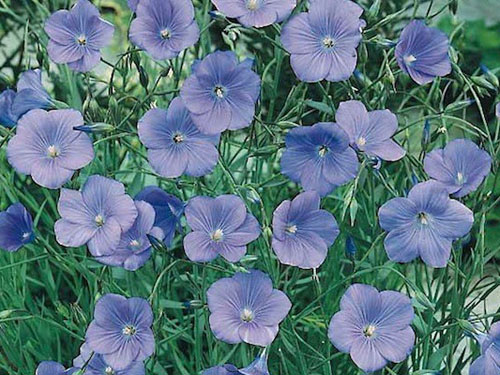
Cultivation methods for flowering flax (red flax, large-flowered flax)
Flowering flax (red flax, large-flowered flax) scientific name: linum grandiflorum. Morphological characteristics: biennial herb, plant height 40-50 cm. Stems erect, branched at the base. Leaves alternate, grayish-green, linear-lanceolate. Flowers solitary, pedicels slender, flowers nodding, corolla 5-lobed
-

How to acclimate large bare-root rose plants? Methods and precautions
At this time of year, large field-grown bare-root plants are sold quite often. Compared with tiny rooted cuttings, many gardening enthusiasts do not know how to handle large plants. This article focuses on handling bare-root plants. Large bare-root plants come in two types: those with a soil ball and fully bare-root plants. As long as the survival rate is well managed, large bare-root plants still do very well.
-
-
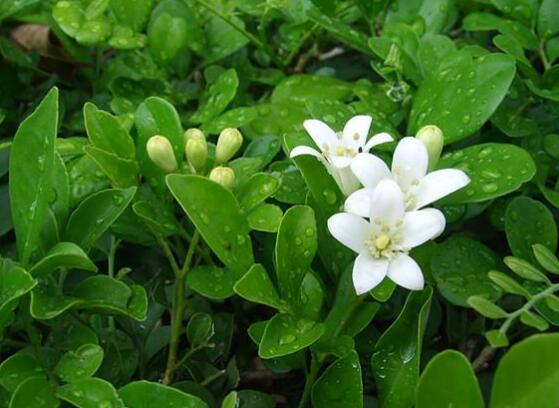
4 key points for fertilizing Orange Jessamine, so its leaves turn glossy green and its flowers bloom fragrant and large
Orange Jessamine, also called Murraya paniculata, was once the title of a Jay Chou song. It grows very beautifully, and its flowers are strongly fragrant, giving it high ornamental value. Nowadays, more and more people grow Orange Jessamine in pots at home, but to grow it well, with green leaves and beautiful blooms, proper fertilizing is important. So how do you fertilize Orange Jessamine?
-
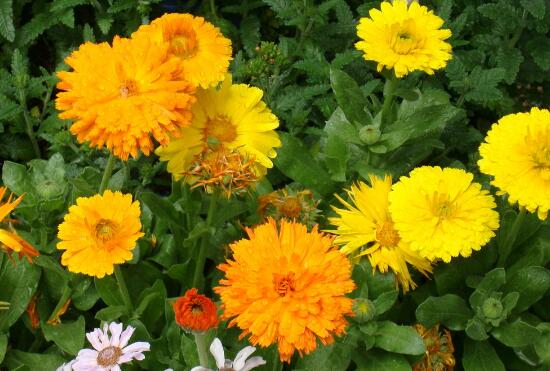
What to do when calendula leaves turn yellow? Pay attention to 7 points, fertilize appropriately and repot into a larger pot
Calendula, a highly ornamental flower, is loved by gardening enthusiasts for its beautiful blooms and vivid flower colors. In daily life, many people grow calendula, but beginners often encounter yellowing leaves when growing it, which seriously affects its ornamental value. So what should you do when calendula leaves turn yellow? On this
-
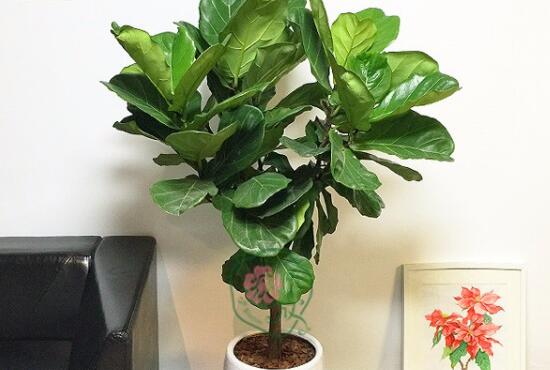
How to grow a fiddle-leaf fig so it becomes tall and large? Plenty of water, ample light and a suitable temperature are key
As a common foliage plant, the fiddle-leaf fig (Ficus lyrata) is not difficult to grow, and any flower lover with a little experience can grow it well. But although "keeping it alive" and "growing it well" differ by only one word, the difference is enormous. The fiddle-leaf fig is prized for its large leaves, so how do you grow it so it becomes tall and large?
-
条件筛选