-
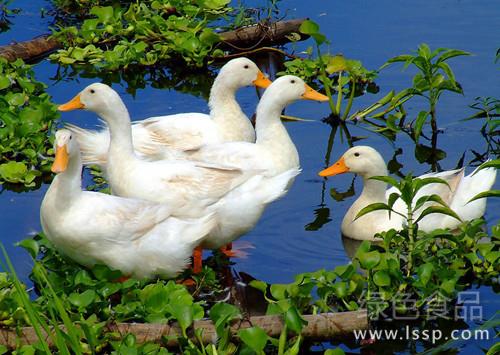
Key points for improving meat duck quality in cold winter: keep warm, prevent disease, increase light, prevent feather pecking
Keep warm, prevent disease, increase light, prevent feather pecking: key points for improving meat duck quality in cold winter
-

Poor cotton growth, management must keep up in the middle and late stages this year
Since the beginning of this year, our province has experienced prolonged overcast and rainy weather with scant sunshine, severe occurrence of seedling diseases, and cotton growth generally poorer than in previous years. At present, cotton has entered a critical period of growth, so we must make full use of the current characteristics of higher temperatures and rapid cotton growth to do a good job in cotton field management. Management in the middle and late stages of cotton should focus on the following aspects: 1. Early stubble clearing, early management. Stubble clearing and intertillage can not only provide a good environment for cotton seedling growth and development, but also eliminate cotton bollworm pupae. Once cotton seedlings enter the field, the word "management" must be put first, and all localities should suit measures to the seedlings and carry out classified management. Category 1 cotton seedlings grow
-
What issues should be noted in the export processing of fresh-keeping shiitake mushrooms?
I. Raw material selection In the processing of fresh-keeping shiitake mushrooms, the first thing to note is the freshness of the raw materials, which is an important factor determining the quality of the finished fresh-keeping shiitake mushrooms. The raw materials must be fresh, and the color must be normal; secondly, the mushroom caps must be complete and round in shape, the stems must be intact, and the mushroom bodies must retain the graceful form of natural growth; the mushroom flesh must be thick, the edges of the caps must be neatly incurred, the partial veil unbroken or slightly open, and not fully opened; the cap diameter must be no less than 38 mm; and there must be no pests or diseases, off-odors, or soil impurities. II. Raw material handling and cold storage First,
-
The Important Role of Montmorillonite in Keeping Crystal Shrimp
Montmorillonite for crystal shrimp is specially used for keeping ornamental crystal shrimp, with a purity of 95-98%, pH 6.5-7.5, and can be placed directly into the tank for use. Montmorillonite for crystal shrimp can stabilize water quality, keep the water at a certain hardness (GH, 4-6) and carbonate hardness (KH, 1-2), and can absorb or inhibit the production of ammonia and organic amines. It is also academically recognized that montmorillonite can serve as the main component of the bacterial culture medium for cultivating nitrifying bacteria. 1 The Efficacy of Montmorillonite for Crystal Shrimp
-
Feeding and Management Methods for Keeping Caged Rabbits Safe Through the Summer
Heat dissipation and temperature control: Plant some vine-type plants such as melons, beans, grapes, and pumpkins around the rabbit hutch to prevent direct sunlight, and you can also apply a layer of lime slurry to the inner and outer walls of the rabbit hutch so that direct sunlight does not reach the rabbit cages; open-air rabbit hutches should have a shade canopy set up, with doors and windows opened to allow air convection; for wool rabbits, the wool should be cut short along with the hair on the head and face, and the rabbit cages should not be too crowded; when the room temperature exceeds 30°C, sprinkle some cool water every 2-3 hours, or use a new brick, soak it in cool water for several minutes, and once it has absorbed enough water (no longer bubbling), place it in the rabbit cage,
-
Detailed Explanation of Key Points of Peach Fruit Antiseptic and Fresh-keeping Treatment Technology
Currently, methods for storing peaches include ice cellar storage, improved ventilated warehouse storage, cold storage, and controlled atmosphere storage. The suitable temperature for peach storage is 0-3°C. Generally, large cold storage warehouses have uneven temperature distribution, poor temperature control precision, poor fresh-keeping effects, and are difficult to operate and manage. The tzfgz series wall-mounted automatic cold storage is a new type of storage and fresh-keeping cold storage developed and promoted by the Shandong Institute of Pomology, with a temperature control precision of 0.1°C, fast cooling speed, and uniform warehouse temperature. Low and high temperatures can be
-
After the Start of Autumn, don't relax on Welsh onion management - keep these key points in mind
Summer goes and autumn comes, and Welsh onion growth enters its vigorous stage. At this time, the main management goal is to promote more leaves and rapid growth, elongate, thicken and increase the weight of the leaf sheaths (the white stalk), and keep the root system strong and firmly established. The field management technical measures can be summarized in four farming proverbs: After the Start of Autumn, don't relax on Welsh onion care, four fertilizers and seven waterings attack in succession, three hoeings and two earthings drain rain and waterlogging, and prevent and control three diseases and six insects. 1. Four fertilizers and seven waterings attack in succession. The four fertilizers refer to the tillering fertilizer (early August), applying 2000-2500 kg of high-quality decomposed barnyard manure, 10 kg of urea or 20-25 kg of ammonium bicarbonate per mu
-
How to Raise a Chinese Box Turtle? A Detailed Guide to Keeping Methods
For raising Chinese box turtles, it is best to buy turtles between April and August each year. During this period there are more turtles, prices are lower, and they are easier to tame and keep. From January to March, turtles are hibernating or about to hibernate, so it is difficult to observe their activity, feeding, droppings, and other conditions. It is hard to judge the survival rate of the turtles. Adult Chinese box turtles are mainly obtained by purchasing wild-caught turtles. Wild-caught turtles are thin and weak, timid, with many wrinkles on the skin of the limbs, and when handled the turtle feels light. Selecting turtles can begin with two aspects: the turtle's appearance and its droppings. A healthy turtle has bright eyes, with no white spots on the cornea, no blood at the mouth or nose, and no mucus secretion. The skin, carapace, and plastron have no damage or ulceration. When crawling, the limbs can lift the body up. After being startled, it can immediately flee. The droppings of a healthy turtle are lump-shaped and wrapped in a white membrane. Droppings that are pale blue, blood-red, light green, etc. are all abnormal.
-
What should be noted when keeping clownfish in a mixed tank?
Clownfish belong to the damselfish family (Pomacentridae), and they all have rather aggressive temperaments, especially showing hostility toward newly introduced fish of the same kind. Mixed keeping is not a problem, but the following conditions are required: 1. Several fish should be introduced into the tank at the same time, with the time interval kept as short as possible, and the smaller individuals introduced before the larger ones. 2. There should be a large number of sea anemones (carpets) in the tank; for three kinds of fish, at least three sea anemones (carpets) are needed. 3. The tank must be large enough, and the sea anemones (carpets) should be distributed evenly. The above three points only help avoid fights among them as much as possible, but they cannot
-
Breeding Methods and Keeping Tips for the White Cloud Mountain Minnow
Morphological Characteristics of the White Cloud Mountain Minnow The White Cloud Mountain Minnow, also known as the White Cloud Mountain fish, Tang fish, red-tailed fish, or golden striped minnow, belongs to the carp family and originated in Guangdong, China. The White Cloud Mountain Minnow was first discovered on Baiyun Mountain in the northern suburbs of Guangzhou, Guangdong, China, hence the name White Cloud Mountain fish. The White Cloud Mountain Minnow is about 3-4 cm long, with a spindle-shaped, slender body that is slightly laterally compressed, a small head, large eyes, and a bluntly rounded snout. The back of the fish is tea-brown with a slight blue tint, the belly is silvery white, the dorsal fin and caudal fin are bright red, the tips of the pelvic fins are yellow, and the center of the tail is also red. From the snout
条件筛选