-

Management Measures and Technical Points for Rice during the Jointing and Panicle Elongation Stage
The jointing and panicle elongation stage refers to the period from jointing and the beginning of young panicle differentiation to just before heading, generally 25-36 days for middle-season rice. 1. Growth and development characteristics and growth appearance during the jointing and panicle elongation stage (1) Growth and development characteristics During this period, on the one hand, stem elongation is the center, completing the growth of the last few leaves and root system and other vegetative organs; on the other hand, reproductive growth centered on young panicle differentiation takes place. During this period some tillers gradually die, and the total number of stems and tillers declines compared with the earlier stage, so it is an important period for preserving tillers and increasing panicles. From
-
Management Techniques for Rice at the Jointing and Booting Stage
Management at the jointing and booting stage: When 50% of the plants in the field have the main tiller elongated by 1-2 cm and the shape of the main tiller becomes rounded, it is the jointing stage. When 50% of the flag leaves have fully emerged from the leaf sheath, it is the booting stage. This period is when rice needs the most water in its entire life cycle. If the water is drained for a long time, it will affect the formation of the panicle, resulting in small panicles and many empty grains. However, deep water flooding should also be avoided; instead, irrigate frequently with shallow water and expose the field appropriately to promote root growth, achieving deep roots and lush leaves, and striving for large panicles and more grains.
-
A Brief Analysis of Treatment Methods for Hip Joint Dislocation in Cattle
Hip joint dislocation in cattle is extremely difficult to reduce, and most veterinarians classify it as an incurable disease. We now report the course of successfully reducing 1 typical case of hip joint dislocation in cattle as follows: Jie Jinbao's household in Shangfan Village, Changqiao Township, Guangchang County, 1 three-year-old yellow cattle bull. Chief complaint: On the morning of April 20, 2001, the cattle was tethered for grazing on a path embankment not far from the village. When someone went to change the grazing area in the afternoon, the cattle was found fallen beside the road and unable to stand. After learning of this, we quickly rushed to the scene. 1 Diagnosis Several people lifted the sick cattle up, and the hind limbs appeared mixed
-
Modified Shaoyao Gancao Decoction for treating joint synovitis in livestock
Formula and treatment method, Modified Shaoyao Gancao Decoction: Baishao (white peony root) 35 g-50 g, Zhigancao (honey-fried licorice root) 15 g-30 g, Danshen (red sage root) 40 g-60 g, Chuanxiong (Szechuan lovage rhizome) 30 g-40 g, Gegen (kudzu root) 40 g-60 g, Guizhi (cassia twig) 30 g-40 g, Duzhong (eucommia bark) 40 g-50 g, Niuxi (achyranthes root) 20 g-35 g, Mugua (Chinese quince fruit) 25 g-40 g (this dosage is the common dosage for large livestock). Decoct in water and administer orally, 1 dose per day, for 3-5 consecutive doses. Add water and an appropriate amount of edible vinegar to the medicinal residue, decoct, and use the liquid to fumigate and wash the affected area; when there is excessive joint effusion that is difficult to absorb
-
Treatment Methods for Pig Joint Sprains and Rheumatism
Due to the action of external force, the joint is twisted, causing incomplete or complete rupture of the joint capsule and the corresponding collateral ligaments of the joint. Symptoms: sudden lameness or walking on three legs, warmth, swelling and pain in the affected area, with pain becoming more pronounced during movement. Treatment: ① 2 parts vinegar, 1 part quicklime, mix well, 1-2 times daily. ② 50-100 g chives plus 100-50 g sorghum liquor, crush and apply externally. ③ 75 g frankincense and 75 g myrrh, 100 g gardenia, 25 g safflower, add an appropriate amount of vinegar and mix well, wrap and apply to the affected area
-
A Case Study on the Diagnosis and Treatment of Joint Pain Caused by Rheumatism in Dogs
At present, dog keepers generally use pen-raising and tethered-raising methods, so dogs get relatively less exercise. If they encounter adverse factors such as sudden weather changes and damp environments, dogs are prone to rheumatism. A case study on the diagnosis and treatment of rheumatoid joint pain in a dog is recorded as follows: (1) Onset and symptoms. A 6-month-old dog, weighing 7.8 kg, kept in a pen, suddenly became ill during consecutive rainy days and a damp environment. The sick dog was lame in the left forelimb and could not put it to the ground, had difficulty moving, often lay down and could not get up, and when forcibly driven, moved forward by hopping on three legs. Palpation of the sick dog's left forelimb showed pain
-
Treatment methods for pig joint sprains and rheumatism
The twisting of a joint caused by external force leads to incomplete or complete rupture of the joint capsule and the corresponding collateral ligaments of the joint. Symptoms: sudden lameness or walking on three limbs, the affected area is warm, swollen and painful, and the pain is more pronounced during movement. Treatment: 1) 2 parts vinegar, 1 part quicklime, mix well, 1-2 times daily. 2) 50-100 g Chinese chives plus 100-50 g spirits, crush and apply externally. 3) 75 g frankincense and 75 g myrrh, 100 g gardenia, 25 g safflower, add an appropriate amount of vinegar and mix evenly
-
How to prevent and treat joint abscess in pigeons? Detailed methods
The main cause of joint abscess in pigeons is: long-term rearing in uneven, rough lofts or rough cages with sharp spikes, which causes skin damage and infection on the legs. It commonly occurs in the ankle and elbow joints, and the incidence rate is high in adult pigeons. Symptoms: at the beginning of the disease, the sick pigeon walks poorly or even limps, and the affected joint shows inflammatory symptoms of redness, swelling, heat and pain, and gradually enlarges and protrudes. On palpation, it also develops from a hard swelling to a soft swelling, with a fluctuating sensation, and pus flows out when incised. In abscesses with a long course, the local skin thickens, and on palpation there is a hard and firm
-
Prevention and Treatment Methods and Precautions for Joint Sprains in Pigs
1. Cause: Due to the action of external force, the joint is twisted, causing incomplete or complete rupture of the joint capsule and the corresponding collateral ligaments of the joint. 2. Symptoms: Sudden lameness or walking on three limbs, the affected area is warm, swollen and painful, and the pain is more pronounced during movement. 3. Prevention and treatment: Avoid strong movements when catching, and prevent jumping from the vehicle during transport. In the early stage, the following prescriptions can be selected for application: (1) External application medicine: ① 2 parts vinegar, 1 part quicklime, mix well, 1-2 times daily. ② 50-100 grams of chives plus
-
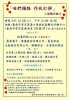
Tainan Shugu Employment Service Station Joint Recruitment on the 26th
The Shugu Employment Service Station of the Vocational Training and Employment Services Center under the Tainan City Labor Affairs Bureau will hold the "Let's Work Together for Our Livelihoods" joint recruitment event on December 26, 2018 (Wednesday), inviting Tainan City's major investor and international wireless network communications equipment manufacturer Wistron NeWeb Corp. (Anding...
条件筛选