-
Weekly Agricultural Science and Technology Achievement Recommendations (Great Agriculture Circle Issue 4)
Great Agriculture Circle: Weekly Agricultural Science and Technology Achievement Recommendations (Issue 4)
-

What issues need attention in catfish farming? A full analysis of the rearing key points
What issues need attention when farming catfish
-

Why is the land bank the only route to solving the issues of agriculture, rural areas and farmers?
Why the land bank is the only route to solving the issues of agriculture, rural areas and farmers
-
Why is the grain issue not a simple matter of addition and subtraction?
The grain issue is not a simple matter of addition and subtraction
-
How to Grow and Care for Kalanchoe: Key Tips and Common Issues, Causes of Yellow Leaves and Solutions
How do you grow kalanchoe? This article covers kalanchoe growing methods and care tips, including watering, light, temperature, fertilizing and repotting, and analyzes the three main causes of yellow leaves with solutions to help you easily grow a healthy potted kalanchoe.
-
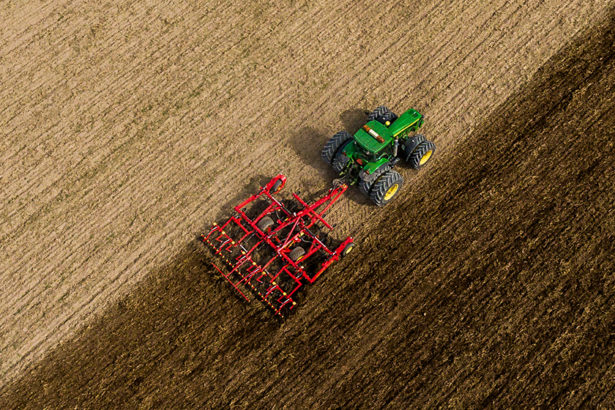
Young Farmer Issue 4, Part 1: Pause the World-Weariness for a Moment - To Plow or Not to Plow?
Young Farmer: Pause the World-Weariness for a Moment | 04 To Plow or Not to Plow (Part 1)
-
Soybean aphid outbreak forecast issued, growers need to take timely preventive measures
Based on the survey results from all forecasting stations across the province, combined with a comprehensive analysis of crop growth and meteorological conditions, soybean aphids are expected to occur at a moderate level overall across the province this year, with some cities and counties that have received less rainfall and had high early-season aphid populations reaching moderate-to-severe occurrence. The peak period of soybean aphid damage will be from mid-July to early August. 1. Occurrence is earlier than in normal years. According to monitoring by all forecasting and plant protection stations across the province, the first aphid sighting was on June 10, later than last year but still about 10 days earlier than in normal years. 2. Meteorological conditions are unfavorable for soybean aphid
-
Analysis of Issues in the Formulation and Use of Complete Feed for Ussuri Raccoon Dogs
The raccoon dog is an animal endemic to East Asia, mainly found in China, Russia, Korea, Japan, Mongolia and other countries, and is divided into many subspecies. The Ussuri raccoon dog is mainly distributed in China's Heilongjiang Province, the eastern and southeastern regions of Jilin Province, and northeastern Korea. At present, the vast majority of raccoon dogs bred in captivity in China are Ussuri raccoon dogs originating from Heilongjiang Province. The raccoon dog is one of the fur-bearing animals with high economic value. Compared with foxes and mink, it has the advantages of bearing more cubs, a high survival rate, being easy to raise, and having a stable market; therefore, in recent years the number of raccoon dogs raised in China has steadily increased year by year, with good momentum
-
What issues should be noted during the processing of yellow peaches?
Influenced by international yellow peach market prices, domestic yellow peach prices have been climbing steadily, with purchase prices maintained at 2-3.6 yuan/kg, an average price of 2.6 yuan/kg, and average output value of yellow peach orchards at 7800 yuan/mu, with the highest reaching 10,000 yuan, generally 2-5 times that of ordinary peach orchards, showing very significant economic benefits. 1. Pay attention to selecting excellent varieties: Yellow peach varieties used for canning require non-melting flesh, firm texture, good elasticity, low juice content, clingstone, no red streaks in the flesh, and preferably no
-
What issues should be noted in the efficient cultivation of kernel apricots?
Kernel apricot is one of the main dried fruits in northern China, with excellent economic returns. In recent years, due to the development of almonds, the comparative benefit of kernel apricots has somewhat declined. To improve the production efficiency of kernel apricots, comprehensive measures should be adopted. 1) Develop in suitable sites. Kernel apricots are drought-tolerant, tolerant of poor soil, and widely adaptable, but for efficient production, orchards must be established in locations with deep soil layers, fertile soil, and sheltered, south-facing slopes. Because kernel apricots bloom early and are susceptible to late frost damage, avoid establishing orchards on mountain ridges, wind gaps, and low-lying areas. 2) Pay attention to configuring pollinizer trees.
条件筛选