-

Experience Sharing on Integrated Rice and Crayfish Farming
With the continuous development of China's aquaculture industry, crayfish farming is now very common. There are many methods for farming crayfish in China, and different farmers adopt different methods, so farmers can exchange and learn from one another. Crayfish
-
How to Achieve Integrated Control in Locust Farming
Locusts, also known as grasshoppers, rice stem borers, and paddy grasshoppers, belong to the phylum Arthropoda, class Insecta. China has more than 17 known species of locusts. In our area, the Chinese rice locust (Oxya chinensis) is the dominant species, mainly damaging crops such as rice, corn, sugarcane, and wild rice stem. The Chinese rice locust occurs in our area
-
Analysis of the Efficient Integrated Farming Model of Fish Rearing in Lotus Root Fields
I. Field Construction The area of the lotus root field should preferably be 1-2 mu, generally 1-1.2 m deep; around the field, culture trenches are dug, 1.5-2.0 m wide and 0.8-1.0 m deep, with the inlet and outlet opened at diagonal corners, so as to keep the field water clean and prevent the accumulation of toxic substances from harming the fish; apply per mu
-
A Detailed Guide to Integrated Tilapia Farming Methods and Techniques
The cost of integrated farming is relatively low, and when fish prices are sluggish, the profit margin is larger and it is highly practical to implement. How to further improve the benefits of integrated farming through management techniques has become the main issue at present. In recent years, as pond rents have continued to rise in various places, feed prices have kept
-
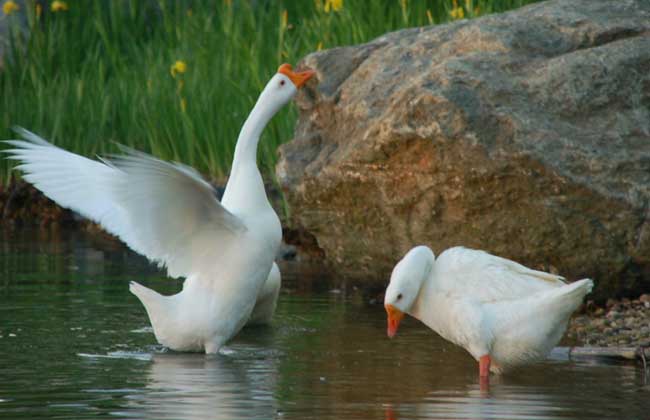
Detailed Explanation of Key Points for Integrated Meat Goose Farming Technology
Integrated Meat Goose Farming Technology
-
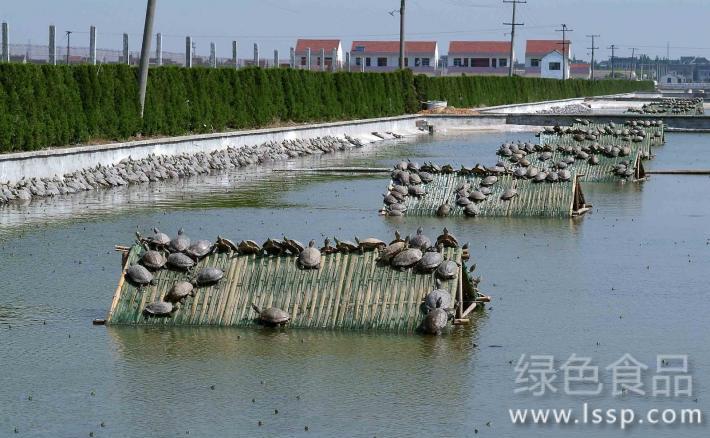
Integrated Polyculture of Soft-Shelled Turtles with Silver Carp, Bighead Carp, Common Carp and Crucian Carp for Imitation-Wild High-Efficiency Farming
Integrated Polyculture of Soft-Shelled Turtles with Silver Carp, Bighead Carp, Common Carp and Crucian Carp for Imitation-Wild High-Efficiency Farming
-
New technique for integrated fish-duck farming: what size of fry should be stocked, and what are the benefits
Q: What size of fry should be stocked in integrated fish-duck farming?
-
The integrated fish-goose farming model can increase economic returns by 30%.
Integrated fish-goose farming is a three-dimensional ecological farming model that combines poultry rearing with fisheries management. According to comparisons, under the same conditions, integrated fish-goose farming increases economic returns by about 30% compared with raising fish or geese separately. 1. Benefits of integrated fish-goose farming. 1. Geese are fully automatic, energy-saving and highly efficient aerators for fish ponds. In integrated fish-goose farming, farmers do not need to worry about oxygen depletion in the water caused by weather changes, because whenever the weather changes, the geese will scramble to jump into the water to bathe and chase each other, churning up splashes, which has a particularly good oxygenating effect on the fish pond.
-
Key Technical Points for Integrated High-Efficiency Duck-Pig-Fish Farming
Through integrated farming, ducks, pigs, and fish can make full and rational use of energy, achieving the goals of saving feed and attaining high yield and high efficiency. The integrated high-efficiency duck-pig-fish farming method is: 1. Select superior breeds. For ducks, Cherry Valley ducks are best; for pigs, crossbred Landrace pigs and other improved breeds; for fish, mainly silver carp, bighead carp, black carp, grass carp, etc. These breeds tolerate coarse feed and grow fast. 2. Management of duck pens, pig houses, and fish ponds. Duck pens, pig houses, and fish ponds should be concentrated and conveniently located for transport to facilitate management. Keep the
-
Full Analysis of the Key Technical Points for Lotus-Rice-Fish Integrated Farming
"Lotus-rice-fish" integrated farming refers to a co-culture model in which both rice is planted and fish are raised during the growing period of lotus root. The relevant integrated farming techniques are briefly introduced below. 1. Reasonable site selection. Choose gray mud fields with sufficient water sources, strong water retention capacity, and medium or above fertility. Fields with water-quality concerns, cold-waterlogged fields, and perennial lotus fields are not suitable for selection. 2. Select improved varieties. For lotus seeds, choose excellent varieties with large grains, a long flowering period, and high yield; for rice, it is advisable to choose early-maturing or early-to-medium-maturing varieties, such as Minke Zao No. 8, Zhefu 218, etc.; for fish, mainly stock common carp.
条件筛选