-
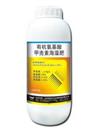
Detailed Explanation of Key Points for Using Bacterial Biological Insecticides
Bacterial biological insecticides have advantages such as high insecticidal rate, no environmental pollution, safety to natural enemies, harmlessness to humans and livestock, and not inducing pest resistance. They are a new type of protective pesticide currently promoted for use in pollution-free cultivation. Because their control effect mainly depends on the bacterial activity in the pesticide, the following points need to be kept in mind during use...
-
Using specific insecticides requires particular care; mastering the method is key
Generally speaking, specific insecticides have different active ingredients, each with its own characteristics, and they also have different insecticidal mechanisms of action (that is, the principles by which pesticides kill pests). Varieties of this type often used in production today include: chlorfluazuron, buprofezin, flufenoxuron, diflubenzuron, bisultap, monosultap, imidacloprid, fipronil...
-
How to choose insecticide application timing and spraying site
1. Chlorpyrifos is prone to causing phytotoxicity when used during the melon seedling stage, and its use should also be avoided during the flowering period of some crops. 2. Pesticides containing triazophos are not suitable for use on fruit cane, as they easily cause phytotoxicity. 3. Because phoxim decomposes readily when exposed to light, its use should be avoided during the watermelon growing period and the seedling stage of radishes and leafy vegetables (even during the growing period...
-

How to apply insecticides scientifically? Correct methods and techniques
To control crop pests with pesticides and achieve the best insecticidal effect, in addition to selecting the right targeted agent and applying it at the right time, you should also pay special attention to the following two issues that are easily overlooked. Different agents and different application methods should be chosen according to the part of the plant the pest damages, so that the pesticide is delivered to the right place. For example, for pests that damage...
-
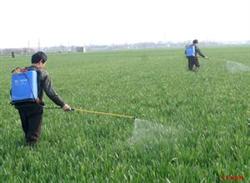
Two key points to master when spraying insecticides
First, choose the favorable time period for application according to climate characteristics and the pests' day-and-night activity patterns. The best application times are 9-10 a.m. and after 4 p.m. This is because at 9-10 a.m., the dew on crop leaves has already dried, and it is precisely when diurnal pests are most active. Applying the insecticide at this time will not...
-

Why can't pesticides be used in excessive amounts to kill insects?
In lawn management, to save on mowing costs, besides mechanical mowing, plant growth regulators can also be used to control lawn growth. For example, people use various plant growth regulators such as paclobutrazol on lawns, which can make the intercellular spaces of turfgrass plant cells smaller and slower to change, make internodes smaller, make leaves thicker, and make the color...
-
To improve insecticidal effectiveness, these essential preparations cannot be skipped
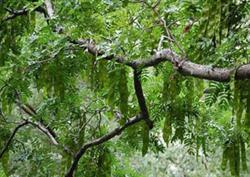
For Chinese honey locust leaves, take 1.5 kg of fresh leaves, mash them, add 1.5 kg of water, filter out the residue, and keep the juice. For every 1 kg of juice, add 4 kg of water and spray; this can effectively control cotton aphids and red spider mites. For chinaberry leaves, take 0.5 kg of fresh leaves, mash them, add 3 kg of water, soak for half a day, and filter out the residue. Take the liquid and spray; it can control cotton aphids, red spider mites, cabbage caterpillars...
-
Why do insecticides become less and less effective the more you use them?
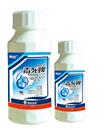
Chlorpyrifos is a highly effective, broad-spectrum organophosphorus insecticide that acts on pests through contact toxicity, stomach toxicity and fumigation, and is especially effective against the brown planthopper. The relevant application techniques are described below: 1. Product characteristics: 1. Chlorpyrifos is currently available in China in formulations such as emulsifiable concentrate, granules and microemulsion. Among them...
-
What are the precautions for using insecticides during the melon seedling stage
A agricultural supply seller from Yandu District, Yancheng City called to report that a local farmer used abamectin and dimehypo to control pests in rice fields. After application, a small amount of pesticide solution was left over and was incidentally sprayed onto 0.1 mu of soybeans grown by the family. As a result, the soybeans showed symptoms resembling scalding by boiling water the next day, then turned yellow and dried up. He asked whether the soybeans...
-

Bt insecticide application techniques matter; mastering the method is key
Ethephon is an organophosphorus broad-spectrum low-toxicity plant growth regulator that promotes ripening. It can enter the plant through leaves, bark, fruit, and seeds, then be transported to the sites where it acts, releasing ethylene. It can promote fruit ripening and coloring, promote the abscission of leaves and fruit, dwarf plants, and change the ratio of female to male flowers...
条件筛选