-

Simple tips for increasing edible mushroom yields: master the methods for higher production
Simple tips for increasing edible mushroom yields
-

Eight key technical measures for increasing soybean yield
First, applying flower-and-pod fertilizer. The flowering and pod-setting stage is when soybean grows and develops most vigorously, and it is the period of greatest fertilizer demand in the soybean's entire life. Applying flower-and-pod fertilizer can reduce flower and pod drop, promote full grains, and improve quality. Flower-and-pod fertilizer should be applied at the early flowering stage, preferably as a combined application of nitrogen and phosphorus fertilizer, with 3-5 kg of urea and 7.5-10 kg of phosphate fertilizer per mu, applied in holes opened 5 cm to the side of the soybean roots, and after application, soil should be hilled up to cover the fertilizer. Second, spraying foliar fertilizer. In addition to the three major elements nitrogen, phosphorus and potassium, boron, zinc and molybdenum are indispensable trace elements for soybean. Therefore, from the flowering to the seed-filling stage of soybean
-
Detailed Explanation of Key Soybean Cultivation Techniques for Increasing Yield
1. The ecotype of soybean varieties should be appropriately selected according to the natural conditions of the local soybean production area. Soybean podding habit can be divided into 3 types: indeterminate, determinate and semi-determinate. Lao Zhao is located in Zhumadian, which belongs to the Yangtze River Basin spring and summer soybean zone, with a summer crop of 120—150 days. In this region, varieties with determinate podding habit should mainly be selected for planting, though indeterminate podding varieties may also have been chosen, which would lead to the above phenomenon. Therefore, attention should be paid to variety selection, especially in areas with relatively high soil fertility and abundant rainfall.
-
New Cotton Cultivation Technique: Saving Labor and Increasing Yield at the Same Time
This technique is based on the cotton cultivation method in which cotton is not pruned or disbudded, but only the terminal bud and side buds are removed, also called the two-time topping cultivation method. On that basis, a more labor-saving one-time topping cultivation method has been introduced. It saves at least 70% of labor, while increasing yield by more than 8%, and cotton quality is basically on par with the traditional method. Its key techniques are as follows: 1. Select good varieties and keep the sowing date moderate. It is advisable to choose large-plant types with strong mid-season growth, with seed cotton yield per mu of no less than 350 kg and high-yielding varieties exceeding 500 kg. Usually, the Hua Kang III series, Qiufeng Large Boll series, and disease-resistant
-
What are the ten methods for increasing oyster mushroom yields?
1. Temperature difference stimulation method: During the fruiting body formation and development stage of oyster mushrooms, giving a 7 to 12°C temperature difference stimulation every day can promote earlier fruiting and uniform fruiting body development. The specific method is: cover well with plastic film during the day to keep warm, and in the evening or morning on sunny days uncover the film to expose the bed, ventilate and cool down to increase the temperature difference; combine with high-humidity management to induce fruiting. 2. High humidity stimulation method: First open the mushroom bed (or mushroom blocks) and let them dry for 1-2 days, then spray water 2-3 times a day for 2-3 consecutive days, allowing the mushroom blocks to slowly absorb water, so that the culture medium on the surface of the mushroom blocks
-
Detailed Explanation of Key Technical Points for Increasing Spring Tea Yield and Improving Quality
Delaying light pruning: Conventional light pruning of the tea canopy is carried out from December in winter to February of the following year. Practice has shown that doing so has three drawbacks: first, the branches are prone to frost damage after pruning; second, the overwintering buds are cut off, delaying the sprouting time of spring buds; third, the nutrients already accumulated in the branches on the tea canopy surface are cut away, affecting the sprouting vigor of spring buds and the growth of thick strong branches, ultimately affecting spring tea yield and quality. Therefore, the pruning time should be after the frost period, preferably so that the first spring tea can be picked 30 to 40 days after pruning. Advancing topdressing: Conventional topdressing is mostly carried out in early to mid-March, when spring buds
-
Several Key Technical Measures for Increasing Gastrodia elata Yield
Gastrodia elata is a precious Chinese medicinal herb. In order to solve the problems commonly found in current artificial cultivation of Gastrodia elata, such as unstable yield, severe degeneration, and susceptibility to pests and diseases, the Edible Fungi Research Institute of our county carried out research on high-yield, stable-yield, and high-quality cultivation models for Gastrodia elata, and achieved certain results. The several techniques for how to increase Gastrodia elata yield are summarized as follows: 1. Choose a suitable cultivation site: Gastrodia elata is suitable for growing in areas with cool summers and winters that are not very cold. It requires moist soil, but not waterlogged, and rich in humus.
-
What are the traditional fertilization methods for increasing the yield of edible fungi?
When edible fungi reach the middle and late stages of fruiting, a large amount of nutrients has basically been consumed. In order to strengthen the aftergrowth of fruiting, appropriate topdressing fertilizer must be applied, which can increase the yield. Mushroom growers are advised to adopt the following measures, which will have a very good yield-increasing effect. 1. Apply mushroom soup: Collect and wash the mushroom stems and broken mushrooms cut off during harvest and processing, cut them into thin slices, add 1—1.5 kg of water per kg of material, boil for 15 minutes, take the filtered juice and add 10—15 kg of water, and spray it on mushroom trays or fungus bags. Using it at the peak of fruiting can make the fruiting bodies thick and extend
-
Analysis of Key Technical Points for Increasing the Yield of High-Grade Tea
With the development of our country's economy, the improvement of people's living standards, and the continuous deepening of opening up to the outside world, high-grade tea is increasingly favored by the market, and its sales volume is growing year by year. Therefore, how to increase the yield of high-grade tea has become an important research topic in tea production. To this end, the author conducted technical explorations in many aspects, gained some experience, and achieved good results. The main steps are introduced as follows; 1. Strengthen autumn and winter fertilization of tea gardens. In winter, apply sufficient base fertilizer and additional quick-acting nitrogen fertilizer, giving full play to the spring effect of fertilizers, so that spring tea is high-quality
-
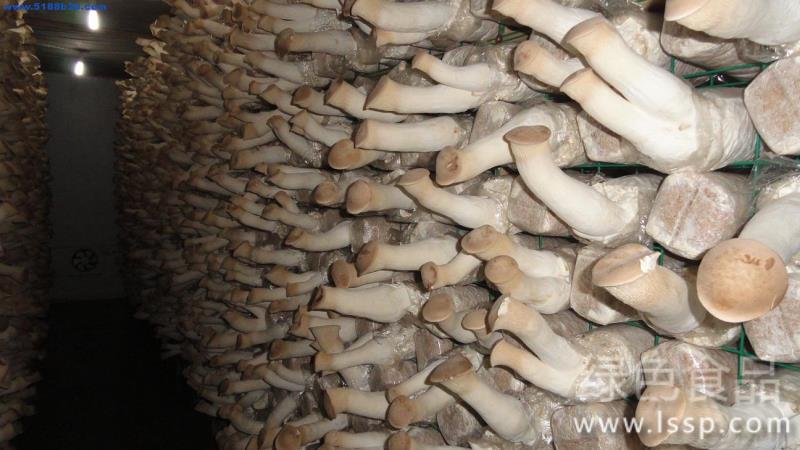
Tips for Increasing Edible Mushroom Yield: Special Methods Help Boost Production
"Little Tips" for Increasing Edible Mushroom Yield Using Special Methods
条件筛选