-
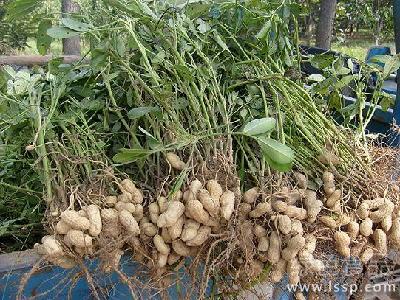
What are the key points for saving peanut seeds? Do these well for a bumper harvest and increased income next year
Ensuring a bumper harvest and increased income next year: key points for saving peanut seeds
-

How to increase the survival rate when propagating geraniums
Geraniums are mainly propagated by cuttings. To increase the survival rate, you must master the following points: (1) Selection of cuttings. Choose branches that are solid inside and have a small cut surface as cuttings. The specific method is to pinch off the growing tip of the mother plant in advance, and after new side branches emerge, cut the branch from the base of the new side branch, close to the mother branch. (2) Cutting time. Cuttings are generally taken in mid-September. If the cuttings are not newly grown side branches, the cut cuttings must be left to dry for at least a whole day.
-
Mushrooms can achieve increased yield with traditional fertilization methods
To achieve high mushroom yields, appropriate supplementary fertilization is essential. Based on years of practical experience by mushroom growers in many places, the following nine traditional fertilization methods have proven to have excellent yield-increasing effects. Mushroom growers are encouraged to try them in practice. Applying mushroom soup. Collect mushroom stems and broken mushrooms left over from harvesting and processing, wash them clean, cut them into thin slices, add 1--1.5 kg of water per kg of material, boil for 15 minutes, take the filtrate and dilute with water to 10--15 kg, and spray on mushroom beds of 30--40 sq m. Use during the peak fruiting period,
-
Interplanting autumn soybeans in rice paddies yields good increases in both output and income
According to trials: after the mid-season rice harvest, by using the temperature and light conditions in the field, planting an additional season of autumn soybeans can increase soybean yield by 60-120 kg/mu, with economic income of 150-420 yuan/mu, giving a relatively good effect of increasing both output and income, and it is suitable for extension in ratoon rice areas below 400 m in altitude. The key technical points are as follows: 1. Suitable site and good varieties: fields below 400 m in altitude with no water for retaining ratoon rice, as well as all rice seed production fields, can be planted. After the rice grains have set, open ditches to drain water; after the rice harvest, promptly clear weeds and rice stubble, without plowing, and according to
-
Mushrooms can achieve increased yields with traditional fertilization methods
Applying mushroom soup. Collect and wash the mushroom bases and broken mushrooms cut off during harvesting and processing, cut them into thin slices, add 1-1.5 kg of water per kg and boil for 15 minutes, take the filtrate and dilute it with water to 10-15 kg, and spray it on 30-40 sq m of mushroom beds. Applying it at the peak of fruiting can make the fruiting bodies thick and fleshy and extend the peak fruiting period. Spraying plant ash. Soak 25 kg of plant ash in 50 kg of water, filter it, and spray it to prevent mushrooms from turning red. Spraying chemical fertilizer solution. Take 0.1%-0.2% urea solution, every
-
Angelica sinensis with shade net coverage: high yield increase and quality improvement benefits
The shade cultivation technique for Angelica sinensis starts from the three-leaf stage of its growth (that is, from mid-May to early August after summer begins, when temperatures are high and light is intense). A shade net with a 50% shading rate is timely placed over Angelica sinensis, providing a suitable micro-environment of moderate temperature, weak light, and moisture that mimics its original ecological growing conditions. By lowering temperature, increasing humidity, and reducing light, it reduces the early bolting rate of Angelica sinensis in dry flatland cultivation to about 30%; moreover, shade cultivation of Angelica sinensis also helps prevent and reduce pest and disease damage, thus improving the quality of Angelica sinensis.
-
Planting dry Pinellia has high benefits and is a good project for farmers to increase income.
According to statistical analysis of market surveys of major medicinal herb markets and production areas across the country, there is currently a large gap between supply and demand for dry Pinellia, with a strong trend, and the price has risen to 45-52 yuan per kg, with a favorable outlook. According to Zhao Xijin, a traditional Chinese medicine pharmacist at the Anguo City Traditional Chinese Medicinal Materials Association in Hebei, wild resources of dry Pinellia are gradually decreasing, and the seed quantity per mu for planting dry Pinellia is relatively large, about 30-40 kg, with high planting costs (over 600 yuan). Herb farmers are generally unwilling to develop it on a large scale and only plant it on a small scale, cultivating their own seedlings before expanding. This situation has caused
-
Analysis of Cotton Production Misconceptions and Ways to Increase Yield Through Plant Protection (Part 5)
For more than a decade, with the widespread promotion of genetically modified insect-resistant cotton, cotton bollworm is no longer enough to make cotton farmers turn pale at the mention of pests. However, Fusarium wilt and Verticillium wilt have always been the "tightening band" giving cotton farmers headaches, aphids and red spider mites "stir up trouble" every year, cotton stink bugs and tobacco whiteflies have become increasingly rampant in recent years, and together with cotton bollworm suddenly breaking out in certain years, pesticide control of cotton is still an unavoidable matter. At the same time, there are also the following two serious problems in pest and disease control, which directly lead to
-

-

How to increase velvet antler production? Practical farming techniques shared
How to increase velvet antler production
条件筛选