-
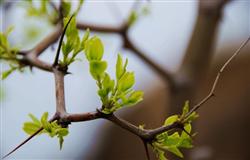
What are the key points of jujube tree pruning and pinching technology?
How do you pinch jujube trees? How many rounds should jujube tree pinching be divided into? Please explain in detail. Pinching jujube trees can mainly effectively reduce unnecessary vegetative growth of jujube trees, save nutrients, ease the contradiction in nutrient allocation between growth and fruiting, and promote reproductive growth. Second, it can effectively improve the light conditions within the canopy and increase the photosynthetic...
-
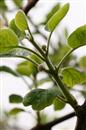
Kiwifruit Growing Techniques: How to Pinch Back Kiwifruit in Summer?
How to pinch back kiwifruit in summer? Please explain the method. For pinching back kiwifruit in summer, you can refer to the following methods: Pinching back young trees. For newly planted trees of the current year and 2-year-old young trees, shaping is generally not needed. After selecting and keeping 1 to 2 strong canes, pinch once when the cane grows to 80 cm, and then let it grow freely....
-
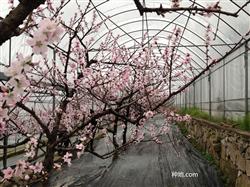
Peach Tree Summer Pinching Methods and Technical Key Points
Peach trees bloom very profusely; how should flower and fruit thinning be carried out? What should be noted? Peach trees bloom heavily and have a high fruit-setting rate, but too much fruit set can affect fruit quality, reduce commercial value, and can also weaken tree vigor and shorten lifespan. Flower and fruit thinning should be done in a timely manner, and earlier is better than later. First thin buds and flowers, then thin fruitlets 1-3...
-
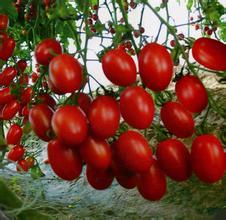
Detailed Explanation of the Continuous Pinching and Pruning Method for Cherry Tomatoes
The tomato plant is naturally a sprawling crop, but in cultivation it is mostly grown vertically on trellises. As a result, as the plant grows and extends, the parts farther from the ground perform less ideally in flowering, fruit setting, and fruit enlargement, making it impossible to increase yield. To address this unfavorable situation, the continuous pinching method can be used, so that...
-

What are the control methods for the jujube inchworm pest?
This insect, also known as the jujube looper, occurs commonly and is widely distributed across all jujube-producing regions of China, where its larvae feed on tender buds, flower buds and leaves. In years of severe outbreak, it can strip the jujube buds and leaves completely bare, resulting not only in no yield that year but also affecting fruit set the following year. [Occurrence pattern] This insect has 1 generation per year. It overwinters as pupae in the soil layer near the tree trunk. The following March, adults begin to emerge from the soil and eclose, with April being the peak period of eclosion and May the final period, the entire eclosion period lasting as long as about 60 days. The egg stage lasts 10-20 days, and hatching begins in mid-April,
-
Introduction to Xinchuanzhongdao, a Promising Early-to-Mid Season Peach Variety
Xinchuanzhongdao is a new variety selected by Ikeda Masamoto of Nagano Prefecture, Japan, from the Kawakamijima White Peach. In 1996, our orchard introduced it directly from the Zhengzhou Fruit Research Institute. After trial plantings and observations at multiple sites across Xiangyun County, it was determined that this variety has strong cultivation adaptability, early fruiting and high yield, large fruit, attractive full-red coloration, high firmness, excellent storage and transport tolerance, rich aroma, and outstanding quality, with a wide range of suitable growing areas. The fruit ripens in mid-to-late July, making it a large, full-red, high-quality premium peach variety between the early and mid-season types, with high economic value and broad development prospects.
-
Detailed Explanation of the Biological Characteristics of Xinchuan Nakasu Peach
I. Morphological Characteristics The tree is vigorous and relatively spreading. After open-center training and pruning, a 3-year-old tree is 260 cm tall, with a trunk circumference of 25 cm and a canopy diameter of 3 x 2.6 m. New shoots are green, 1-year-old branches are reddish-brown, and the trunk and perennial branches are grayish-brown. Leaves are dark green with a smooth surface. Leaf glands are kidney-shaped, small and inconspicuous. II. Biological Characteristics (1) Phenological Period In the Yangtze River basin, the flower bud swelling stage is in early to mid-March, the full bloom stage is from late March to early April, the flowering period lasts 57 days, and the fruit ripens in mid-to-late July. The growth
-
Introduction to the New Early-Mid Season Peach Variety Xinchuanzhongdao
Xinchuanzhongdao is a new variety selected by Mr. Ikeda Masamoto of Nagano Prefecture, Japan, from the Chuanzhongdao white peach. In 1996, our orchard introduced it directly from the Zhengzhou Fruit Research Institute. Through multi-point trial plantings and observations across various locations in Xiangyun County, it has been found that this variety has strong cultivation adaptability, early fruiting and high yield, large fruit size, full red and gorgeous coloration, high firmness, excellent storage and transport tolerance, rich and fragrant flavor, and exceptional quality, with a wide range of suitable planting areas. The fruit ripens in mid-to-late July, making it a large-fruited, fully red, high-quality premium peach variety between the early and mid-season varieties, with high economic value and broad
-
What are the characteristics of the economic traits of the Xinchuan Zhongdao peach fruit?
Economic traits of the fruit: The fruit is large, with a single fruit weight of 260-350 g. It is round or oval, with a flat fruit apex and an inconspicuous suture. The fruit is bright red with a gorgeous color, the fruit surface is smooth, and the fuzz is sparse and short. The flesh is yellow-white, pale red near the pit, semi-clingstone, with a small pit, and an edible rate as high as 97%. The flesh is crisp and firm, and juicy. At room temperature, it can be stored for 1015 days, has good marketability, and is extremely tolerant of storage and transport. The fruit has a sugar content of more than 13.5%, low acidity at 0.15%, is sweet and sour and palatable, with a distinctive flavor and rich aroma, and
-
Detailed Explanation of the Occurrence Patterns and Control Methods of the Jujube Inchworm
The jujube inchworm, also known as the jujube spanworm, dingmenchi, or gongyao worm, belongs to the order Lepidoptera, family Geometridae, and is one of the major pests of jujube leaves. I. Occurrence Patterns The larvae damage the tender buds, leaves, and flower buds of jujube. It has 1 generation per year, overwintering as pupae in the soil 10-15 cm deep around the tree canopy. In early March of the following year, they emerge as adults. After mating, they lay eggs. The female adults are wingless and must crawl up the tree trunk to lay eggs. After an egg stage of about 22 days, from late March to early April, the larvae hatch and climb up the tree to cause damage. Larvae in the 1st to 3rd instars have a small appetite and mainly feed on tender leaves.
条件筛选