-
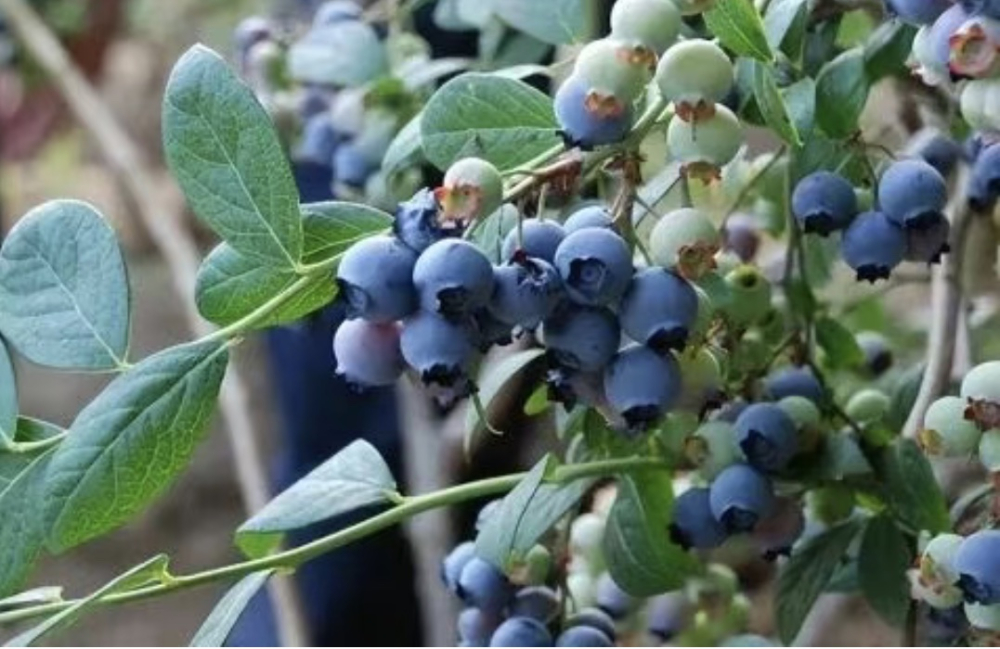
Blueberry New Variety Rights Dispute Escalates: Noposion and Meiming Agriculture Sue Each Other for Hundreds of Millions Combined
Nongxun.net reported on July 28 - Amid a dispute over blueberry new variety rights and seedling quality, the legal battle between Shenzhen Noposion Crop Science Co., Ltd. and Yunnan Meiming Agriculture Co., Ltd. continues to escalate. According to Noposion's latest announcement, the cumulative amount claimed in the mutual lawsuits between the two parties has reached
-
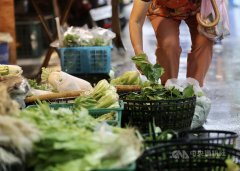
Heavy rain causes 150 million yuan in agricultural losses; Council of Agriculture closely monitors fruit and vegetable price fluctuations
The Council of Agriculture stated that agricultural losses from the heavy rain have reached NT$150 million, with melons and leafy vegetables particularly affected in Yunlin County, Tainan and Pingtung areas. It will assist county and city governments with agricultural loss procedures and guard against fruit and vegetable price fluctuations. The Ministry of Economic Affairs today held the central flood
-
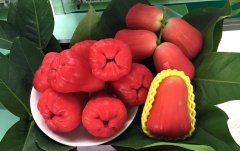
New wax apple variety "Honey Peach Wax Apple" from Taiwan, China hits the market, developed by the Kaohsiung Agricultural Improvement Station
The Kaohsiung Agricultural Improvement Station has bred a new wax apple variety, "Kaohsiung No. 2 - Spring Peach," which is currently the largest-fruited wax apple variety, with an appealing pink-peach color, known as the "Honey Peach Wax Apple," and its fiberless texture makes it very suitable for the elderly; it is now available in small quantities. Kaohsiung District Agricultural
-
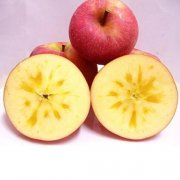
Where are sugar-core apples produced in China and how do they form? Real and fake pictures teach you to tell them apart
The sugar-core apple has not been on the market for very long. Some people say the sugar-core is a new variety of apple, while others say it is not. So what exactly is the sugar-core? Where in China are sugar-core apples grown, how are sugar-core apples formed, and what is the difference between real and fake sugar-core pictures?
-

Policy grain purchases hit a new high in 2015, reaching 175 million tonnes
The 2016 Central Grain Reserves Work Conference was held in Beijing on the 5th. According to the relevant person in charge of Sinograin, in 2015 Sinograin purchased a total of 175 million tonnes of policy grain for the whole year, exceeding the 100-million-tonne scale for the third consecutive year and setting a new record high, giving full play to its role as the main force in purchasing and storage.
-
The annual cost of manually removing water hyacinth in China reaches as high as 100 million yuan
Wang Yanliang, deputy director of the Department of Science and Technology Education of the Ministry of Agriculture and director of the General Station of Agricultural Ecology and Resource Protection, pointed out in his speech that invasive alien species are showing a trend of rapid growth in China, with nearly 50 new invasive species added in the past 10 years, and more than 20 dangerous invasive species have successively broken out and caused disasters over large areas in China.
-
China's Annual Grain Loss Reaches 70 Billion Jin; Hidden Waste Should Not Be Underestimated
Starting in 2011, Santai Flour Co., Ltd. in Taihe County, Anhui Province launched a "grain bank" business, providing farmers with grain storage and exchange services, solving the problem of high grain loss during farmers' grain storage. The photo shows the Gaomiao branch of the Santai Grain Bank. Xinhua News Agency
-
China's high-mountain vegetable sown area reaches 22 million mu
China's high-mountain vegetable sown area reaches 22 million mu, becoming an important driver of poverty alleviation in mountainous areas. Xinhua News Agency, Yinchuan, July 29 (Zhang Liang, Yang Wenxi) - Qian Keming, Chief Economist of the Ministry of Agriculture, recently revealed at the 6th China (Ningxia) Horticultural Expo that China's high-mountain vegetable sown area
-
China's feed demand has already reached 2.5 times its grain demand for human consumption
In recent years, China's per capita grain ration dropped from 207.1 kg in 1986 to 148 kg in 2010, a decrease of 28.5%, but at the same time, per capita consumption of meat, eggs, milk and other foods has been climbing steadily. For more than 30 years, Ren Jizhou, a grassland science expert in China and an academician of the Chinese Academy of Engineering,
-
Invasive alien species reach 529, costing China 57 billion yuan a year
More than 500 invasive alien species, devouring 57 billion yuan a year. By Zhang Wen, National Business Daily, from Beijing. The invasion of alien organisms, while severely disrupting ecosystems, has also brought China average annual economic losses of more than 57 billion yuan. The Ministry of Agriculture announced on July 29 that
条件筛选