-

How to scientifically improve the nutritional level of pigs
1. Nutrition of gilts. The nutrition of gilts and the related nutritional reserves are important factors affecting the lifelong performance of sows, and their nutritional level should ensure the body's needs during the reproductive period after maturity. Starting from a body weight of 45 kg, the diet level should be 0.1% higher than the usual growing-finishing pig diet to enhance the skeletal development of gilts. After gilts reach about 150 days of age and enter the replacement gilt herd, their growth should be controlled, with restricted feeding (2.3-2.8 kg/day) of a medium-energy, high-protein diet to reduce
-
Biotechnology Assists Lily Variety Improvement
China is the natural distribution center of the genus Lilium. On this land, there are 47 species and 18 varieties of native lilies, which hold a very important position in the improvement of lily varieties worldwide. However, currently less than half of the original lily species are used in breeding, and there are still many original lily species with special superior traits that urgently need further development and utilization. Researchers at China's scientific research and teaching institutions have conducted a detailed analysis and study of the progress in lily variety improvement and biotechnology research in China. China's lilies have obvious advantages: Lilium dauricum, Lilium distichum, and others
-
How can the water color of eel culture ponds be improved?
During the culture process, the pond water color changes unpredictably, indicating that phytoplankton have died in large numbers, zooplankton such as rotifers and water fleas have increased sharply, dissolved oxygen and pH have decreased, harmful gases have increased, eels have reduced feeding, and floating head has appeared, leading to disease and death. The improvement methods are as follows: 1. Light green turns transparent: This phenomenon is caused by massive reproduction of zooplankton such as rotifers and water fleas. Trichlorfon at 0.5 ppm plus potassium permanganate at 2 ppm can be used to kill excess rotifers and water fleas, or a large water exchange can be used; stock 500 g or more per fish of bighead carp per mu
-
Gui Green No. 1: Introduction to a national-level improved tea tree variety with Guangxi's independent intellectual property rights
Tea is an important economic crop in China, and in particular one of the pillar industries for poverty alleviation and prosperity in the mountainous areas of Guangxi. With the rise of organic tea (green food) production, some varieties with resistance to pests and diseases and strong adaptability have received attention. Varieties determine characteristics such as the sprouting period of tea trees, processing suitability, quality traits and resistance. To develop tea production, tea products must be early to market, distinctive, of superior quality and favorable in price to be in a position to seize the market. Therefore, to make Guangxi's tea industry strong and large, we must start from the "source" - adopting superior
-
Rationalized Layout of Improved Tea Cultivars in Liandu District
Liandu District of Lishui City is located in the heart of southwestern Zhejiang, in the middle reaches of the Ou River. The area is embraced by green mountains and clear waters, with extremely rich ecological resources. It is a national ecological demonstration zone with a forest coverage rate of over 80%, and is known as "Green Liandu." Liandu District has four distinct seasons and a mild climate, belonging to the mid-subtropical monsoon climate zone. The soil is mainly red-yellow soil and lithological soil, with a pH value mostly between 4.5 and 6.5, which is very suitable for tea cultivation, and the tea produced is of excellent quality. 1. Overview of tea production and improved tea cultivar structure in Liandu District
-
What are the improved clonal tea tree varieties? Detailed variety introduction
Yingshuang: small tree type, medium-leaf class, belongs to the early-budding group. The spring tea budding period is generally in early to mid-March, with budding density, etc. It has strong bud-growing ability, abundant downy hair, strong tenderness retention, and high yield. It is suitable for making famous and high-quality green teas; the finished product has fine, tight strips, a tender green and glossy color, a high, fresh and lasting aroma, a strong, fresh and refreshing taste, and a tender green, clear and bright liquor color. When made into Longjing, it has good color and high economic benefit. The Zhejiang Province Improved Variety High-Efficiency Tea Garden Demonstration Base - Yingguiyan five thousand mu large-area per-mu output value reached nearly ten thousand yuan (1999), and what was used was the improved clonal variety "Yingshuang." Longjing 4
-
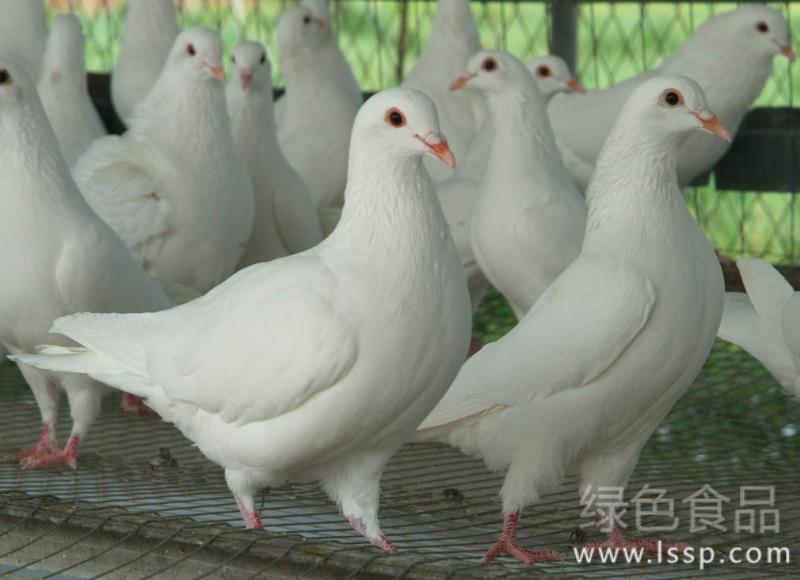
Meat pigeon farming has a long cycle; four synchronizations help you improve farming efficiency
Meat pigeon farming has a long cycle; "four synchronizations" improve meat pigeon farming efficiency
-
Detailed Explanation of Key Techniques for Transplanting Improved Clonal Tea Varieties
1. Site selection. For transplanting improved variety seedlings, the site is generally chosen on terraced land, gentle slopes and flat dry land, preferably with deep soil layers, good structure, shelter from wind and facing the sun, and abundant water sources. 2. Land preparation. Complete 10-15 days in advance. Row planting, bed width 1 m; deep furrows with hanging trenches are required, furrow depth 25-30 cm, width 24-30 cm, apply base fertilizer at the bottom of the furrow. The base fertilizer is mostly decomposed cake fertilizer and special tea fertilizer, with a per-mu application rate of 150 kg cake fertilizer and 50 kg special fertilizer; after fertilizing, backfill the furrow with topsoil, keeping the soil
-
Key points of tea cultivation: selecting improved varieties and reasonable close planting
1. Selecting improved varieties Seeds (seedlings) are the basic means of production in tea cultivation, and any cultivation method is built on the improved varieties of a given period. Since the 1980s, tea cultivation has entirely adopted the close-planted, dwarfed, no-tillage method. Because individual space is reduced and population density increased, it is all the more necessary to match this with suitable improved varieties in order to achieve the desired results. For example, Fuding Dabaicha, Qianmei 101, Qianmei 303 and others are all fine tea varieties suitable for close planting. 2. Collection and
-
Key Points of High-Yield Cultivation and Improved Techniques for Lilies
Lily yields are unstable; some plots suffer "disaster," with early seedling death and almost no yield. To achieve high yields in lily cultivation, focus on the "four improvements." 1. Replace poor-quality seed bulbs with high-quality seed bulbs. For lilies, select superior varieties such as Longya lily (Lilium brownii var. viridulum) as seed. The typical features of Longya lily are: bulbs tightly clasped, scales thick and fleshy at the lower part, pointed and curved at the upper part, shaped like dragon claws, colored like ivory. Leaves on the aerial stem are large and sparse, with no bulbils and no daughter bulbs. Lilies need to be purchased from other locations for seed, which is an important measure for rejuvenation. But pay attention to purchasing from sea
条件筛选