-
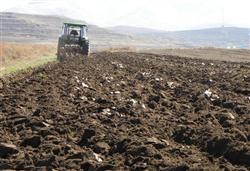
How can licorice (Glycyrrhiza) be grown for high yields?
How can cultivated licorice achieve high yields? What should be noted? We ask experienced readers to share their advice. Zhongdiwang has compiled the techniques for cultivating licorice, listed below for readers' reference. Soil selection for planting licorice: licorice prefers a dry climate and tolerates severe cold, and is suitable for deep soil...
-
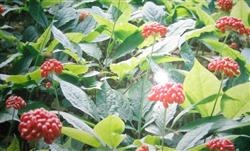
How should ginseng and American ginseng be fertilized when grown?
How should ginseng (American ginseng) be fertilized when grown? Please give an introduction. Ginseng and American ginseng are perennial herbaceous perennials with strict fertilizer requirements. Research by experts has found that they are potassium-loving plants, and their potassium uptake is far greater than that of nitrogen and phosphorus, meaning potassium is an important factor determining whether ginseng achieves high yields. Moreover, as the growing years increase...
-
Goji berry (Lycium barbarum) has wide adaptability and is simple to plant, so it can be grown in many places.
Goji berry has strong sprouting ability. Every year from April to August, while it sends out many new branches, it also produces suckers from the roots. Goji berry is highly cold-tolerant, light-loving, and salt-alkali tolerant. Its propagation is divided into two types: sexual propagation and asexual propagation. For sexual propagation, soak the fruit in water for 1-2 days, and after it softens, wash out the seeds and dry them in the sun. Sow in late March, cover with 1 cm of soil,...
-

Detailed Explanation of High-Quality and High-Yield Cultivation Techniques for Log-Grown Lingzhi (Ganoderma)
Lingzhi (Ganoderma) is a precious medicinal fungus. Modern medical research has demonstrated that lingzhi possesses multiple functions such as cancer prevention, anti-cancer and anti-aging properties, and the development and application of lingzhi has attracted widespread attention. Longquan City is a key production area for lingzhi; in the early 1990s, trials of short-log sterilized-substrate cultivation techniques for lingzhi were already underway, and these techniques have been continuously refined through production extension and application. By 2002, the city's log-grown lingzhi cultivation volume reached 3000 cubic meters, with a total output of 120 tons, accounting for about 1/4 of the national total output, and achieving an output value of 700
-
High-yield Cultivation Techniques for Lingzhi (Ganoderma lucidum) Grown on Sterilized Linden Wood Logs
I. Production Season: Based on the suitable temperatures for the growth of lingzhi mycelium and fruiting bodies, in both northern and southern regions, wood can be felled in early December of the lunar calendar, cut and bagged in mid-December, sterilized, and inoculation completed by late December. Around Qingming (Tomb-Sweeping Day) of the following year, the logs are buried in the field, and 2-3 batches of lingzhi can be harvested that same year. However, felling must not be later than Qingming, because wood felled after Qingming has high moisture content, the bark tends to fall off, and nutrient loss makes it unsuitable for production. Logs inoculated around Qingming can only produce 1-2 batches of lingzhi that year. II. Wood Requirements: All tree species suitable for log cultivation of shiitake mushrooms and wood ear mushrooms can be used
条件筛选