-
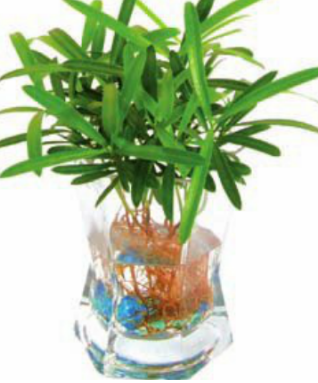
The Correct Methods for Hydroponic Growing and Pruning of Buddhist Pine
Buddhist pine (Podocarpus macrophyllus), an evergreen tree genus, is known by people as Luohan Shan, Jiangnan Bai, and other names. Its tree form is beautiful, and its crown is large and spreading; it is mainly grown in the Jiangsu-Zhejiang region, while household growing is mainly of dwarf plants, mostly as potted specimens. How to correctly grow Buddhist pine hydroponically: key points for hydroponic growing of Buddhist pine, 1. Sow the seeds in river sand to raise seedlings.
-
Detailed Guide to Growing Pinellia ternata: Planting Methods and Difficulty Analysis
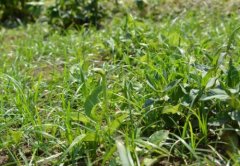
The tubers of Pinellia ternata are the source of the Chinese medicine "Banxia" (Pinellia ternata). Because it is toxic when used raw, it is mostly used only after processing. This image is taken from the Traditional Chinese version of Wikipedia and is not a specimen I grew myself. The better-known relative of Pinellia ternata is generally the plant commonly known as "plowshare grass," Typhonium divaricatum (Typhonium blumei).
-

What Are the Economic Benefits of Growing Pinellia ternata (Drought Pinellia)? A Detailed Analysis in One Article
Pinellia ternata has a very short growing period: planted in April, it can be harvested in August or September. The growing period is between 130 and 150 days. The yield of Pinellia ternata is 200 kg per mu; calculated at a market price of 40 yuan/kg, the benefit is around 8,000 yuan per mu. In addition, Pinellia ternata prefers a shaded environment and is suitable for intercropping with trees, fruit trees, or grain crops. This intercropping model makes full use of the land and achieves the double benefit of both grain and medicine, both forest and medicine, or both fruit and medicine.
-
Growing environment requirements and suitable cultivation conditions for Pinellia ternata
Pinellia ternata is a shallow-rooted plant that prefers fertile soil, and was originally mostly found growing wild on moist, loose, and fertile sandy loam or humus soil. It prefers a mild, humid climate and a shaded environment, is afraid of drought, and avoids high temperatures. In summer, it is best grown in a semi-shaded, semi-sunny environment; it grows relatively well when soil moisture content is 20%-40%; drought and water shortage easily cause the seedlings to fall over. Generally, with changes in the growing environment, it can fall over 1-3 times a year. For Pinellia ternata, falling over is, on the one hand, an adaptation to adverse conditions, and more importantly, it increases the number of bulbils, that is, it carries out one round of asexual
-
Detailed Explanation of the Morphological Characteristics and Suitable Growing Environment of Pinellia ternata
[Morphological Characteristics] A perennial herb, 15-30 cm tall. The tuber is spherical or flattened-spherical. Leaves are basal, with long petioles; seedlings have a single leaf that is ovate-cordate, with a pointed tip and entire margin; from the 2nd and 3rd years onward, the leaves are trifoliolate compound leaves, elliptical to lanceolate. On the inner side of the lower part of the petiole, bulbils are produced, which can be used as propagation material. Monoecious; flowers are small and pale green. [Suitable Growing Environment] It prefers moisture and fears drought; it is averse to strong light; it is shade-tolerant and cold-tolerant, and the tubers can overwinter naturally. It is advisable to choose moist, fertile, deep, neutral sandy loam soil.
-
Cultivation method for growing Pinellia ternata in three crops a year
The Chinese medicinal herb Pinellia ternata can be grown in three crops a year. Planted in April, harvested in July; planted in July, harvested in October; planted in October, harvested in April of the following year. Three crops of Pinellia ternata can bring in more than 5,000 yuan per mu. Site selection and land preparation: For planting Pinellia ternata, loose and fertile soil is best. In combination with land preparation, apply 3,000-5,000 kg of farmyard manure, 25-30 kg of superphosphate, and 1,000 kg of plant ash per mu; ammonium bicarbonate must not be applied. After deep ploughing and fine harrowing, make beds 1.3 m wide and 17 cm high, with ditches 30 cm wide. In the ditches, intercropping can be done with
-

What are the precautions for growing pineapple? Read this article to understand
Precautions for growing pineapple
-
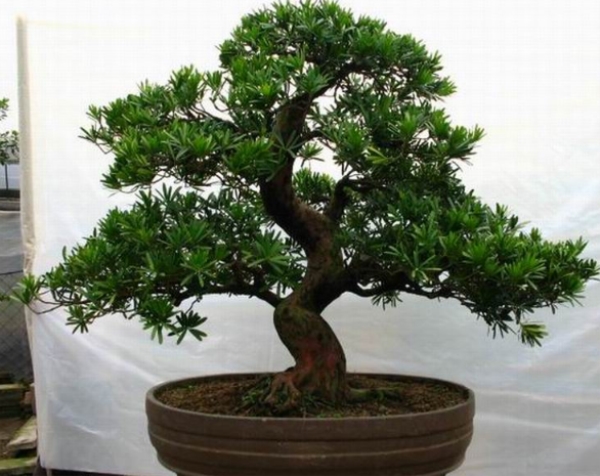
What are the key points to note when growing Buddhist pine (Podocarpus macrophyllus)?
Because Buddhist pine has a well-developed root system and strong sprouting ability, and stays green with foliage throughout all four seasons, it consumes a large amount of nutrients during its annual growth. If grown for two years, the walls of the pot are basically filled with fibrous roots, and the fertility of the soil is basically exhausted. Therefore, during its growth, it is essential to repot frequently to maintain the nutrient supply
-

What are the growing conditions for Pinellia ternata? A detailed explanation of its environmental requirements
Growing conditions for Pinellia ternata
-
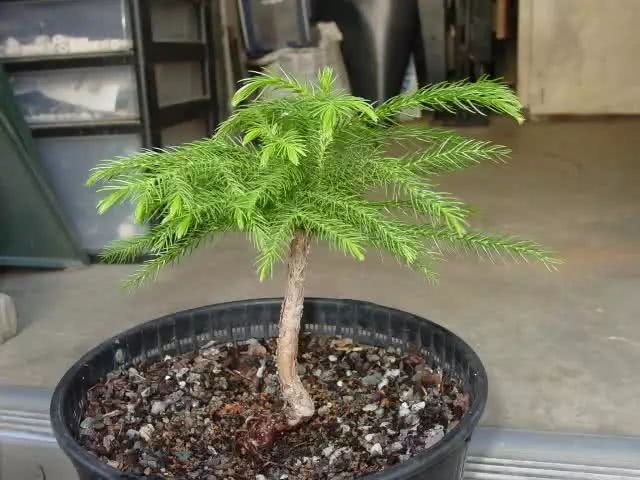
Growing a Norfolk Island pine as a potted plant is easy, and it stays green all year round indoors
The Norfolk Island pine (Araucaria heterophylla) was originally a tree that could grow to over 10 m tall, but it has now also been cultivated into a very delicate and beautiful potted tree, very suitable for growing in a spacious living room or a large room, and it is especially easy to care for. The Norfolk Island pine rather likes sunlight, ...
条件筛选