Growing a Norfolk Island pine as a potted plant is easy, and it stays green all year round indoors
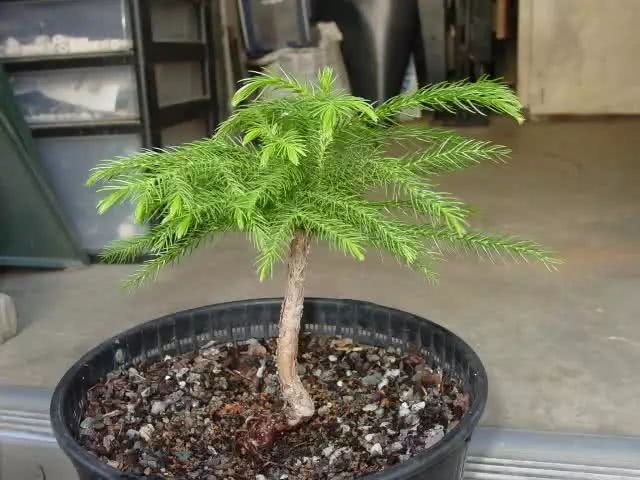
The Norfolk Island pine was originally a tree that could grow to over 10 m tall, but it has now also been cultivated into a very delicate and beautiful potted tree, very suitable for growing in a spacious living room or a large room, and it is especially easy to care for. The Norfolk Island pine rather likes sunlight, but young Norfolk Island pines prefer a cool, shaded environment, which suits growing it at home perfectly.
The Norfolk Island pine is originally a tropical plant native to the South Pacific region, fond of a warm and humid environment all year round, and attention must be paid to protecting it from the cold in winter.
Grown indoors as a potted plant, the Norfolk Island pine does not need much light, grows especially slowly, and basically needs hardly any management. It may grow only a few cm a year, its plant shape can be kept at just over 1 m, and it can also be grown into a fine bonsai plant.
Younger Norfolk Island pines are very suitable for growing in semi-shade; they can grow well even in a bright environment. The growing environment should be kept ventilated and airy, and a closed-in space at home should be avoided; it can be placed by a windowsill with appropriate scattered light.
When caring for the Norfolk Island pine in summer, it needs appropriate shading to avoid scorching sun or long periods of direct sunlight. It is a tropical forest tree, so in winter it needs protection from the cold and from frost, and the minimum care temperature should be kept above 5 degrees.
Although the Norfolk Island pine fears overly strong light, it cannot be grown in a completely shaded place either, otherwise its branches and leaves will grow leggy and become very thin and weak. It does not need much management.
In the spring and summer growing season, the Norfolk Island pine needs the soil kept appropriately moist, but the potting soil should not be allowed to become waterlogged, otherwise the roots and stems will easily rot. During cultivation, long-term drought in the soil should be avoided, otherwise the branches and leaves will easily dry out and turn yellow, and the leaves will become very brittle.
In spring and summer, a little diluted liquid fertiliser can be added regularly; the concentration of the fertiliser must not be too strong, as this can promote more beautiful branches and leaves on the Norfolk Island pine.
The soil for growing the Norfolk Island pine should be a loose, airy, well-draining sandy soil, and appropriate river sand or perlite can be added. For the soil, leaf mould or peat soil can be chosen, and for the pot, a somewhat heavier container should be chosen, such as the common ceramic pot or clay pot.