-
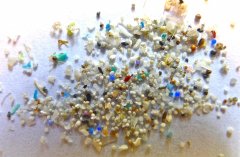
Bioplastics do not use petroleum and degrade very quickly. Is there a solution to the plastic waste crisis?
Plastic waste crisis? What can be done? Bioplastics do not use petroleum and degrade very quickly. Currently, a new study from Tel Aviv University in Israel describes the process technology for making bioplastic polymers derived from microorganisms that feed on seaweed.
-

Schumacher may become a vegetative state patient, wife plans to spend over a hundred million yuan to build a high-grade sickroom
From his injury on December 29 last year to now, Schumacher has been in a coma for a full three months, and Corinna has been by the side of the racing king in a hospital in France. Although former F1 doctor Hartstein believes that fans should prepare for the worst and said that Schumacher's condition was misdiagnosed
-

How is reagent-grade starch made from potatoes?
Using potatoes, reagent-grade starch can be produced with low cost and high economic benefit. Production method 1. Washing and making potato pulp: Wash the potatoes with water 2 to 3 times, remove all mud and sand, and cut away potato pieces with hoe injuries and rotten holes. Start the crusher, feed in the washed potato pieces, and the potato pulp will flow out immediately. Because fresh potatoes themselves contain about 75% water, no additional water is needed when pulping. 2. Filtering the pulp and rinsing the starch: Filter the potato pulp by machine or by hand, and store the starch milk (water containing starch) in a tank to clarify. Wait for the starch in the tank to settle to the bottom
-
Detailed Explanation of Jujube Grading Standards: How to Grade Jujubes
Jujube fruit grading should be based on the quality and intended use of the jujubes, so as to meet the needs of different uses. Standards vary somewhat among different cultivars. Generally, jujube fruit grading can be divided into the following 4 grades. Special grade: fruit weight more than 20% greater than the average for the cultivar, and the fruits are relatively uniform, with thick flesh and unwrinkled surface, pure color with no uneven coloration, no moldy or mushy rotten fruits, and mechanically damaged fruits and diseased/insect-damaged fruits less than 3%, with a moisture content less than 25%. Grade 1: single fruit should reach the average fruit weight or slightly above, fruits uniform,
-
Introduction to First-Grade Superior Sweet Kernel Apricot Varieties: Fengren
Fengren Fengren was bred by the Liaoning Institute of Pomology in 1998. The fruit is flat-ovoid, with an average single fruit weight of 13.2 grams, and is freestone. The dry pit weight is 2.17 grams, the pit yield is 16.4%, and the pit surface is relatively convex. The average dry kernel weight is 0.89 grams, the kernel yield is 39.1%, and the kernels are thick, plump, and sweetly fragrant. The average annual kernel yield per tree for 5-10 year old trees is 4.4 kg, 38.5% higher than Longwangmao. The self-pollination fruit-setting rate is 2.4%, and it is extremely productive. It is the pollinator variety for Chaoren.
-
Introduction to the Longwangmao Cultivar, a First-Grade Elite Kernel Apricot Variety
Longwangmao is currently the only first-grade cultivar among the main kernel apricot varieties grown commercially in China, and is known internationally as "Dragon Emperor Large Almond." The fruit is oblate, with an average single-fruit weight of 18 g and a maximum of 24 g; the skin is orange-yellow and the flesh is thin; the stone is free. The pit yield is 17.5%, and the dry pit weight is 2.3 g. The kernel yield is 37.6%, and the average dry kernel weight is 0.8-0.84 g. The kernels are flat and plump, conical with a flat base; the kernel skin is brownish-yellow, and the kernel flesh is milky white, aromatic and crisp, with a slight bitterness. 5-
-
Detailed Explanation of Key Production Techniques for Grade AA Potatoes
I. Production Site Conditions 1. Environmental conditions: The atmosphere, soil and other conditions of the green food production base shall be monitored by an environmental monitoring agency designated by the provincial green food management department and meet the environmental standards for green food production sites. 2. Soil conditions: Choose light loam or slightly sandy soil with deep soil layers, loose structure and good drainage, with a pH value of 5.6-7.0. Flat land or gentle slopes are suitable, and low-lying plots must be avoided. For the previous crop, choose wheat or soybean stubble with autumn plowing, and pay special attention to avoiding plots where long-residual pesticides were used the previous year. Continuous cropping is not suitable.
-
Production Technology for Grade A Green Food Garlic in Dongping County
Green food refers to safe, high-quality, nutritious foods that follow the principles of sustainable development, are produced according to specific production methods, are certified by a specialized agency, and are permitted to use the green food label, being free from pollution. Grade A green food refers to products whose production site environmental quality meets the requirements of NY/T391-2000, which are produced in strict accordance with the green food production material use guidelines and production operating procedures, with limited use of restricted chemically synthesized production materials, whose product quality meets green food standards, and which are certified by a specialized agency and permitted to use the Grade A green food label.
-
How are Gastrodia elata processed and graded?
From early November to early April of the following year, Gastrodia elata is in its dormant period. During this period, Gastrodia elata can all be processed into finished medicinal material for sale. Generally, harvesting, planting and processing are done simultaneously, so that harvesting and planting are closely linked. The harvest period is divided into two seasons, winter and spring. The winter harvest is before the ground freezes, and the spring harvest is after the thaw and before sprouting (mid-April). To process the harvested Gastrodia elata, the following steps must be carried out: Grading: Jianma (arrow-shaped Gastrodia) varies in size. Grade 1 Gastrodia elata should be above 150 g; Grade 2 Gastrodia elata 70 g to 150 g; Grade 3 Gastrodia elata below 70 g; Grade 4 Gastrodia elata is damaged or insect-bored
-
What varieties are first-grade superior varieties of apricots for kernel use?
1. Longwangmao Among the apricot varieties for kernel use currently mainly cultivated in production in China, only Longwangmao is first-grade, and it is called "Longhuang Big Almond" internationally. The fruit is oblate, with an average single fruit weight of 18 g and a maximum of 24 g; the skin is orange-yellow and the flesh is thin; the stone is free. The kernel rate is 17.5%, and the dry stone weight is 2.3 g. The kernel yield is 37.6%, and the average dry kernel weight is 0.8-0.84 g. The kernel is flat and plump, conical with a flat base; the kernel skin is brownish-yellow, and the kernel flesh is milky white, fragrant and crisp in taste, with a slight bitterness. The average yield per tree at 5-6 years old
条件筛选