-

Over 400 billion yuan of state investment has gone into the Grain for Green program
As of now, the central government has invested a cumulative 405.66 billion yuan across 25 provinces (autonomous regions and municipalities) in the first round of the Grain for Green program, completing afforestation on 139 million mu of retired farmland and 309 million mu of supporting afforestation on barren hills and wasteland and closed-off mountain areas for forest cultivation, involving 32 million rural households and 124 million
-
Where Have the Talents of Agricultural Enterprises Gone? A Close Look at Five Realistic Problems
I. Where Did the Money Go? The Funding Predicament of Agricultural Enterprises Falling Before the Dawn - this is the most tragic scene of many agricultural investments. The Qingdao blueberry and Sichuan kiwifruit bases acquired by Lenovo, and the original operating enterprises behind them, were to some extent also suffering from a darkness-before-dawn style
-
A Hundred Million Mu of Rapeseed Flowers Bloom Across China: Where Does the Rapeseed Oil Go?
In early spring in March, the rapeseed flowers are blooming again, and the areas around cities and the ridges of the fields all turn golden yellow. Once the flowers finish blooming, freshly pressed rapeseed oil is about to hit the market. But this dark-colored oil, which carries the taste memories of the previous generation, is now nowhere to be found in today's shops and supermarkets.
-
China's rural hollowing-out trend is now a foregone conclusion
China, a great power with empty nests, is now a foregone conclusion! The Spring Festival has already become a hurried passerby in my rural hometown. After many years, I returned to my rural hometown in Zhoukou, Henan, China, during the Spring Festival. I do not know whether it is because I have seen too many new buildings in the big city, but the village felt very dilapidated. Some newly built buildings seemed
-
Four major changes in China's agricultural layout and production patterns
"Huguang ripe, the world fed," "grain transported from south to north," "facing the yellow earth with back to the sky" - these traditional impressions of grain production are now undergoing earth-shaking changes. First, grain-producing areas are rapidly shifting northward. The middle and lower reaches of the Yangtze River are a traditional grain-producing region, long known for the saying "Huguang ripe, t
-
Autumn grain harvest is now a foregone conclusion, with Shandong, Henan and other provinces reporting a steady stream of good news
A large corn field in the ten-thousand-mu demonstration area of Chengxinzhuang Village, Liugu Town, Hua County, Henan Province, where late-harvest technology is being promoted. Experts explain that for corn that is peeled, sun-dried and harvested late, each day's delay in harvest can increase corn yield by 10 kg per mu. Autumn is at its fullest, and across ten thousand miles of farmland, a picture of autumn grain harvest is spread everywhere
-
A bumper corn harvest is a foregone conclusion, but market risks warrant vigilance
Golden October is exactly the harvest season in Heilongjiang, and as far as the eye can see there are endless stretches of corn and soybeans. The vast black soil has upheld this region's status as China's largest grain-producing area through its bounty. A reporter recently followed an inspection team from Harbin to Suihua, through Bei'an, past Wudalianchi, as far north as Heihe, then back through Nenjiang, Nehe and Mo Banner in Inner Mongolia, and finally returning to Harbin via Qiqihar, Longjiang and Daqing, a journey of 2,500 kilometers. Through on-site surveys, visits to farming households, seed dealers and grain purchasers, and in-depth discussions with large-scale grain growers, planting associations, state-owned grain depots and processing enterprises, it was learned that the Northern Granary will again welcome a bumper year.
-
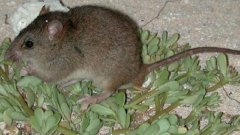
Climate-Driven Extinction of the Bramble Cay Melomys Highlights the Importance of Understanding the Environment
If we do not properly protect the environment, there will be fewer and fewer animals around the world, and the quality of the environment people live in will get worse and worse. The Australian government recently confirmed that the Bramble Cay melomys, which lived in the Great Barrier Reef area, is believed to have gone extinct between 2009 and 2014, becoming the world's first
-
What are the signs that a pesticide has gone bad? Here's how to store it properly
Pesticides are a type of chemical agent commonly used in our pesticide production process to control pest and disease infestation, and the state has very strict requirements for their use. In actual production, some farmers buy pesticides and leave them for a long time, by which point they have actually deteriorated or lost their efficacy.
-
Can You Still Eat a Hollow White Radish? Explained Clearly in One Article
After white radishes are stored for a long time, they become hollow, and many people still choose to keep eating hollow white radishes. So can you still eat a hollow white radish? 1. Can you still eat a hollow white radish? The main reason white radishes become hollow is that the organic matter inside them is broken down through
条件筛选