-
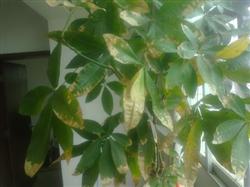
What to Do When a Money Tree Gets Leaf Blight? Detailed Prevention and Control Methods
What should you do if a money tree develops leaf blight? Please be advised to promptly remove and destroy diseased leaves as soon as they are found. During the cultivation of the money tree, care and management should be strengthened, with timely watering and fertilizing; in each growing season, a foliar fertilizer can be sprayed 2 to 3 times, such as 0.5% nitrogen potassium dihydrogen phosphate or 200 times dilution of dual-effect micro-element fertilizer. Seedlings...
-

What to Do When the Succulent White Peony (Graptoveria 'Titubans') Gets Leggy? Teach You the Correct Way to Handle It
What to Do When White Peony Gets Leggy
-

What to Do When the Spring Miracle Succulent Gets Leggy? Teach You the Correct Way to Handle It
What to Do When the Spring Miracle Succulent Gets Leggy
-

What to Do When a Pothos Gets Frostbitten? Teach You the Correct Remedies
What to Do When a Pothos Gets Frostbitten
-

What to Do When Jasmine Gets Pests? Effective Control Methods to Teach You
What to Do When Jasmine Gets Pests
-

What to Do When a Clivia miniata Gets Stuck Arrow? A Few Practical Solutions
What to Do When a Clivia miniata Gets Stuck Arrow?
-

What to Do If Haworthia cooperi var. truncata Gets Leggy? Causes and Solutions
What to Do If Haworthia cooperi var. truncata Gets Leggy
-

What to Do When a Phalaenopsis Orchid Gets Gray Mold? Symptoms and Control Methods
Gray mold is one of the most common diseases in Phalaenopsis orchid production, occurring frequently during their growing season, especially during winter and spring greenhouse cultivation, and the pathogen can infect any part of the plant. If cultivation management is neglected, it further favors the occurrence and spread of the disease, and in severe cases can cause a large number of fallen flowers and leaves, not only affecting the plant's blooming but also directly reducing the ornamental value and yield of Phalaenopsis orchids. (1) Conditions for Onset Warmth and humidity are the main conditions for the spread of gray mold in Phalaenopsis orchids. That is, when relative humidity is around 90% and temperature is
-
What should I do if my impatiens (touch-me-not) gets mosaic virus disease?
Impatiens mosaic virus disease occurs relatively commonly in Shanghai, Guangzhou, Nanning and other places in China. [Pathogen] Cucumber mosaic virus (CMV), see Gladiolus virus disease for details. [Symptoms] The new leaves at the top of the plant develop mosaic patterns, sometimes deformed; in severe cases, the shoot tips become rosette-like and the plant is stunted. [Occurrence pattern and epidemic characteristics] This virus has a very wide host range, and there are more than 60 species of aphids that transmit it, with the main vectors being Myzus persicae, Aphis gossypii, and corn leaf aphid (Aphismaidis), etc.
-
What to Do When Impatiens Gets Mosaic Disease? A Detailed Guide to Prevention and Control Methods
Symptoms The disease occurs at the root crown. At first the root crown turns brown and constricts, later causing damping-off symptoms. Generally, in flower beds during the plum rain season, and when potted flowers are too wet, the disease occurs more frequently. Pathogen PhytophthoranicotianaevanBredadeHaanvar.parasitica(Dastur)Waterhouse Transmission routes and disease conditions The pathogen overwinters in seeds or as mycelium and oospores with diseased plant debris in the soil, and spreads through wind
条件筛选