-

Jing'an in Jiangxi Successfully Cultivates the World's Rare White Tea
Recently, the world's rare tea variety -- white tea -- was successfully cultivated through stem cuttings in the experimental garden of the tea factory in Luowan Township, Jing'an County, Jiangxi Province. White tea is one of the world's rare and precious teas, belonging to the asexual, fruitless cultivated plant species. On the international market, 1 kilogram of white tea sells for as much as 5,000 yuan RMB, giving it relatively high economic value, but very few regions in our country produce white tea. According to Zheng Guangshui, who is responsible for white tea production management in Luowan Township, Jing'an County, the former Shijing Tea Factory in Jing'an County successfully introduced and transplanted 40 mu of white tea in 2000. Last winter's cuttings
-
Fully Enclosed Cutting Propagation Technique for Azaleas
1. Selecting and building the cutting bed: Choose a sheltered, shady, well-drained site to build the cutting bed. Cover it with a black shade net (60% to 70% shading rate); the sides of the shade net must hang down to the ground so that the entire structure is in a cool, shady environment. On the seedbed, set up a small arch tunnel with a center height of 40 cm. Cover it with a layer of plastic film, then a layer of black shade net (60% to 70% shading rate). 2. Laying the substrate: In early May, mix leaf mold and perlite (1:1) evenly and spread it in the seedbed to a depth of no less than 30 cm. Level it
-
Ninghua, Fujian successfully introduces "Taiwan Fat Ginger" and enjoys a bumper harvest
Li Xinfu, a ginger farmer in Xiasha Village, Zhongsha Township, Ninghua, Fujian, began introducing 15 mu of "Taiwan Fat Ginger" in 2004. Through two years of trial planting, he accumulated relatively rich successful experience in high quality and high yield. This year, he rented 100 mu of rice fields in Gaoshengbei to plant "Taiwan Fat Ginger", and fresh ginger has now begun to be sold on the market. The average yield per mu can reach 2000 kg. All products are exclusively sold by Longyan Taifu Agricultural Development Co., Ltd. at 2.4 yuan per kg. A net profit of more than 3000 yuan per mu can be obtained, with remarkable benefits. According to the characteristics of "Taiwan Fat Ginger" being tolerant of fertilizer, fond of shade,
-
How to raise pullets for egg production successfully? Detailed explanation of key technical measures
When chicks are 7 weeks old, they are moved into the growing house and enter the growing stage. Whether this stage is successful or not largely determines the physique and laying performance of laying hens after sexual maturity. Therefore, to raise high-yielding replacement laying hens that meet breed requirements, the key link is to do a good job in the feeding and management of growing chickens. 1. Do a good job in disinfecting the environment inside and outside the chicken house to create a relatively safe living environment for the flock. Many diseases on laying hen farms are caused by horizontal transmission. Therefore, disinfecting the chicken house, the surrounding environment, and the chickens themselves to cut off the links of horizontal disease transmission is an effective way to control disease occurrence and reduce chicken deaths. The specific technical measures taken are: ① Two weeks before introducing the chickens, first thoroughly clean and wash the chicken house, then wash and disinfect it with disinfectants such as Baidusha or Aidifu. ② Use formalin plus potassium permanganate for fumigation disinfection at a ratio of 30 ml plus 15 g, keep it sealed for 1-2 days, and pay attention to increasing the temperature and humidity of the chicken house to improve the disinfection effect. ③ One day before introducing the chickens, spray disinfect once with Youlüjing or iodine preparation disinfectant, and disinfect the floor with a 1%-2% caustic soda solution. ④ After introducing the chickens, carry out disinfecting with chickens present 1-2 times per week, alternating disinfectants to avoid the emergence of drug resistance. In seasons with frequent disease, disinfect 2-3 times per week. In hot summer, disinfect once a day, which can also play a certain role in preventing heatstroke and cooling.
-
Biotech pigs capable of producing a cerebral thrombosis treatment drug have been successfully bred by South Korean scientists
South Korean scientists have successfully bred "biopigs" that produce a cerebral thrombosis (cerebral hemorrhage) treatment drug through their urine. The South Korean Rural Development Administration recently stated: "By injecting the genetic gene for treating cerebral thrombosis (TPA) into pig fertilized eggs, we successfully bred 4 pigs that can excrete cerebral thrombosis treatment substances through their milk and urine." South Korea has become the world's second country after the United States to breed, through genetic modification, animals capable of producing cerebral thrombosis treatment substances. The United States, in 1997, through genetic modification technology,
-
Why do mushrooms sporadically appear before the mycelium has fully spread
Normally, after the mycelium has fully spread, fruiting begins after a few days of recovery. But sometimes fruiting bodies appear when the mycelium has only spread through 2/3, or even 1/2, of the mushroom log, which is abnormal. Some people advertise that their spawn produces mushrooms before the mycelium has fully spread as a superior "early-maturing, high-yielding spawn," but that is deceptive nonsense; in reality, when this happens, it is a sign of spawn degeneration. There are also external factors, such as: (1) using too much spawn, so old spawn blocks produce mushrooms. (2) packing the substrate too tightly, and the cultivation bag
-
Fujian Academy of Agricultural Sciences Successfully Bred High-Quality Early Indica Rice Jingfu 4a
After 5 years of effort, the Fujian Academy of Agricultural Sciences has successfully bred a high-quality early indica rice - Jingfu 4a. Experts believe that this research achievement has reached the advanced level of similar international research. This achievement was successfully cultivated through arduous efforts by Zhou Tianli, a researcher at the Rice and Wheat Research Institute of the Fujian Academy of Agricultural Sciences, and his research group. Using Jingfu 4a to formulate early hybrid combinations can greatly improve the quality of China's early-season hybrid rice. According to relevant experts, for a considerable period of time in China, the high-quality male sterile lines used to formulate early hybrid combinations
-
Disease- and pest-resistant japonica rice successfully bred in Jiangsu
A breakthrough has been achieved in the "Breeding of New Multi-Resistant, High-Yield and High-Quality Japonica Rice Varieties" carried out through cooperation between the Bokun Agricultural Research Institute of Yixing City, Jiangsu Province, and the China National Rice Research Institute and other institutions. New high-yield, high-quality japonica rice lines such as 4701 and 4714 have been successfully bred with resistance to brown planthopper, rice blast and other pests and diseases. It is reported that the bred high-yield, high-quality japonica rice lines combine genes for resistance to brown planthopper, white-backed planthopper, rice blast and stripe leaf blight, as well as specific genes for high yield and high quality. Testing has shown that these high-quality japonica rice lines are resistant to brown planthopper,
-
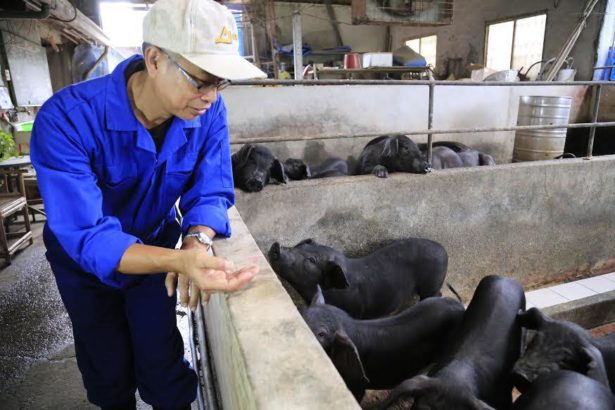
The Battle Over Epidemic Prevention and Food Waste 02"Pig Farmers' Civil War: Feeding Food Waste to Pigs Is High-Risk and Outdated VS Food Waste Can Be Sorted More Carefully in Addition to High-Temperature Boiling
The Battle Over Epidemic Prevention and Food Waste 02"Pig Farmers' Civil War: Feeding Food Waste to Pigs Is High-Risk and Outdated VS Food Waste Can Be Sorted More Carefully in Addition to High-Temperature Boiling
-
Methods for Skillfully Applying Foliar Fertilizer to Tea Plants to Improve Quality
If famous tea is contaminated, especially export products, its output value and reputation will suffer serious damage. To improve tea quality and yield, in addition to measures such as growing green manure in tea gardens, mulching to retain moisture, applying sufficient farmyard manure after each harvest, and improving tea-making techniques, foliar fertilizer should also be used skillfully. This is a good method that uses a small amount of fertilizer, takes effect quickly, and yields high returns, generally increasing yield by 20%-30% or more. The techniques are: Fertilization timing. When the new shoots of each round of tea in spring, summer, and autumn sprout and grow to the stage of one bud and one initial leaf, choose a windless sunny day at early morning, evening, or on a cloudy day for spraying, once a week for 2-3 consecutive sprays. Spray until water drips from the leaf surface. Fertilizer ratio. Mainly nitrogen, phosphorus, and potassium, supplemented by micronutrient fertilizers, with a ratio of 4:1:1. Micronutrient fertilizers are proportioned according to the principle of supplementing whatever the tea plant lacks. Fertilization concentration. The fertilization concentration is related to the fertilizer variety and weather conditions. According to experiments, urea is 0.5%, superphosphate 1%, potassium sulfate 0.5%, zinc sulfate 50-100 ppm, and ferric molybdate 20-50 ppm. If the concentration is too high, fertilizer damage is likely to occur; otherwise, it will not be effective. Combination with multiple substances. It can be combined with pest control, sprinkler irrigation, and plant growth regulators, saving labor and making mechanized operation easier to achieve. Chemical properties of fertilizers and pesticides. Acidic fertilizers should be combined with acidic pesticides, and alkaline fertilizers with alkaline pesticides, so as not to produce chemical reactions or precipitates, preventing mutual cancellation of fertilizer and pesticide efficacy. Use biological pesticides to control pests and diseases. Using biological pesticides to control tea plant pests and diseases is the best choice, as it is safe, reliable, pollution-free, and harmless, with low cost and high control efficacy, such as Bt emulsion, Bacillus thuringiensis, Beauveria bassiana, agricultural antibiotics, and plant antibiotics.
条件筛选