-
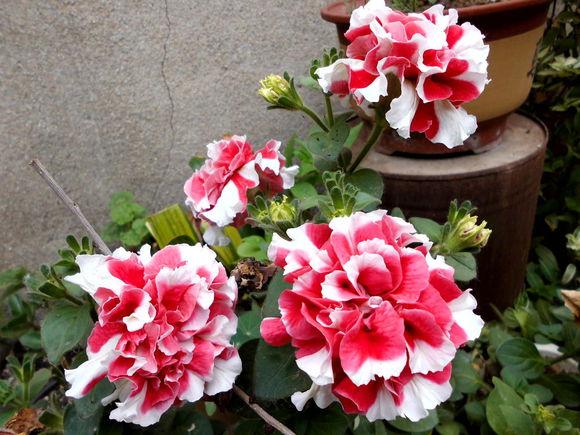
How to propagate double-flowered petunias, and what to do when buds form but do not open
Double-flowered petunia: this flower has many layers of petals and comes in many colors, and it is super beautiful. Let's see how to propagate double-flowered petunias. What to do when double-flowered petunias grow flower buds but do not bloom: Double-flowered petunia propagation methods: There are two propagation methods for double-flowered petunias, seed sowing and cuttings.
-

Cultivation techniques for new large-flowered geranium varieties
The large-flowered geraniums 'Coral', 'Ice Cave' and 'Scene' have a plant height of 30 to 40 cm, with round and large flower heads, good mass planting effect and few pests and diseases, making them excellent material for landscape applications. Geraniums of this type are all award-winning varieties from European flower trials. Their growth habit favours a cool climate, with a suitable growing temperature of 5°C to 25°C. The plants enter a semi-dormant state during the high-temperature period in summer, and in cold winter regions they can overwinter with only slight protection. They prefer a location with ample light, tolerate dryness and dislike waterlogging, and require a loose growing medium that
-
What are the new large-flowered carnation varieties?
1. Variety introduction: In the late period of the "Ninth Five-Year Plan", the Flower Research Institute of the Yunnan Academy of Agricultural Sciences undertook the provincial Science and Technology Department's science and technology tackling project "Breeding of New Large-flowered Carnation Varieties", and has bred a group of new cut-flower carnation varieties (lines). Some of the new varieties, after small-scale trial planting by flower growers, have shown good production suitability and marketability. Four applications for new carnation variety rights were filed with the Plant Variety Protection Office of the Ministry of Agriculture of China. Among them, compared with Master, currently the foreign variety of the same red series with the largest planting area, Yunhong No. 1
-
Red-flowered black locust
Red-flowered black locust, also known as bristly locust and Jiangnan locust, is a variety of black locust (Robinia pseudoacacia) in the genus Robinia of the Fabaceae family. Because its stems, twigs and flower stalks all bear red bristles, it is named "bristly locust". It has abundant flowers and brilliant colors, and can be planted in groups or as a single specimen for garden landscaping. The leaves of the red-flowered black locust are very similar to those of the black locust: odd-pinnate compound leaves, with opposite leaflets, 7 to 13 in number, elliptical. The papilionaceous corolla is pink or purplish-red, with 2 to 7 flowers forming a sparse raceme. The flowers are sterile, and the pods mostly do not develop, generally producing no seeds, so it is difficult to propagate by seed; black locust is mostly used as rootstock
-
What are the other names for autumn zephyrlily? Zephyr lily, rain lily, white-flowered iris-leaved lily
Scientific name: Zephyranthes Candida. Other names: Zephyr lily, rain lily, white-flowered iris-leaved lily. Family and genus: Amaryllidaceae, Zephyranthes. Place of origin: South America. Morphological features: Perennial herb, with a low and compact clump, plant height 15-20cm. Leaves basal, flat linear, slightly succulent. Leaf color dark green. Flowers solitary, tepals 6, elliptical-lanceolate. Cyme, white with a purplish-red tinge on the outside. Flowering period July-September. Capsule nearly spherical.
-
Reinwardtia indica, also known as golden-flowered flax and yellow flax, have you ever seen this plant?
Scientific name: Reinwardtia trigyna. Common names: golden-flowered flax, yellow flax. Family and genus: Linaceae, Reinwardtia. Origin: native to southwestern China, Vietnam, India and Indonesia. It is now cultivated in various places in the south. Growth habit: it likes a warm environment with ample sunlight and good ventilation, and prefers fertile, well-drained soil. It likes to grow in low-altitude calcareous soil and is not cold-tolerant. Morphological characteristics
-
What are the propagation methods for the yellow-flowered red-centered four-season chrysanthemum?
The yellow-flowered red-centered four-season chrysanthemum is a newly bred chrysanthemum variety with stable traits, strong resistance and good adaptability. It has short internodes, a dwarf, non-lodging habit, large flowers, a long flowering period and bright flower colors. As soon as it appeared, it won praise from industry insiders for its uniqueness and beauty. At present, this flower is in the stage of propagation expansion and can be propagated vigorously. Its propagation method is the same as that of other chrysanthemums. Simply cut it into cuttings of 2 leaves per segment, dip them in rooting hormone solution, insert them into a seedbed (sandy soil is preferable), cover with a sunshade net, spray water on the leaves twice a day, and in 10 days they will
-
What tree is the large-leaf red-flowered black locust? An introduction to its cultivar characteristics
The large-leaf red-flowered black locust is a multi-purpose black locust cultivar bred in Germany. In 1999, Professor Yang Minsheng of Hebei Agricultural University introduced it to China from the Institute of Forest Genetics and Forest Tree Breeding in Germany. After nearly 5 years of introduction trials and demonstration planting, it was proven that the large-leaf red-flowered black locust has strong adaptability, can grow normally in the suitable areas for black locust in North China, and has shown very high economic value. The large-leaf red-flowered black locust has a fast growth rate, with a diameter at breast height reaching 9.5 cm at 3 years old; a large leaf yield, with pinnate leaves 45-60 cm long, longer than tetraploid black locust
-
What is the difference between Yulan magnolia and purple-flowered Yulan magnolia
Yulan magnolia, also known as white Yulan magnolia, is a deciduous tree of the Magnolia genus, with an oval or flattened-spherical crown and grayish-brown bark. Its single leaves are alternate, obovate-rounded, with a abruptly pointed tip. The flowers are terminal, with flower buds formed in the previous autumn, blooming before the leaves. The flowers are white, fragrant, 10-16 cm in diameter, upright bell-shaped, with 9 tepals, obovate, white, arranged in whorls of three, and numerous stamens and pistils. Its main variety is the purple-flowered Yulan magnolia (var. FurFurascens), whose tepals are purplish-red outside and clear white inside. Both magnolias are highly favored by people. Yu
-
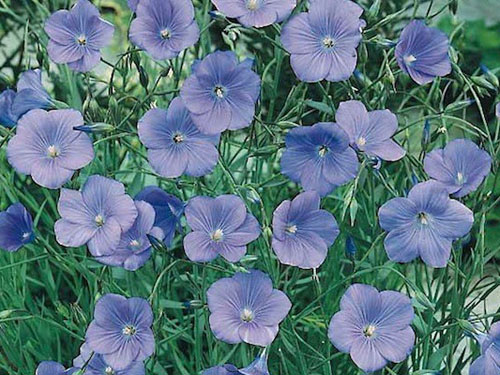
Cultivation methods for flowering flax (red flax, large-flowered flax)
Flowering flax (red flax, large-flowered flax) scientific name: linum grandiflorum. Morphological characteristics: biennial herb, plant height 40-50 cm. Stems erect, branched at the base. Leaves alternate, grayish-green, linear-lanceolate. Flowers solitary, pedicels slender, flowers nodding, corolla 5-lobed
条件筛选