-

What to Do After Edamame Is Hit by Flooding? Latest Treatment Methods Explained in Detail
The arrival of summer also brings the rainy season along with it, and many places in the south have already had continuous heavy rain. Moreover, summer is also the planting season for edamame, and edamame is the crop least tolerant of waterlogging; when affected by waterlogging, it causes root rot and slows down growth. So what should be done after edamame is hit by flooding?
-
What are the remedial measures for a kiwifruit orchard after heavy rain and flooding?
After the heavy rain, kiwifruit plants are submerged and buried. Kiwifruit has fleshy roots. Excessive rain causes soil water saturation, insufficient nutrient supply and poor aeration, weakening the root respiration capacity, and the roots will gradually rot. During rainfall, if rainwater remains on the soil surface for 2 hours, the leaves will yellow and curl slightly; if it remains for 3-4 hours, slight root rot begins to appear, and leaf yellowing and curling worsen; if it remains for more than 5 hours, the roots rot severely, and the edges of the aboveground leaves scorch and fall off; after 4 days of flooding, 40% of the plants die, and after 8 days, basically 100% die. In order to help the affected orchard resume growth as quickly as possible and reduce flood damage losses, it is recommended that affected orchards take the following remedial measures. Let us take a closer look:
-
How to Manage Citrus After Flooding? A Detailed Guide to Practical Remedial Measures
The heavy rainfall brought by this year's No. 15 typhoon Koppu caused torrential rain in parts of Xinyi City in Maoming, Yangchun City in Yangjiang, and Luoding City in Yunfu in western Guangdong, causing widespread damage and loss to crops such as rice, and severe damage and harm to fruit trees such as citrus.
-
China Shiitake Mushrooms: Random Testing Across Taiwan, China Finds Pesticide Residues in 30%, Passed Off as Japanese, Korean or Taiwan, China Mushrooms Flooding the Market
China Shiitake Mushrooms Wreaking Havoc in Taiwan, China 01"NewsMarket Tests Across Taiwan, China: 30% of Chinese Mushrooms Have Pesticide Residues, Passed Off as Japanese, Korean or Taiwan, China Mushrooms Flooding the Market
-
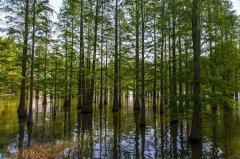
Bald Cypress Leaves Pictures and the Price of 3-5 cm Saplings, Are the Saplings Afraid of Flooding
Bald cypress is a type of cypress, a deciduous tree, a plant of the genus Taxodium, also known as pond cypress. Its vitality for growth is very strong. If you want to plant a cypress species that is easy to grow and keep alive, this kind of cypress is one you can choose. So what are its main characteristics? Let's take a look.
-
Key Cultivation Techniques for Potatoes After Flooding
Select good varieties It is advisable to choose varieties with good shape, high yield, fast tuber expansion, and tolerance to high temperatures at the seedling stage, such as Kexin No. 4, and it is best to use virus-free seed potatoes. Selecting seed potatoes and sprouting Seed potatoes should be spring potatoes harvested in the same year, and diseased potatoes, rotten potatoes, damaged potatoes, and poorly shaped tubers must be strictly removed, with small whole tubers of 20-40 g being the best. In autumn, whole-tuber sowing should be used, with seed potatoes of about 25-50 g and a sowing rate of 150-200 kg per mu. Soak whole tubers in 1 g of gibberellin mixed with 120-180 jin of water for 15-20 minutes in mid-to-late July, and place them in
-
What are the remedial measures after rice suffers from flooding?
Rice has strong waterlogging tolerance. After being submerged for about 3 days, about 80% of the rice seedlings can still survive, and it is enough to strengthen management. After being submerged for 4-7 days, 50%-80% of the rice seedlings survive, so it is necessary to promptly thin and replant seedlings to ensure a sufficient population. After being submerged for more than 7 days, only about 30% of the rice seedlings survive, so replanting or switching to other crops should be considered. It is necessary to adapt to local conditions, provide guidance by category, and carefully carry out post-disaster management of rice. As long as rice seedlings still have green leaves, the inside of the leaf sheath is still green and has a certain hardness, and the white roots or root system are light yellow, and 2-
-
What remedial measures are there after cotton is affected by flooding?
Cotton has the ability to self-regulate and compensate. After a disaster, remedial measures of stress-resistant cultivation should be adopted: rapid drainage, early loosening of the soil, heavy fertilization, delayed topping, and intensive pruning. Rapid drainage: make an all-out effort to lower the water level in the outer three ditches, with emphasis on clearing and deepening the inner three ditches of the cotton field. In areas with low-lying terrain and high inland river water levels, mechanical and electrical drainage must be used on an emergency basis to speed up drainage and lower the groundwater level of the cotton field. Early loosening of the soil: after flooding, the cotton field soil becomes compacted and has poor permeability. About 7 to 8 days after drainage, the soil should be loosened on an emergency basis to improve soil aeration and warming performance in the cotton field and accelerate the recovery and growth of cotton seedlings.
-
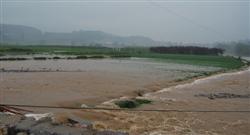
Severe Potassium Loss After Flooding Makes Potassium Supplementation Essential for Crops
In past years, in several provinces along the middle and lower reaches of the Yangtze River, potassium deficiency symptoms were commonly seen in crops such as cotton, rice, corn, soybeans, and peanuts. Apart from some soils being inherently low in potassium, this was largely related to the heavy rainfall during the crop growing season this year, which caused considerable potassium loss. In cotton, most fields showed potassium deficiency...
-
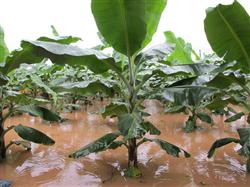
What are the remedial measures after banana plants suffer flooding damage?
How do you remedy banana plants after flooding damage? Please explain the methods. Banana plants have fleshy roots with strong respiration and need a loose, well-aerated soil environment. Once they are submerged and waterlogged, the soil lacks oxygen, which causes root rot, and their absorbing capacity declines or is lost, throwing the supply and demand of water and nutrients in the banana plant out of balance; the leaves, stems and fruit cannot get water and nutrients...
条件筛选