-
JD.com food on sale notification: what to do when peanut butter exceeds aflatoxin limits
If I bought a fake product from an online store, whether it's a phone or clothes, should I seek redress from the manufacturer or the production factory? Generally I seek compensation from the online store, and as for the online store's losses, whether it goes after the manufacturer is none of my concern, because the online store
-
JD.com Food Sold on Platform Notification: What to Do About Aflatoxin-Exceeding Peanut Butter
If I bought a fake product from an online store, whether it's a phone or clothes, should I seek redress from the manufacturer or the producer? Generally I seek compensation from the online store, and as for the online store's losses, whether they go after the manufacturer is none of my concern, because the online store
-
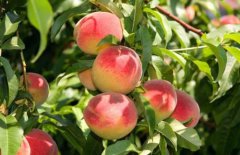
Five major peach variety characteristics: firm-fleshed peach, yellow peach, honey peach, nectarine, flat peach
Peaches are a fairly common fruit in our daily life, and we have also heard of peach tree grafting techniques. So how many peach varieties do you know? Do you recognize the peach varieties introduced below? 1. [Firm-fleshed peach] Firm-fleshed peach, also called crisp peach, is a common edible peach variety on the market. Its flesh is relatively firm, and even after ripening the flesh remains crisp, firm and dense. This kind of peach tastes quite good, but has relatively little juice.
-

A Detailed Guide to Flat Peach Planting Methods and Precautions
The flat peach that the general public knows as a food comes from mythological dramas; in reality, it is simply a variety of peach, but it holds a very high status among peaches. Because it has nutritional and edible value such as replenishing qi and blood and nourishing yin and promoting fluid production, it is
-
What are the control methods for citrus flat-headed borer?
The citrus flat-headed borer (Agrilus auriventris) has one generation per year in the Chenggu area, overwintering as larvae of various instars inside the branches and trunks of citrus trees. In late March, the larvae bore into the xylem and begin to pupate; mid-to-late April is the peak pupation period, with the pupal stage lasting about 25 days. Early May is the peak emergence period for adults, and mid-May
-
Control Methods for Mango Flatid Planthopper
The mango flatid planthopper, also called the leafhopper, damages flower spikes and young fruit, causing flower and fruit drop, poor harvest or even total crop failure, and induces severe sooty mold. It also damages young buds, tender shoots and leaves, causing bud and leaf deformity. It usually occurs more frequently during the flowering period, and high humidity and a dense canopy make this insect more likely to appear.
-
Detailed Explanation of Key Points for High-Yield Pomegranate Cultivation Techniques
1 Site selection: Choose a location with flat terrain, convenient transportation, irrigation access, and shelter from wind facing the sun. When establishing the orchard, avoid areas and orientations where the minimum winter temperature drops below 16°C, especially trough-shaped valleys and basins where cold air tends to accumulate. 2 Planting density
-
Detailed Explanation of Key Techniques for Spring Planting of Loquat
(1) Land preparation: When building a loquat orchard on flat land, planting trenches should be dug, generally 0.80--1.0 m wide and about 0.80 m deep. The distance between planting trenches is generally about 3 m, and the length of the planting trenches depends on the size of the orchard site or the length of the slope. When digging the trenches, keep the topsoil and subsoil separate, placing the topsoil on the upper side. When backfilling, first backfill the topsoil, and use 3--4 layers to bury and press in straw, rice straw, farmyard manure, phosphate fertilizer, etc. Generally, base fertilizer is applied 1--2 months before planting.</p><p>Loquat has wide adaptability to soil. Generally, sandy or gravelly loam can be used for cultivation, but soil with deep soil layers, loose texture, high humus content, strong water and fertilizer retention, and which is not prone to waterlogging is best. If the soil is too clayey, some sandy soil can be mixed in. If the soil is relatively acidic, lime should be appropriately increased in combination with fertilization to improve the soil. Sloping land must be terraced into contour bench terraces. Mountain soil is relatively barren, so large holes and heavy fertilizer must be used for cultivation. Each planting hole should be 1 m long and 1 m wide, and 0.8--1.0 m deep. At the same time, each hole should be backfilled in 3--4 layers with more than 50 kg of barnyard manure, green manure, etc., 0.8--1 kg of phosphate fertilizer, and 1 kg of quicklime. The fertilizer must be fully mixed with the soil. Farmyard manure should be placed in the bottom layer to facilitate root absorption. Phosphate fertilizer and lime should be placed in separate layers and must not be mixed. Wait until the fertilizer has decomposed and the soil has settled after loosening before planting. (2) Select excellent strong seedlings: Variety selection should follow the principle of "matching species to site", and at the same time require grafted varieties with relatively large fruit, generally around 50 g, thick flesh, sweet taste, high yield, and strong disease resistance. (3) Planting time: Plant before the spring shoots sprout in spring, generally around March in spring. If too late, it affects the emergence of spring shoots. When the soil is too wet or the wind speed is too high, it is not suitable for planting. (4) Planting density: Close planting is generally determined according to the cultivated variety, soil fertility, terrain, etc. Usually, barren sloping land is planted more densely than fertile, deep flat land, and weak trees are planted more densely than vigorous trees. The plant-row spacing is generally 2 x 3 m, with 111 plants per 667 sq m. It can also be 2 x 3.5 m or 2.5 x 3.5 m. (5) Rational arrangement of pollinizer trees and appropriate variety combination: Loquat is mostly self-pollinated, but some varieties show self-incompatibility. Therefore, in the same orchard, 2--3 varieties should be cultivated, but the varieties are required to have similar full-bloom periods to facilitate pollination. Generally, for every 2 rows of the main cultivated variety, plant 1 row of pollinizer variety, with a ratio of 2:1. Bee release during the flowering period can also be combined to increase the pollination rate. Loquat orchards should combine early-, mid-, and late-maturing varieties, so that different maturity periods can meet market supply and demand. Generally, early-, mid-, and late-maturing varieties are combined at 1--3:5--6:2--4. (6) Rational planting: Transplanting seedlings with soil generally gives a high survival rate. If transplanted without soil, the roots should be dipped in mud slurry. When planting, place the seedling at the center of the planting point and distribute the root system evenly in the hole, then fill in soil layer by layer so that the root system fully contacts the soil. While filling, firm the soil, water with root-setting water, cover with soil again to near the graft union, water again with root-setting water so that the soil and loquat root system fully contact, then fill with soil again. Generally, the backfilled soil is about 10--20 cm higher than the ground surface. Around each loquat seedling, make an earth ring about 5 cm high to facilitate watering, fertilizing, or intercepting precipitation. (7) Trunk determination: The trunk height is determined at 30--40 cm above the graft union. The branches above it should retain a length of about 20 cm. Select and retain 3 plump buds above the trunk height and train them as main branches, with each main branch facing 120 degrees apart. </p>
-
How much does Xinjiang flat peach cost per jin, and how is it different from honey peach?
At the mention of flat peach, many people think of the flat peach banquet in Journey to the West, and feel that the flat peach is a kind of immortal peach. In fact, the flat peach is a type of peach with a good taste. So how much does Xinjiang flat peach cost per jin? And how is it different from honey peach? 1. Introduction to Xinjiang flat peach: 1. When
-
A Detailed Guide to Tape Grass Planting Techniques and Management Methods
Tape grass, also known as flat grass, is a perennial stemless submerged herb that grows in streams, rivers and other places, combining ornamental, economic and medicinal uses in one, and generally those engaged in fisheries will cultivate it, so what are the tape grass planting techniques? 1. Site selection and land preparation. Tape grass is suitable for planting under forest with 50
条件筛选