-

What is the typical per-mu yield of green forsythia?
Per-mu yield of green forsythia: On flat land, green forsythia yields 480-600 kg of green forsythia per mu; at 15 yuan per kg, the output value per mu is 7200-9000 yuan. The suitable density on flat land is about 400 plants per mu, and in the full fruiting period each plant produces 1.2-1.5 kg of commercial green forsythia. | After deducting seeds, manual management, etc.
-
Detailed Explanation of Shiitake Mushroom Cultivation Techniques and Management Methods
Find a flat, sunny piece of land to build a mushroom shed, and control the temperature inside the shed at 26-28°C. Then mix sawdust, wheat bran, gypsum powder, lime, potassium dihydrogen phosphate, etc. together into a culture substrate, put it into bags and sterilize for 6-7 hours. Finally, inoculate in the morning or evening, and wait for
-
Detailed Explanation of Key Techniques for Spring Planting of Loquat
(1) Land preparation: When building a loquat orchard on flat land, planting trenches should be dug, generally 0.80--1.0 m wide and about 0.80 m deep. The distance between planting trenches is generally about 3 m, and the length of the planting trenches depends on the size of the orchard site or the length of the slope. When digging the trenches, keep the topsoil and subsoil separate, placing the topsoil on the upper side. When backfilling, first backfill the topsoil, and use 3--4 layers to bury and press in straw, rice straw, farmyard manure, phosphate fertilizer, etc. Generally, base fertilizer is applied 1--2 months before planting.</p><p>Loquat has wide adaptability to soil. Generally, sandy or gravelly loam can be used for cultivation, but soil with deep soil layers, loose texture, high humus content, strong water and fertilizer retention, and which is not prone to waterlogging is best. If the soil is too clayey, some sandy soil can be mixed in. If the soil is relatively acidic, lime should be appropriately increased in combination with fertilization to improve the soil. Sloping land must be terraced into contour bench terraces. Mountain soil is relatively barren, so large holes and heavy fertilizer must be used for cultivation. Each planting hole should be 1 m long and 1 m wide, and 0.8--1.0 m deep. At the same time, each hole should be backfilled in 3--4 layers with more than 50 kg of barnyard manure, green manure, etc., 0.8--1 kg of phosphate fertilizer, and 1 kg of quicklime. The fertilizer must be fully mixed with the soil. Farmyard manure should be placed in the bottom layer to facilitate root absorption. Phosphate fertilizer and lime should be placed in separate layers and must not be mixed. Wait until the fertilizer has decomposed and the soil has settled after loosening before planting. (2) Select excellent strong seedlings: Variety selection should follow the principle of "matching species to site", and at the same time require grafted varieties with relatively large fruit, generally around 50 g, thick flesh, sweet taste, high yield, and strong disease resistance. (3) Planting time: Plant before the spring shoots sprout in spring, generally around March in spring. If too late, it affects the emergence of spring shoots. When the soil is too wet or the wind speed is too high, it is not suitable for planting. (4) Planting density: Close planting is generally determined according to the cultivated variety, soil fertility, terrain, etc. Usually, barren sloping land is planted more densely than fertile, deep flat land, and weak trees are planted more densely than vigorous trees. The plant-row spacing is generally 2 x 3 m, with 111 plants per 667 sq m. It can also be 2 x 3.5 m or 2.5 x 3.5 m. (5) Rational arrangement of pollinizer trees and appropriate variety combination: Loquat is mostly self-pollinated, but some varieties show self-incompatibility. Therefore, in the same orchard, 2--3 varieties should be cultivated, but the varieties are required to have similar full-bloom periods to facilitate pollination. Generally, for every 2 rows of the main cultivated variety, plant 1 row of pollinizer variety, with a ratio of 2:1. Bee release during the flowering period can also be combined to increase the pollination rate. Loquat orchards should combine early-, mid-, and late-maturing varieties, so that different maturity periods can meet market supply and demand. Generally, early-, mid-, and late-maturing varieties are combined at 1--3:5--6:2--4. (6) Rational planting: Transplanting seedlings with soil generally gives a high survival rate. If transplanted without soil, the roots should be dipped in mud slurry. When planting, place the seedling at the center of the planting point and distribute the root system evenly in the hole, then fill in soil layer by layer so that the root system fully contacts the soil. While filling, firm the soil, water with root-setting water, cover with soil again to near the graft union, water again with root-setting water so that the soil and loquat root system fully contact, then fill with soil again. Generally, the backfilled soil is about 10--20 cm higher than the ground surface. Around each loquat seedling, make an earth ring about 5 cm high to facilitate watering, fertilizing, or intercepting precipitation. (7) Trunk determination: The trunk height is determined at 30--40 cm above the graft union. The branches above it should retain a length of about 20 cm. Select and retain 3 plump buds above the trunk height and train them as main branches, with each main branch facing 120 degrees apart. </p>
-
Detailed Explanation of Key Cultivation Techniques for Schisandra chinensis in Flat Land
Schisandra chinensis is a multifunctional, multi-purpose, highly efficient wild economic plant. Its fruit is a precious traditional Chinese medicinal herb renowned both domestically and internationally, beneficial to the human body by tonifying qi, nourishing the kidney, astringing the lungs, restraining essence, promoting fluid production, quenching thirst, improving intelligence, and calming the mind. As medicine, it mainly treats conditions such as lung deficiency with wheezing and coughing, spontaneous sweating, night sweats, chronic diarrhea, dysentery, seminal emission, neurasthenia, forgetfulness, palpitations, insomnia, weakness of the limbs, acute and chronic hepatitis, and diminished vision. It can also be made into a series of health foods such as Schisandra wine, Schisandra beverages, Schisandra tea, and Schisandra honey; its stems, vines, and roots
-
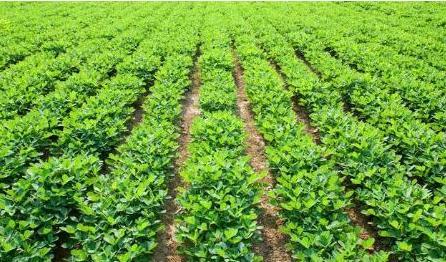
Is flat planting or ridge planting better for peanuts? The key depends on the land conditions
Ridge planting versus flat planting of peanuts has always been a topic of debate among many friends, but personally I think ridge planting is currently a bit better, though some areas are still only suitable for flat planting. Here, Science Xingnong will chat with everyone about...
-
-
-
Land inspections find the problem of inflated cultivated land retention figures remains prominent
The No. 1 National Land Inspection Announcement of 2015 released on the 28th shows that in some places, illegal and irregular land use, especially the indiscriminate occupation and abuse of cultivated land, false balance of cultivated land occupation and compensation, and inflated cultivated land retention figures remain prominent. According to the announcement, in 2014, targeting the fulfillment of the target responsibility for cultivated land protection
条件筛选