-

Pig price market analysis: Can the rising trend of pig prices spread like wildfire?
Pig price market analysis: Can the rising trend of pig prices spread like wildfire?
-
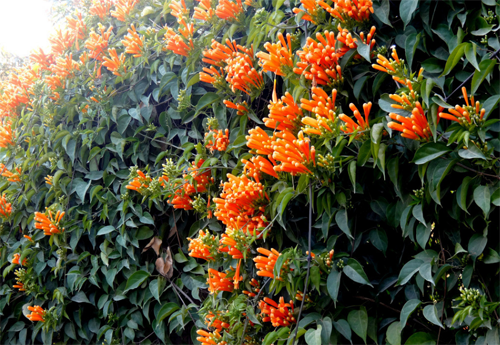
How to Grow Firecracker Vine: Propagation Tips and How It Differs from Trumpet Vine
Firecracker vine blooms in strings upon strings, just like firecrackers, neatly arranged firecrackers, which is how it got the name firecracker vine. So what is the growing method for firecracker vine? How do you propagate it? And how does it differ from trumpet vine? Firecracker vine growing method: choosing potting soil and flower pots
-
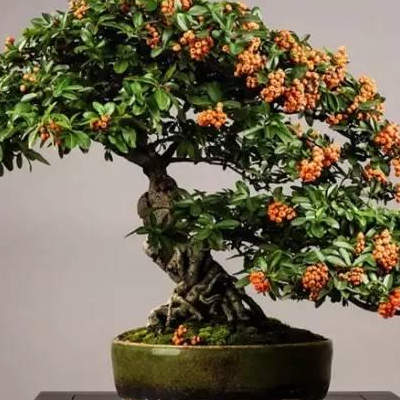
How to Make a Firethorn (Pyracantha) Bonsai and a Detailed Guide to Prices
Firethorn bonsai is something many people love to grow, and it really does look beautiful. How is a firethorn bonsai made? How much does a firethorn bonsai cost: How to make a firethorn bonsai: (1) Branch-layering time. Generally speaking, September each year is the best time to layer branches of a firethorn bonsai
-
What variety is Mayfire nectarine? What are its characteristics?
In 1980, it was developed by the California Horticultural Experiment Station of the United States Department of Agriculture through embryo culture from naturally pollinated young embryos of Armking. In 1989, it was introduced to the Zhengzhou Fruit Research Institute of the Chinese Academy of Agricultural Sciences. The fruit is oval, with symmetrical halves and a slightly protruding apex; the average single fruit weight is 75 g, and the largest fruit weighs 110 g; the ground color of the skin is orange-yellow, fully covered with red, glossy, and attractive in appearance, and the skin peels easily; the flesh is firm-melting, yellow, without red pigment, medium-much juice, aromatic, with a flavor more sour than sweet;
-
Fire Pink
Fire Pink, whose scientific name is Silene virginica, is a perennial herbaceous flower in the genus Silene of the family Caryophyllaceae, native to the United States. The plant grows about 20-80 cm tall, and the flowers are about 2.5 cm in diameter, with bright red or deep red petals; when they bloom from May to September, they form a brilliant mass of red that is very beautiful. Propagation is mostly by sowing, and can also be done by division or cuttings. The optimum temperature for growth is 15-25°C. It can be used in flower beds or grown in pots.
-
Integrated Control Methods for Soybean "Fire Dragon Seedling"
In Wudalianchi City, Heilongjiang Province, the soybean area is 950,000 mu, with a continuous cropping area of 930,000 mu, accounting for 97.8% of the soybean sown area. Through investigation, the area affected by soybean "Fire Dragon Seedling" is around 96.5%, with most yield reductions between 20 and 50%, and some plots reaching total crop failure. It can be said that due to the influence of the market economy, the continuous cropping area of soybean cannot be controlled, but through integrated control, the occurrence of soybean "Fire Dragon Seedling" can be reduced, enabling soybean to achieve high and stable yields. The integrated control techniques for soybean "Fire Dragon Seedling" are as follows:
-
New bonsai variety of the Fireworks Tree, blooming as brilliantly as fireworks
The Fireworks Tree is a small shrub in the genus Clerodendrum of the family Verbenaceae, native to Africa and the Pacific Islands, and is also scattered in China. The Fireworks Tree has a beautiful plant form, elegant leaves, brilliant and colorful flowers, and dancing stamens. From June to November, it blooms continuously, with a flowering period lasting as long as half a year. The flowers are terminal, long-tubular, in loose clusters, with dense inflorescences; the floral tube is purplish red, and the front bursts open into 5 pure white, colorful, long strip-shaped petals, like twinkling stars, as if they were clusters of fireworks blooming at a festival. The exposed stamens are like golden threads and silver willows, bouncing and dancing nonstop with every breeze; the fruit after flowering
-
Introduction to the main characteristics of the peach variety Mayfire
Bred by the USDA Horticultural Experiment Station in California from natural seedlings of Armking embryos through embryo culture. Introduced in 1989 to the Zhengzhou Fruit Research Institute of the Chinese Academy of Agricultural Sciences. The fruit is oval, with two symmetrical halves and a slightly protruding tip; average single fruit weight 75 g, maximum fruit weight 110 g; the skin's ground color is orange-yellow, fully covered with red, glossy, attractive in appearance, and the skin peels easily; the flesh is firm-melting, yellow, without red pigment, moderately juicy, aromatic, with a flavor more sour than sweet; soluble solids 8.8%. Clingstone. The tree is relatively vigorous, with a
-
What is Jinshan Fire Garlic? Learn about its characteristics in one article
A variety introduced from abroad at the beginning of this century, first planted in the Kaiping area of Guangdong. The plant height is 50 cm, the garlic bulb has a small stalk and thin base, the garlic skin exposes the cloves, the cloves are plump, the flesh is firm, the smell is pungent, and it turns red when fully mature, with top quality. Besides being eaten fresh, it can also be processed into sweet-and-sour canned garlic. The sowing period is October, and the whole growth period is 140 days to 150 days. The plant type is robust, the root system is well developed, it is not prone to lodging, and it is tolerant to fertilizer and resistant to disease. The yield of dry garlic bulbs is 250 kg to 300 kg per mu.
-
Management Methods and Care Points for Firethorn Bonsai During the Fruiting Period
Firethorn bonsai is a fruit-ornamental bonsai, so whether making small, medium, or large bonsai, after shaping, fertilizer and water management and pruning must be strengthened so that it grows vigorously year after year, with abundant flowers and leaves and heavy fruit. So, how should firethorn bonsai be managed during the fruiting period? In our northern Guangdong region, firethorn generally blooms and sets fruit from early April to mid-April. Generally, applying a phosphorus fertilizer once before flowering and ensuring sufficient light is enough. After fruit set, apply a mixed phosphorus-nitrogen fertilizer solution once a month to make the fruit large and beautifully colored. In April and May, special
条件筛选