-
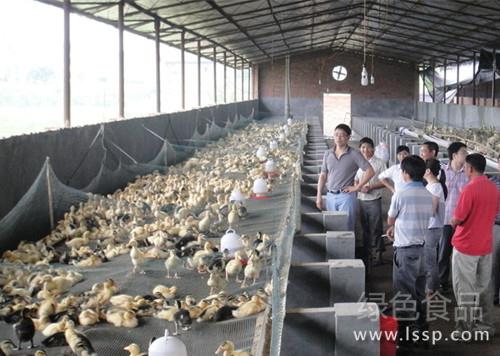
Raising Ducks in Confinement Can Save Labor: Key Management Techniques Explained
Raising Ducks in Confinement Can Save Labor: Key Management Techniques for Confined Ducks
-

What to Do About Retained Placenta in Sheep? Key Points of Prevention and Treatment Explained
I. Prevention The main preventive method is to strengthen the feeding and management of pregnant sheep: feed formulation should follow the principle of not making pregnant sheep overweight; a proper amount of exercise must be ensured every day. II. Treatment Within 14 hours after birth, one may wait for it to shed on its own. If more than 14 hours have passed, appropriate measures must be taken, because by then the placenta has begun to rot, and if it remains in the uterus it can cause severe inflammation of the uterine mucosa, leading to temporary or permanent infertility, and sometimes even septicemia. Therefore, when more than 14 hours have passed, the following methods should be adopted as early as possible
-
Almond Variety Selection and Management Characteristics Explained (Part 2)
As a nut-producing fruit tree, the almond differs somewhat from other peach varieties in cultivation. 1. Site selection. Almonds have strong adaptability and a long lifespan, and can be planted on hillsides, slopes, around the home, and in courtyards, but the following points should be noted: (1) Almonds bloom early, so mid-mountain areas and open ground where late frosts are unlikely to occur should be chosen; (2) Almonds are light-loving, so sunny slopes or shady slopes with a small gradient should be chosen; (3) Almonds are not tolerant of waterlogging, so well-drained plots should be chosen. 2. Planting. In autumn, plant after leaf fall and before the ground freezes
-
Snake breeding and selection is carried out in three steps, with the specific methods explained in detail
Strengthening the artificial breeding and selection of snakes is of great significance for improving the reproductive survival rate, growth and development speed, product quality and economic benefits of snakes. It is a task that cannot be neglected in a snake farm and must be carried out year-round with persistent effort. In breeding and selection, the following three points should be done well: 1. Selection of breeding eggs. The breeding eggs placed in incubation must be fresh and of high quality. Eggs stored for a long time have a low hatching rate and a high mortality rate, and the hatchling snakes are weak and grow slowly. Therefore, the female snake should be checked frequently before laying eggs, and when the eggs are found to be approaching the cloaca,
-
What is the relationship between rose blooming and temperature? Explained clearly in one article
Many floriculture references describe open-ground roses as: fond of warmth, with a blooming period from May to October, but this is actually inaccurate. After years of observation, the author found that the blooming period of roses is longer than this: it can last from May all the way to November, or even longer. It does not fear frost, and only after snow do the flowers and leaves gradually wither; if pruning is done a little later, it is even possible to enjoy roses in the snow. Roses like sun and fertilizer, but they are also tolerant of poor soil and drought, and their adaptation to temperature fluctuates over the course of a year. Although roses like warmth, they cannot tolerate intense heat. In the blazing summer, although roses still
-
Key Points and Measures for Health Care Technology of Finishing Pigs Explained in Detail
Applying small peptide nutrition to finishing pigs to promote growth, and applying "Dazhuangsu" or "Dazhuangsu-B" to eliminate mycotoxins in feed can improve the body's disease resistance and greatly reduce the occurrence of diseases; in addition, eliminating ammonia gas, hydrogen sulfide and asthma in livestock housing, controlling respiratory disease complex, shortening the feeding period by more than 10 days, and improving feed conversion rate and meat quality. Regarding small peptide nutrition and its health care, the previous view held that protein digestion always occurs in the intestine, where it is digested into individual free amino acids and then absorbed.
-
How to Treat Bulging Eyes in Fish? Effective Methods Explained
Signs of infection One or both eyeballs of the fish bulge out abnormally. (Note: Some fish, especially ornamental goldfish, have bulging eyes from birth.) Affected fish Exophthalmia can affect many pond and aquarium fish. Details of infection The development and contagiousness of the disease depend greatly on the cause, which is often very difficult to determine. Swollen eyeballs can be caused by many factors, including fish tuberculosis, white spot disease, dropsy, worm cataracts (caused by various fluke larvae, such as Diplostomum) and bacterial infections.
-
How to store garlic scapes? Indicators and methods explained in detail
I. Storage indicators: 1. Temperature: -0.51°C; 2. Gases: O2 concentration 2-3%; CO2 concentration 6-8%; 3. Humidity: 9095%; 4. Freezing point: -0.7-0.8°C; 5. Gas injury thresholds: O2<1%, CO2<12%; 6. Storage period: 4-10 months. II. Storage method: controlled atmosphere storage. III. Technical process: timely harvest (without
-
Akita Inu Buying Guide: Methods and Precautions Explained
(1) For first-time owners, before buying, it is best to visit a household that keeps this dog to learn about its appearance and habits, so that you have a clear idea when choosing one. (2) If conditions permit, you should also find some introductory materials about this dog and study them carefully, to further understand the dog's appearance and the characteristics of each part of its body, and avoid mistakes when buying. (3) When selecting, first pay attention to the standards for height and weight; if it is too large or too small, it may not be a purebred. Since young dogs are not yet old enough in days and their bodies are not yet fully developed, those slightly smaller than the standard may also be considered.
-
Eight Methods for Preventing Cotton Boll Rot Explained
1. Digging trenches to drain waterlogged fields Cotton is most afraid of autumn waterlogging; the higher the humidity in the cotton field, the more severe the boll rot. Continuous rainy weather is even more likely to cause boll rot. Therefore, after heavy rain, the accumulated water in the cotton field should be drained promptly, the soil should be allowed to dry to lower humidity, the field microclimate should be improved, boll opening should be accelerated, the reproduction and spread of pathogens should be inhibited, and boll rot should be reduced. 2. Reasonable pruning For cotton fields with high density and vigorous growth, after the full flowering stage, empty fruiting branches should be cut off promptly, vigorous buds should be removed, and the side tips of the middle and lower parts and the old leaves on the main stem should be removed in stages and batches, to enhance ventilation and light penetration, lower temperature, and reduce rot
条件筛选