-

Explaining the New-Type Professional Farmer: How to Build a Socialized Agricultural Service System
As agriculture has developed to this day, the meaning of "farmer" has changed greatly, and the shift from an inherited status to a brand-new profession is an unstoppable historical trend. In 2012, "new-type professional farmer" was written into the No. 1 Central Document for the first time, and in the same year the Ministry of Agriculture launched a
-
Explaining the push to make potatoes a staple food: What impact will it have once potatoes become a staple grain?
On the 6th, Vice Minister of Agriculture Yu Xinrong said at the Potato Staple Food Strategy Seminar that in the future, by advancing the move to make potatoes a staple food, and striving through several years of unremitting effort, the potato planting area, per-unit yield level, total output and the share of staple-food potato products in total potato consumption should all increase significantly, so that potatoes gradually become China's fourth-largest staple grain crop after rice, wheat and corn.
-
How can rural cooperative economic organizations grow bigger and stronger? Chen Xiaohua explains
From December 13 to 14, the 6th (2014) China Cooperative Economy High-Level Forum, guided and supported by the Department of Rural Economic System and Management of the Ministry of Agriculture and the Cooperative Guidance Department of the All China Federation of Supply and Marketing Cooperatives, and hosted by the China Cooperative Economy Society, was held at the Beijing Conference Center.
-
How is grain production doing? National Bureau of Statistics explains
According to the national grain production data released by the National Bureau of Statistics, the total national grain output in 2014 was 607.10 million tons (121.42 billion jin), an increase of 5.16 million tons (10.3 billion jin) over 2013, up 0.9%. The main reasons for the grain increase in 2014 were: 1. Stable policies, measures
-
What are the three red lines for rural land transfer in China? Zheng Fengtian explains
In recent years, rural land transfer in China has developed rapidly, but some problems have also emerged, including forced transfer and the one-sided pursuit of transfer scale and speed, which have infringed on farmers' lawful land rights and interests. Problems such as non-grain production and non-agricultural use caused by capital going to the countryside are also quite prominent
-
Why is it hard for stockpiling to improve the competitiveness of agricultural products? Dang Guoying explains
Setting intervention prices for agricultural products according to farmer income targets may weaken the pressure of market competition and bring marginal land with backward productivity into cultivation. According to media reports, a reporter learned from authoritative sources that the research for the 13th Five-Year Plan for agriculture is considering abolishing the temporary stockpiling policy,
-
How can drought-relief technical measures be put into practice? Agricultural experts explain
The 15th day of the seventh month determines drought or flood; the 15th day of the eighth month determines the harvest. However, since the beginning of summer, 12 provinces and regions including Henan, Shaanxi and Hebei have been repeatedly hit by drought. Recently, Mei Xurong, head of the disaster prevention and mitigation expert steering group of the Ministry of Agriculture and director of the Science and Technology Bureau of the Chinese Academy of Agricultural Sciences, said in an interview with reporters
-
What Is Supply-Side Structural Reform? Five Questions Explained at Once
As the Central Economic Work Conference drew to a close in Beijing on December 21, 2015, supply-side structural reform became the hottest term in China's current political and economic discourse. From the fading of the "three main drivers" of investment, consumption and exports to the proposal of supply-side structural reform, this
-
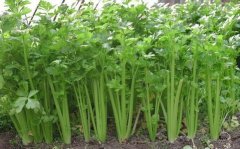
Celery Planting Methods and Cultivation Techniques Explained in Detail
Organic Celery Cultivation Methods Varieties Celery has slender, hollow leaf stalks and a strong fragrance, and can be used for stir-frying, boiling and as a seasoning. Varieties can be divided into local types: Tianwei variety (green leaves, white stalks), green tube, summer celery; and Western types (divided into green and yellow). The Tianwei variety has light green leaf stalks, few fibers, many branches, excellent quality, a strong fragrance and is not easily subject to rot.
-
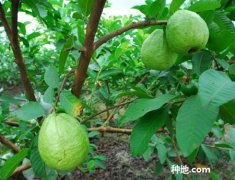
Guava Cultivation Techniques and Planting Time Explained in Detail
Organic Guava Cultivation: Selection and Maintenance of Environmental Conditions. Guava is cultivated over a considerable area in central and southern Taiwan, China, and is one of the important tropical fruit trees. Organic guava cultivation first requires good environmental conditions; the selected orchard must not have air pollution, water
条件筛选