Guava Cultivation Techniques and Planting Time Explained in Detail
Organic Guava Cultivation: Selection and Maintenance of Environmental Conditions. Guava is cultivated over a considerable area in central and southern Taiwan, China, and is one of the important tropical fruit trees. Organic guava cultivation first requires good environmental conditions; the selected orchard must not have air pollution, water
Organic Guava Cultivation Method
Selection and Maintenance of Environmental Conditions
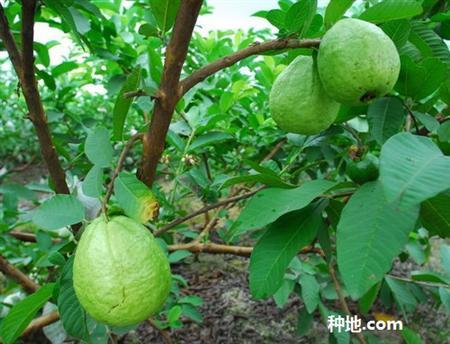
Guava is cultivated over a considerable area in central and southern Taiwan, China, and is one of the important tropical fruit trees. Organic guava cultivation first requires good environmental conditions; the selected orchard must not have air pollution, water pollution, or soil pollution. During the cultivation process, chemical fertilizers and chemical pesticides are completely avoided or used as little as possible, while full use is made of various plant residues, poultry and livestock manure compost, green manure, and other unpolluted organic wastes from inside and outside the farm, as well as natural mineral powders and beneficial microorganisms, so as to avoid harming the soil, water resources, and ecological environment, to maintain sustainable agricultural production, and to provide guavas of excellent quality and high safety that are beneficial to human health. The above cultivation method that completely avoids chemical fertilizers and chemical pesticides is called pure organic farming, while the cultivation method that uses little chemical fertilizer and chemical pesticide is called quasi-organic farming. However, the small amount of chemical fertilizer and chemical pesticide in quasi-organic farming is recommended for use after harvest until the flowering stage; after fruiting, natural control methods should be adopted, and the product must not have any chemical pesticide residue. Since guava has few pests and diseases and flowers and fruits throughout the year, with young fruit, medium fruit, and mature fruit all present on the same tree, it is best not to use chemical pesticides at all. However, to improve its taste and quality, appropriate amounts of inorganic nutrient agents such as phosphorus-potassium, acid-calcium, and magnesium phosphate must be used. If managed according to the above method, it should probably be called quasi-organic farming with no chemical pesticide use at all.
Adopt Sod Culture and Do Not Use Herbicides
Guava is highly susceptible to diseases that cause it to wither and die. In general orchards, some guava trees die from disease every year to varying degrees. After removing the dead tree and replanting a new seedling in the original spot, it will still wither and die again. The main reason is that the pathogen has already remained in the soil and can invade guava trees at any time to cause damage. Since general guava orchards adopt clean cultivation and use herbicides to remove weeds, the guava trees become very weak, the leaves tend to turn yellow, and the phenomenon of dead trees becomes more serious. The general control method is to dig out the dead tree and then plant a crop of gramineous crops such as corn or sorghum in its place before planting guava again, so that it can grow normally. However, the best method is to adopt sod culture. After adopting sod culture, since most sod grasses are gramineous, their roots can not only gradually loosen the orchard soil, but also have the effect of eliminating soil nematodes and pathogens. Afterward, it is only necessary to apply large amounts of organic fertilizer, lime, and other soil improvement materials on top of the sod, and they will gradually seep downward and be absorbed by the fruit trees. When adopting sod culture, weeds with strong wild characteristics such as goosegrass, Digitaria, cocklebur, barnyardgrass, purple nutsedge, Millettia, and wild morning glory should be removed as much as possible, leaving gentle weeds such as broadleaf carpetgrass, bermuda grass, and carpet grass, so that earthworms and other beneficial microorganisms and small organisms in the soil can reproduce naturally, and the soil will gradually become loose, facilitating fertilization and normal growth and nutrient absorption by crop roots. When the weeds are too tall, use mechanical cutting as appropriate, and do not use any herbicide. If local dwarf bermuda grass is planted throughout, then there is completely no need to mow all year round. Local dwarf bermuda grass was first successfully tested by farmer Liu Yongfu of Shetou Township. The stems of this grass are very thin, and the plant will never grow too tall; it was selected by farmer Liu himself.
Fertilization Management
Because guava bears fruit each time new shoots grow after pinching, a general orchard can be said to flower and fruit almost all year round except for a short rest period after heavy pruning. On one tree, young fruit, medium fruit, and mature fruit are all present. The fertilization management method is very different from that for plants that flower and fruit once or twice a year. If large amounts of nitrogen fertilizer are frequently used to promote the growth of young fruit, the sugar content of the mature fruit will decrease. If large amounts of nutrient agents such as phosphorus, potassium, calcium, and magnesium are used to increase the sugar content of the mature fruit while nitrogen fertilizer is neglected, the fruit will not grow large. The best method is to avoid demanding too large a fruit and, under the principle of appropriately restraining nitrogen fertilizer, fully supply nutrient agents such as phosphorus, potassium, calcium, and magnesium. Fertilization methods can be divided into base fertilizer and top dressing:
Base fertilizer is usually applied starting after heavy pruning between May and June, using organic fertilizer made from coarse organic materials such as bagasse, rice husks, and wood chips, and pig manure, cow manure, sheep manure, feathers, oil seed meals (soybean meal, peanut meal, sesame meal, rapeseed meal, castor meal, etc.), rice bran, phosphate rock powder, peat, and comprehensive beneficial microorganisms. In addition, fully use phosphate rock powder, oyster shell powder, limestone powder, dolomite powder, or other calcium and magnesium materials; the amount used at this time can be a little more.
For top dressing, use the same organic fertilizer as above once every 2-3 months, but in a smaller amount. In addition, apply medium-nitrogen oil seed meal fertilizer by irrigation once every half month. Method for making medium-nitrogen oil seed meal liquid fertilizer: prepare one 120-liter plastic barrel, add 3 kg soybean powder, 6 kg rice bran, 3 kg phosphate rock powder or seabird guano, 2 kg seaweed powder, 1 liter animal amino acid, 3 eggs, 10 kg black sugar, and 2 liters comprehensive beneficial microorganisms, then finally add clean water until the total is about 100 liters, mix thoroughly, and stir once each morning and evening. Let it ferment for about 15-30 days, then take the stock solution, dilute it 50 times with water, add 1000 times humic acid or other nutrient agents, and apply it together by irrigation to the roots. When spraying leaves, replace soybean powder with soymilk and rice bran with condensed milk; after preparation, it can be diluted 100 times with water and sprayed on the leaf surface. If there are already medium or mature fruits on the tree, apply about 30 kg of oyster shell ash or slaked lime, magnesia lime, or other calcium and magnesium materials per fen of land once a month. These materials are best applied before irrigating liquid fertilizer or used when the soil is moist after rain, for faster results.
⟦NL>
Pest and Disease Control
Guava is a relatively wild fruit tree with few types of pests and diseases, but if appropriate control is not carried out, it is almost impossible to obtain any yield at all. Its main diseases include damping-off disease, Phytophthora disease, and anthracnose. Pests include fruit flies, mealybugs, aphids, rust mites, and thrips. Damping-off disease is mainly transmitted through wounds, so after heavy pruning the wounds can be coated with wood tar and immediately sprayed with 200-300 times Bordeaux mixture. Dead guava trees should be pulled out and burned. Phytophthora disease is transmitted from the soil and damages fruit, seedlings, branches, and leaves, so after the diseased plant is pulled out, corn, sorghum, or other gramineous plants can be planted in its place, or local dwarf bermuda grass can be planted for sod culture, which can avoid its damage, and newly planted seedlings are more likely to survive. For anthracnose control, during the flowering and fruiting period, spray 400-500 times Bordeaux mixture with 300-500 times neem oil once a month, or spray 600-800 times lime sulfur mixture once every 15-30 days. Spraying 400 times sugar-vinegar solution (black sugar enzyme or comprehensive beneficial microorganisms and brewed vinegar each at 400 times) once every 7-14 days can also reduce the occurrence of various pests and diseases. Among these, if the brewed vinegar is first soaked with about 20% garlic and chili, the effect will be even better.
For anthracnose control, appropriate amounts of lime sulfur mixture and Bordeaux mixture can be sprayed.
The fruit fly is the greatest pest of guava. If it is not controlled, there will be completely no harvest. The only control method is to bag the fruit as early as possible, but after bagging, rust mites will breed inside the bag and cause damage, making the guava peel produce brown to red spots. With about 25 times magnification, one can see small insects resembling refined white long-grain rice, slender and with six legs; these are rust mites. For control, before bagging, spray wettable sulfur powder at 300-400 times or lime sulfur mixture at 500-600 times over the entire area, and soak the bag opening in wettable sulfur powder, then let it dry before use.
The mealybug is the second greatest pest of guava. If it is not controlled, it will produce much white powder on the fruit or branches and leaves, affecting guava growth and appearance quality. Because mealybugs and aphids are in a symbiotic state with ants, and ants do their utmost to protect mealybugs and aphids in order to obtain honeydew, to prevent scale insects and aphids, one should first try to control ants. To control ants, spray high-concentration sticky substances such as summer oil and pine resin on the trunk. If chili, tobacco, neem oil, citronella oil, peppermint oil, etc. are added to these, the effect will be even better, but when spraying branches and leaves, the concentration should be appropriately reduced, at least above 500 times.
For mealybug control, mainly spray high-grade summer oil with citronella oil, neem oil, etc.
Thrips mainly cause damage during the flowering period and young fruit period; the peel of damaged fruit will become rough. Pyrethrum has a very good effect on controlling thrips. When pyrethrum is unavailable, mix and spray citronella oil and peppermint oil each at 500-600 times, and additionally add garlic, chili, tobacco, and neem oil, etc. to enhance the effect.