-

One out of every 7 jin of grain in China is imported; grain structure reform will shift direction
On one side is a full granary of domestically produced grain after twelve consecutive years of bumper harvests, and on the other is low-priced imported grain that has once again exceeded 100 million tonnes. The inversion of domestic and international prices highlights the lagging competitiveness of Chinese agriculture and further strains the nerves of grain policy adjustment. Statistics show that in the first 11 months of 2015, imported grain
-
How much does China spend on poverty alleviation each year? How are the hundreds of billions in poverty alleviation funds used?
To escape poverty, money must be spent. To lift more than 70 million poor people across the country out of poverty, the funds needed over the next five years will amount to at least hundreds of billions of yuan. Recently, at the Central Conference on Poverty Alleviation and Development, General Secretary Xi Jinping stressed that the intensity of investment in poverty alleviation and development must match the requirements of winning the battle against poverty
-
Meat consumption has risen by one step every ten years, and the shortfall will reach 10 million tons in 2020
Li Shuilong, executive president of the China Meat Association, clearly pointed out that it is expected that by 2020 China's annual meat output will be 90 million tons, and there will be a supply-demand gap of about 10 million tons that must be made up through imports. At the China-Spain meat enterprise business meeting, Li Shuilong, executive president of the China Meat Association, particularly made clear
-
The development of animal husbandry needs everyone to speak up and call for it
China is a major country in animal husbandry production and consumption. News coverage of animal husbandry is not only rich in content and of great significance, but also has a considerable audience. However, browsing through many mainstream media outlets reveals that: news reports on animal husbandry developments are being marginalized, and this
-
Sinograin makes every effort to do a good job in the temporary state reserve corn purchase in Northeast China
On December 1, the reporter learned from Sinograin Corporation that the state's temporary reserve corn purchase in the four northeastern provinces has been stable and progressing smoothly, and the purchase volume in the first month was twice that of the temporary reserve purchase in the same period last year. A relevant person in charge of Sinograin told the reporter that since November 1, the state has launched the 2015 temporary reserve corn purchase in the three northeastern provinces and one region.
-
There Is No Need to Create Another Rentier Class in Rural Land
As is well known, the funds for China's urban infrastructure construction come from land finance. Generally speaking, the current fiscal capacity of China's local governments is very limited. Most of the fiscal revenue that city governments rely on from taxes can only maintain operations, and there is rarely surplus fiscal revenue to use
-
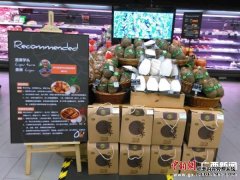
Imperial Palace Tribute Taro from Lipu Hits the Market at Ole' Premium Boutique Supermarket, Aroma Spreads Everywhere
NANNING, Nov. 17 (China News Service) -- Reporter Lin Hao -- Guangxi Lipu taro, long known as a tribute to the imperial palace in days gone by, has recently gone on sale at all national stores of China Resources Vanguard's Ole premium boutique supermarket. It is understood that Lipu taro is a traditional famous and premium specialty of Lipu County, Guilin, Guangxi, and has been cultivated artificially in Lipu County, Guangxi for more than 400 years, with Xiaotingshan being especially well known. Thanks to the unique climate and soil conditions of Lipu County, the Lipu taro grown there is large in size, rich in nutrients, fine in texture, soft and aromatic; the tubers generally weigh 2 to 3 jin, and the large ones can reach more than 10 jin, with quality far superior to taro produced elsewhere. Lipu taro was once chosen as Guangxi's first-choice tribute presented to the imperial court at the year-end grand ceremony, and it reached its peak especially during the Qianlong period of the Qing Dynasty, winning great favor with Emperor Qianlong. With the broadcast of the TV drama "Prime Minister Liu Luoguo" and CCTV's "Traveling Across China" program, Lipu taro became a household name across the country and was designated as the exclusive taro for the 2008 Beijing Olympics.
-
Why the Reform of the Rural Collective Property Rights System Is Not Simply Dividing Everything Up
The reform of the rural collective property rights system means advancing classified reform according to the different types of resource assets, operating assets and public-welfare assets. However, this reform is by no means simply dividing everything up, by no means privatization, and still less is it about letting farmers eat the
-
Grain farmers, rest assured: growing grain will never leave you worse off
We must do everything possible to transform the mode of agricultural development, raise the overall grain production capacity, and protect farmers' enthusiasm for growing grain. Just as farmers were celebrating a bumper autumn grain harvest, they suddenly encountered rather sharp fluctuations in grain prices. Agricultural monitoring shows that domestic grain prices have been basically stable,
-
China's soil erosion area accounts for 30% of its landmass, with one million mu of farmland lost every year
First national-level soil and water conservation plan approved. Recently, the State Council issued the "Reply on the National Soil and Water Conservation Plan (2015-2030)" (hereinafter referred to as the "Reply"), in principle agreeing to the "National Soil and Water Conservation Plan (2015-2030)" (hereinafter referred to as the "Plan
条件筛选