-

How can dragon fruit be cultivated and managed for high efficiency?
1. Site establishment. Dragon fruit is relatively heat-tolerant and water-tolerant, and prefers warm, humid, sandy soil rich in organic matter. Before planting the seedlings, per mu, according to a 1.5 m x 2 m spacing, erect 100-110 cement square columns measuring 10 x 10 x 250 cm, with the cement columns inserted 50 cm into the soil, to support the dragon fruit branches as they climb.
-
Detailed Steps for Establishing a Sugar Mandarin Nursery
1. Site selection The nursery for sugar mandarin should be established on flat land, gentle slopes, or fields with convenient irrigation and drainage that have convenient transportation, are far from pest and disease epidemic areas (at least 3000 m away from old citrus orchards and citrus huanglongbing orchards), are sheltered from the wind and facing the sun, have sufficient water sources, open terrain, deep topsoil, and a low groundwater table
-
Detailed Explanation of Key Cultivation Techniques for Newly Established Citrus Orchards
1. Orchard establishment should be of high quality and started early. The key points are digging the trenches well and applying sufficient basal fertilizer, passing the first hurdle of orchard establishment well. Dig continuous trenches 1 m wide and 0.6 m deep along the contour lines, fill each mu with 2500--30000 kg of green manure, and apply an appropriate amount of nitrogen and phosphorus fertilizer; next: for low-lying land and paddy fields, drainage ditches should be dug well, with the main drainage ditch more than 0.80 m deep, to reduce field humidity and lessen pest and disease damage. Orchard establishment should begin promptly after the autumn harvest to ensure enough time for the green manure and soil to decompose fully; field-grown seedlings are best planted before late October (mid-March in spring), while container seedlings should be planted earlier, before October (after March in spring); planting time should be early rather than late.
-
Key Techniques for Site Selection, Orchard Establishment, and Fertilizer and Water Management of Navel Orange
Navel orange, original name: sweet orange. Aliases: Huangguoshu, orange, navel orange, fragrant orange, chenggzi. Latin name: Citrus sinensis (L.) Osbeck. Sapindales, Rutaceae, evergreen small tree, branchlets hairless, branch thorns short or absent. Leaves elliptical or ovate, entire or with inconspicuous blunt teeth
-
What conditions are needed to grow almond trees?
Summary Orchard establishment requirements: A wind-sheltered flat area should be chosen; it is not advisable to choose a windward area. The soil should be deep and well drained. Planting requirements: It should be done after temperatures rise in spring, or after leaf fall in autumn. The planting rate is about 35-50 trees per mu. Water and fertilizer requirements
-
How to Grow Pineapple? A Detailed Guide to the Planting Method
Summary Site selection and garden establishment: Pineapple is a tropical fruit that is suitable for growing in a warm and humid environment, and the soil should be fertile, loose, well-aerated, and slightly acidic. Reasonable close planting: When planting on sloped land, the plant spacing is about 30cm and the row spacing is about 120cm, and planting 3000-4000 plants per mu is more
-
What are the cultivation methods and techniques for golden passion fruit?
Summary Site selection and orchard establishment: It is suitable for planting in fertile, loose and deep plots with convenient drainage and irrigation. Timely planting: Plant in humid and cool weather, water the soil thoroughly, then cover with grass to preserve fertilizer and moisture. Pruning and shaping: After the seedlings recover their growth, the
-

Yunlin County Guides the Establishment of the County's Only Laying Hen Production and Marketing Group
To help livestock farmers form Team Yunlin, Yunlin County has actively guided agricultural groups in establishing production and marketing groups. At present, Yunlin has 638 production and marketing groups with 13,323 members, ranking among the top in the country. This year (2020), it guided the establishment of Yunlin County's only laying hen...
-
-
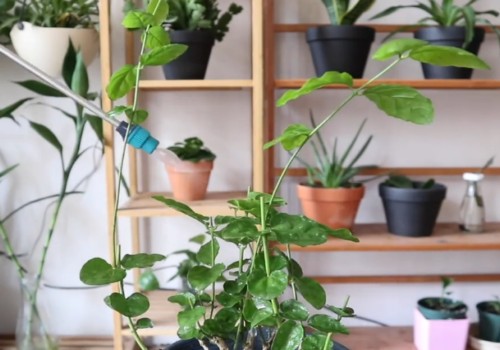
Care methods for jasmine after bare-root planting and successful establishment
Jasmine is a plant with strong vitality. Even when planted with bare roots, as long as you follow a scientific approach, it can still be grown successfully. However, because bare-root planting carries high risks, even after the plant has successfully adjusted to the pot, you still need to pay attention to care and management. Otherwise, the plant can easily show poor growth, or even die, and all your previous efforts will be wasted.
条件筛选