-

Rice midge harms rice, how can it be controlled effectively?
Rice midge, commonly known as red worm or red thread worm, damages the young roots and young shoots of rice with its larvae, causing floating seedlings, and feeds on the embryo and endosperm of ungerminated seeds, preventing the seeds from germinating. Rice seedling fields and direct-seeded fields suffer severe damage. The adult is a small moth, with wings shorter than the body; when resting, the front legs are raised and swing up and down. The larvae are red or pale yellow, with a limb-like protrusion on the ventral side of the prothorax. It occurs 2-3 generations per year, and the first generation damages rice. It overwinters as nymphs and adults in weeds. Adults appear in early May of the second year, and lay eggs in late May.
-
How to effectively control the Schisandra leaf-rolling worm
It occurs from July to August. The larvae are initially white, later turning green. Young larvae bite and feed on the leaf mesophyll; after the 3rd instar they roll leaves and feed, affecting fruit development. Control methods: (1) Before the larvae roll the leaves, spray with 80% trichlorfon at 1000-1500 times dilution. (2) After the leaves are rolled, spray with 40% dimethoate emulsifiable concentrate at 1000-1500 times dilution. (3) Spray with 50% phoxim at 1500 times dilution. (4) Spray with 50% phosphamidon emulsifiable concentrate at 2000 times dilution. (5) Before and after the larvae roll the leaves, they can also be caught by hand.
-
How to effectively prevent and control cotton angular leaf spot
Cotton angular leaf spot is a bacterial disease. Cotton can be affected from the cotyledon stage to the mature plant stage. After infection, dark green small spots first appear on the underside of the leaves, and later the spots gradually expand, restricted by the leaf veins to form polygonal oil-soaked lesions. When the bacterial fluid is moist, it is a yellowish-brown sticky substance, and after drying it becomes a white scab-like substance. In severe cases, it can cause the leaves to dry up and fall off. If diseased leaves are held up to the light, the lesion areas look like oiled paper. The causes are, first, continuous cropping on the same land, with the disease developing from bacteria carried by diseased residues in the soil; second, poor light, high humidity and high temperature, with damaged cotton branches and leaves, which favors
-
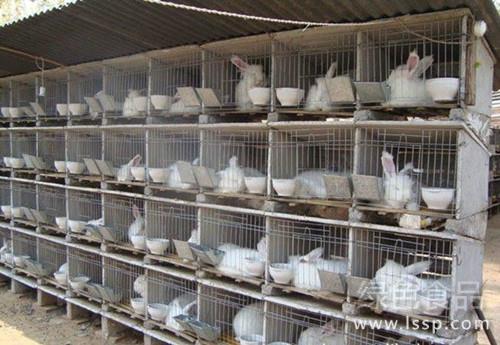
Seven key elements of fattening domestic rabbits, which can effectively improve meat quality and increase output
Fattening can improve meat quality and increase output: the seven key elements of fattening domestic rabbits
-
How can azalea chlorosis be prevented and treated effectively?
Azalea chlorosis is a physiological disease, but the causes of chlorosis are complex. If prevention and treatment are carried out blindly, it is often futile. Therefore, careful observation must be made to determine the condition, identify the cause, and then apply the right remedy for it to be effective. The various symptoms, causes and effective prevention and treatment measures for azalea chlorosis are described below: 1. Iron deficiency. 1. Soil iron deficiency: The formation of chlorophyll requires elements such as iron and nitrogen, and the phenomenon of chlorosis caused by soil iron deficiency occurs frequently. Therefore, supplementing the iron element in the soil is crucial. Ferrous
-
How can bamboo-leaf grass in cotton fields be controlled effectively?
First choose a suitable herbicide, then decide the dosage according to the weed species, leaf age and humidity level. For example, when using fluazifop-P-butyl to control annual weeds, when soil moisture is suitable, the effective ingredient dosage per mu is 9-17 grams; under drought conditions it is 17-24 grams; to control perennial weeds, the effective ingredient dosage per mu is 27-45 grams. Spray on the stems and leaves when grass weeds are at the 2-5 leaf stage. In summer, apply the herbicide on windless days, in the early morning and evening when temperatures are lower; uniform spraying is required, and keeping
-
How to effectively treat viral disease in bell peppers?
Viral diseases are mainly spread when insects or friction wounds infect the plant with the virus. Control measures. (1) Do a good job of pest control: you can use imidacloprid, Yibianjing, Actara and other pesticides for foliar spraying, spraying once every 7-10 days to prevent the spread of viral disease. At the same time, install insect-proof nets at the vents to reduce pest damage. (2) Spray nutrient solution: you can spray the leaves with Fengshou No. 1 at 800 times mixed with 0.1% zinc sulfate (1 liang to 3 sprayers) for spraying, spraying once about every 7 days, which can effectively prevent viral disease
-
Cooling pigs in summer can effectively increase weight gain
Many farmers believe that "pigs do not grow in June," and that feeding them well or poorly makes no difference, so they relax feeding management in summer. In fact, as long as the following cooling measures are taken when raising pigs in summer, the pigs will not only gain meat but also grow just as fast. (1) Spray water on the pigs' bodies and the floor of the pig house to cool them down. When spraying water to bathe the pigs, do not spray their heads. (2) Supply cool clean water in a timely manner. After the pigs finish eating, give them enough clean cold water to drink. (3) Feed more green fodder. Feed an appropriate amount of high-energy feed. (4) Take mosquito prevention measures so the pigs can sleep quietly.
-
Feeding chicks garlic sugar water can effectively prevent diseases
In the hot summer, chicks have relatively poor tolerance, so the probability of digestive tract and other diseases is relatively high. Today we introduce a disease prevention tip to prevent and treat chick colds, digestive tract diseases, selenium deficiency and other conditions. The specific method is as follows: take 50 grams of purple-skinned garlic or garlic, peel and mash into a paste, add 2 kg of warm boiled water, soak for 8 hours, then add 2 kg of prepared 10% sugar water, stir evenly, and feed to the chicks. When feeding adult chickens, an appropriate amount of iodized salt can be added to achieve the effect of disease prevention and treatment.
-
Getting the five key steps right in Gastrodia elata cultivation can effectively increase yield
To achieve stable and high yields of Gastrodia elata, the first thing is to get the five pre-planting steps right: First, choose the site. Gastrodia elata cultivation can be adapted to local conditions, whether indoors, in air-raid shelters, semi-basements, or chicken coops. Because Gastrodia elata likes dark, damp, and cool environments, choose places with good ventilation and shade as much as possible, with semi-basements and outdoor trenches giving the best results. You can lay a layer of bricks before use, or increase the thickness of the bottom sand layer to enhance its water permeability. Second, if the indoor floor is concrete, use high-quality Armillaria mellea fungal material (spawn). Armillaria mellea fungal material
条件筛选