-

How to effectively prevent and control contaminating fungi in Gastrodia elata cultivation
1. When cultivating fungal wood, carefully inspect the fungal branches and fungal logs. Contaminating fungi prefer saprophytic life, so fresh wood that is not decayed and free of mold should be selected for cultivating fungal logs, and the cultivation time should be shortened as much as possible. If contaminating fungi are found on the fungal logs, scrape them off if the infection is light and sun-dry for 1-2 days; discard them if the infection is severe. 2. Inspect the Gastrodia elata seeds used. If mold infection is found, scrape it off and sun-dry if the infection is light, or disinfect the affected area locally with 75% alcohol, carbendazim, etc. before use. Any Gastrodia elata seeds that are bruised or rotten must be discarded. 3. The filling material must be packed firmly, and never leave
-
Getting the five key steps right in Gastrodia elata cultivation can effectively increase yield
To achieve stable and high yields of Gastrodia elata, the first thing is to get the five pre-planting steps right: First, choose the site. Gastrodia elata cultivation can be adapted to local conditions, whether indoors, in air-raid shelters, semi-basements, or chicken coops. Because Gastrodia elata likes dark, damp, and cool environments, choose places with good ventilation and shade as much as possible, with semi-basements and outdoor trenches giving the best results. You can lay a layer of bricks before use, or increase the thickness of the bottom sand layer to enhance its water permeability. Second, if the indoor floor is concrete, use high-quality Armillaria mellea fungal material (spawn). Armillaria mellea fungal material
-
How to effectively control the Schisandra leaf-rolling worm
It occurs from July to August. The larvae are initially white, later turning green. Young larvae bite and feed on the leaf mesophyll; after the 3rd instar they roll leaves and feed, affecting fruit development. Control methods: (1) Before the larvae roll the leaves, spray with 80% trichlorfon at 1000-1500 times dilution. (2) After the leaves are rolled, spray with 40% dimethoate emulsifiable concentrate at 1000-1500 times dilution. (3) Spray with 50% phoxim at 1500 times dilution. (4) Spray with 50% phosphamidon emulsifiable concentrate at 2000 times dilution. (5) Before and after the larvae roll the leaves, they can also be caught by hand.
-

Key points of goji berry cultivation techniques, teaching you to effectively increase yield
How to increase the yield of goji berries
-
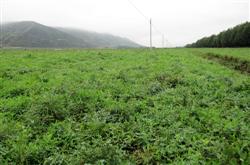
How can Scutellaria baicalensis be managed effectively during cultivation?
How should Scutellaria baicalensis be managed well during cultivation? Please provide guidance. For growing Scutellaria baicalensis, you can refer to the following methods for management: 1. Management before emergence: Regardless of the propagation method, the soil should be kept moist from planting until emergence to promote seedling emergence. 2. Thinning and final thinning: Combined with intertillage and weeding, Scutellaria baicalensis should be thinned, replanted, and finally thinned in a timely manner...
条件筛选