-

Eel fry fishing season about to begin, Chiayi County asks fishermen to cooperate with registration and reporting
The 2020 four-month eel fry fishing season begins on November 1. Chiayi County urges those engaged in shore-side eel fry fishing to register with the fishermen's association, to maintain their own safety and operating order during the operation period, and to cooperate in the fishing log by helping...
-

Detailed Explanation of Techniques for Self-Breeding Rice Field Eel Fry
1. Selection and Cultivation of Parent Eels. Eels used for breeding must have a robust physique and swim actively. The body color is best in coarse black mud, yellow-brown, or black speckled, green-brown. The source of parent eels should be those caught in cages the same day with relatively small wounds. Rice field eels (Monopterus albus) have sex reversal characteristics; 1-winter-age and 2-winter-age rice field eels are basically female, and after 2-winter-age rice field eels spawn, the proportion of males gradually increases, until at 6-winter-age they are basically male. During the non-spawning season, it is difficult to distinguish male from female; generally, body length and body weight are used as standards, generally body length 37-50 cm, weight 7
-
Analysis of Common Misconceptions About Soaking and Disinfecting Eel Fry
In many years of fishery production, aquaculture technicians have accumulated rich farming experience. Soaking fish fry in salt water for disinfection is one of the traditional practices of farmers in various regions. However, aquaculture experts in China and some eel farmers have found in practice that the method of soaking and disinfecting fish fry in salt water, which is widely used for other fish species, is not suitable for use in eel farming. In early 2000, based on experiments, a scholar put forward the view that "using salt water to disinfect eels is unsafe." The experiment showed that after using salt water to disinfect the body of
-
How to test the quality of eel fry when purchasing them
(1) Water test method: Put the purchased eel fry into a container, add an appropriate amount of open-air water, and let it stand for 3-5 minutes. Eel fry of poor quality mostly float to the surface. (2) Shock test method: Remove the eel fry floating on the surface after the water test, let it stand again for 3-5 minutes, then strike the container once with your hand or foot. Eel fry of good quality react strongly, with their heads down and tails up, or try desperately to escape; eel fry of poor quality react sluggishly, with their heads up, tails down, curling, twitching, or turning belly up, etc. (3) Squeeze method: 1. Use your thumb and
-
What are the precautions for selecting wild eel fry
To succeed in farming yellow eels (Monopterus albus), high-quality fry is the prerequisite. Therefore, when selecting high-quality wild eel fry, the following ten points should be noted. 1. The size of the eel fry should be appropriate. Generally, the artificial farming period is 5-6 months, and the weight gain multiple is 2-4 times. At the end of the year when selling, only individuals with a size of over 100 g can fetch a higher price. Therefore, fry stocked in April-May should weigh over 30 g. 2. Try to choose cage-caught fry. Yellow eel fry come from two sources: artificial breeding and natural capture. The number of artificially bred fry
-
How to Catch Natural Eel Fry? Three Methods Explained
There are mainly three fishing methods: 1. Stake net. The stake net is trumpet-shaped, generally 9 m long with a mesh circumference of 6-7 m, and can be woven from polyethylene twine. It gradually narrows from the mouth to the rear end, and the tail end of the mouth is connected to a floating fry collection box. The mesh of the fry collection box is 50-60 mesh. The stake net should be fixed on the beach far from the sluice gate, and it collects and catches eel fry with the tide. It can be harvested during both the rising and falling tides. With two people working, one rows a small boat, and the other regularly lifts the fry collection box with a small white porcelain basin, scoops out the eels
-
How was the trial on early breeding of rice field eel fry in greenhouses carried out?
At present, cage culture of rice field eels is concentrated on collecting fry in July, which gives a high survival rate and low farming risk. But concentrating purchases means few fry sources, high prices, and a low weight-gain multiple. If fry are purchased earlier, the unstable temperature leads to a high mortality rate of the fry. How can this problem be solved? We carried out a trial on early breeding of rice field eel fry in greenhouses, and a brief summary of the trial is as follows: 1. Trial conditions 1. Trial pond: a newly excavated artificial water surface, 250 m long, 4 m wide and 1.5 m deep, with an area of 1000 sq m. The water source is lake
-
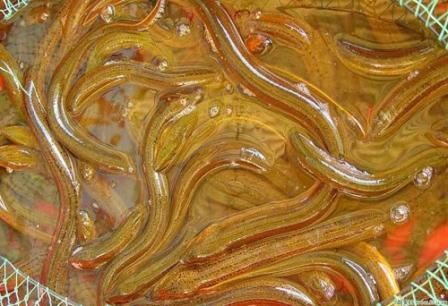
For artificially farming rice field eels, how do you solve the problem of fry and fingerlings?
Question: To carry out artificial farming of rice field eels, how do you solve the problem of fry and fingerlings?
-
How to Buy Rice Field Eel Fry Without Getting Scammed? A Detailed Guide to Anti-Fraud Methods
How to Avoid Being Scammed When Buying Rice Field Eel Fry
-
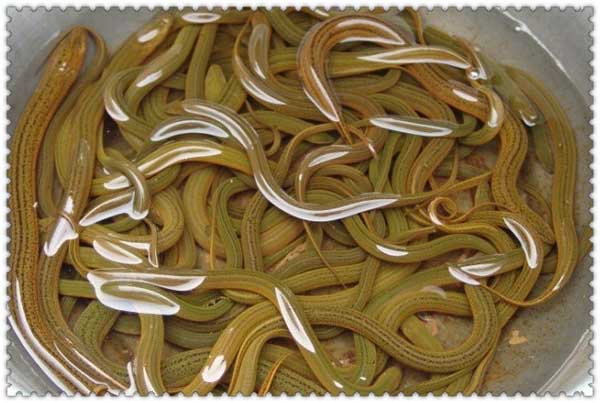
What are the ways in which rice field eels reproduce and produce fry?
The ways in which rice field eels reproduce and produce fry
条件筛选