For artificially farming rice field eels, how do you solve the problem of fry and fingerlings?
Question: To carry out artificial farming of rice field eels, how do you solve the problem of fry and fingerlings?
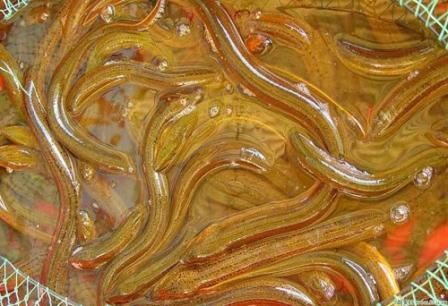
Rice field eel
Answer: At present, for raising rice field eels, the sources of fry and fingerlings are mainly two: catching them in nature and artificial incubation and rearing.
Artificially incubated and reared eel fry are uniform in size, not easily injured, less prone to fish diseases, and have a relatively high survival rate. However, artificially breeding eel fry is very difficult. This is because the rice field eel has a unique physiological phenomenon of sex reversal, that is, from its first sexual maturity it is always female. After spawning, the female eel gradually transforms into a male and never changes again for the rest of its life. This brings great difficulty to artificial breeding of eel fry. So-called artificial incubation and rearing means that during the rice field eel's breeding period, people manually collect the foam masses (the rice field eel's incubation nests) from natural waters for artificial incubation and rearing.