-

Potato Ring Rot Disease Techniques
It is a common disease, with an annual occurrence area of about 10%. The potato ring rot pathogen is mainly spread through seed potatoes; it cannot survive in the soil, but it can be carried on tools, machinery, packing crates and packing bags. Solutions: using disease-free seed potatoes is the most economical and effective control method; use whole-tuber planting; when cutting seed potatoes into pieces, strictly disinfect the cutting knife; before sowing disease-free seed tubers, remove volunteer plants in the field and disinfect tools such as baskets and boxes; use new packing bags.
-
What is the difference between the two rice diseases? Explained clearly in one article
In recent years, bacterial brown spot of rice has shown a trend of relatively severe occurrence in some rice areas of our province. Most farmers mistakenly treat this disease as rice blast, which both increases costs and fails to achieve good results. For this reason, the two diseases are specifically distinguished below. 1. Symptoms. The symptoms of bacterial brown spot of rice are that reddish-brown small spots first appear on the upper leaves of the rice starting from the leaf tip and leaf edge, then expand into spindle-shaped, long oval, or irregular strip-like streaks, gradually spreading to the entire leaf, causing local necrosis of the leaf, with no bacterial ooze visible
-
Pollution-Free Fish Disease Prevention and Control Methods and Technical Key Points
Animal-Plant Symbiosis: Aquatic plants and fish coexist in the same pond, and the fish rarely get sick. The aquatic plants planted in the fish pond are rice or lotus root, oriented east-west, with a wide row spacing (greater than 33 cm), occupying no more than 50% of the total water area, so that the lighting effect is good. The water depth depends on the water tolerance of the aquatic plants; rice is generally within 30 cm, while lotus root can generally reach over 50 cm. The farmed fish can be conventional or famous, special, and excellent new varieties. The farming method can be fry rearing or grow-out fish farming. Because residual bait, fish feces, and other matter deposit at the bottom of the pond, ferment, and rot, not
-
How to prevent and treat black disease in sheep? Detailed explanation of key technical points for prevention and treatment
Black disease in sheep, also known as infectious necrotic hepatitis, is an acute, highly fatal toxemia of sheep. Both sheep and goats can be affected. Expert disease analysis: (1) Pathogen: The pathogen of this disease is Clostridium novyi type B, a Gram-positive, large bacillus with bluntly rounded ends, mostly occurring singly or in pairs, with a few 3-4 organisms forming short chains. Its toxins can be classified into types A, B, and C. (2) Epidemiological characteristics: It mainly occurs in spring and summer in low-lying, damp areas where liver flukes are prevalent. Clostridium nov
-
Swine obstetrics disease: What to do when a sow has a dead fetus retained in the uterus
[Cause] There are many causes of a dead fetus retained in the uterus, mainly inbreeding, breeding too early, damage to the fetus from falls, running, or catching, accidental ingestion of toxins, or acute infectious diseases, which cause fetal death and retention in the uterus. [Symptoms] The sick pig is listless, the vulva is red and swollen, a yellowish-brown foul-smelling liquid flows out, the udder is slightly enlarged and can discharge a small amount of colostrum, no fetal movement can be observed for a long time, the pulse is rapid, breathing is rapid, sometimes abdominal pain appears, and then the cervix closes tightly. If the dead fetus cannot be delivered
-
Swine anthrax is a bacterial disease of pigs
Anthrax is an acute septicemic infectious disease caused by Bacillus anthracis that affects various livestock, wild animals and humans alike. Clinically it presents with septicemia symptoms; necropsy findings include poor blood clotting, markedly enlarged spleen, and hemorrhagic gelatinous infiltration under the skin and serous membranes. In pigs it occurs sporadically, mostly in subacute or chronic form. Epidemic characteristics: Bacillus anthracis forms spores that can survive for a very long time in the external environment; pigs become infected through the digestive tract, and grazing pigs can be infected by rooting in the soil for food; pigs have relatively low susceptibility; cases are mostly sporadic or discovered at slaughter; there are slightly more cases in summer.
-
How are common diseases of Silkie chickens diagnosed? With a detailed explanation of rearing methods
1. Newcastle disease (fowl pest) [Diagnosis] Sick chickens are listless, have reduced appetite, elevated body temperature, tremors, head tilted backward, opisthotonus, and circular movement, etc. Difficulty breathing, drooping wings, greenish watery droppings, death after 2 to 3 days, with a relatively high mortality rate. [Treatment] At 7 to 8 days of age, chicks are given Newcastle disease strain II vaccine by nasal or eye drops; at 28 days of age, the vaccine is administered once more; at 50 to 60 days of age, Newcastle disease strain I vaccine is injected intramuscularly. If the disease breaks out suddenly, Newcastle disease strain I vaccine should immediately be injected intramuscularly.
-
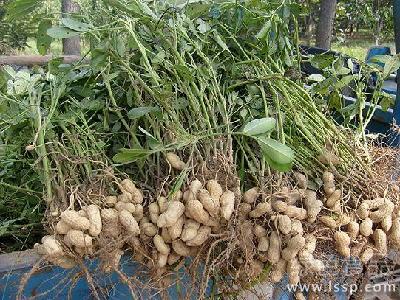
What are the key points for saving peanut seeds? Do these well for a bumper harvest and increased income next year
Ensuring a bumper harvest and increased income next year: key points for saving peanut seeds
-
Mushroom Summer Disease Prevention and Control Methods and Technical Key Points
In summer, temperatures are high, humidity is high, and the base level of contaminating microorganisms is high. In view of these characteristics, effective prevention and control measures should be taken to ensure smooth production. I. Disease prevention measures during the cultivation and mycelial running stage. Due to the influence of high humidity, the success rate of cultivation and mycelial running is greatly reduced, mainly manifested as slow mycelial running, weak hyphae, and a high contamination rate. Main measures: 1. Virus-free spawn and formulated substrate: Virus-free spawn can ensure that it does not itself carry viruses or pathogens and effectively improve resistance; this is the foundation of production. Research has shown that for every 250 kg of cottonseed hull raw material
-
Salt-brining of mushrooms can effectively increase product added value.
When fresh mushrooms sell poorly, or the price is low, and they need to be preserved for a long time before sale, salt-brining is the simplest and most effective method. Mushroom salt-brining requires no large fixed capital investment, generally about 200 yuan is enough, and the processing technique is relatively easy to master. 1. Materials: washing vat, color-protecting vat, blanching pot, cooling water vat, salting vat and other containers, plus auxiliary materials such as salt and citric acid. 2. Fresh mushroom preparation: the standard is timely harvesting, removing debris and cutting stems, and sorting by grade. 3. Washing and color protection: fresh mushrooms can be directly soaked and washed in 0.6% salt water.
条件筛选