-
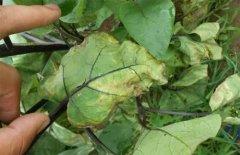
Eggplant Verticillium Wilt: Symptom Identification and Control Methods
Verticillium wilt is one of the major diseases in the growth of eggplant, and this disease is becoming more and more serious, and the worsening of this disease has also seriously affected the yield and quality of eggplant. Therefore, chemical control should be carried out according to the characteristics of the occurrence of this disease. How exactly should it be done
-

Methods and Technical Key Points for the Prevention and Control of Pests and Diseases in Polygonatum
(1) Black spot disease occurs mostly in spring, summer and autumn, and damages the leaves. Control methods: clean the garden at harvest time to eliminate diseased plant residues; in the early stage, spray 1:1:100 Bordeaux mixture once every 7 days, for 3 consecutive times. (2) White grubs damage plants in the larval stage, attacking the roots, biting off seedlings or gnawing the seedling roots, causing broken seedlings or cavities in the roots, and the damage is severe. Control methods: seed dressing with 75% phoxim emulsifiable concentrate at 0.1% of the seed amount; or during the field occurrence period, drench with 90% trichlorfon at 1000 times dilution.
-
Methods and Technical Key Points for Pest and Disease Control in Polygonatum (Solomon's Seal)
Diseases include black spot disease, in which irregular yellowish-brown spots appear on the leaves starting from the leaf tip, with a purplish-red edge at the boundary between the diseased and healthy tissue, after which the spots spread downward and the leaves turn withered and yellow. For control, spray with a 50% Tuzet (thiophanate) 1000-fold dilution, applying the spray once every 7-10 days for 2-3 consecutive applications.
-
Symptoms and Control Methods of Polygonatum Leaf Spot Disease
The disease begins in April to May. On affected leaves, elliptical or irregular lesions first appear at the leaf tip, with brownish outer edges and pale white centers; the disease spreads downward from the lesions, causing the leaves to wither and die. The disease is more severe during the rainy season. Control methods: 1) After harvest, clean the field and garden, gather the dead branches and diseased plant debris and burn them to eliminate the overwintering pathogen. 2) Before the disease occurs and in the early stages, spray 1:1:100 Bordeaux mixture, or 50% Tuzet (thiram) 1000x solution, once every 7 to 10 days, for 3 to 4 consecutive sprays.
-
What are the control methods for common tulip diseases?
Tulip, also known as "foreign lotus," is a bulbous flower of the lily family. It wins people's affection with its bright and rich flower colors, graceful flower posture, long flowering period, and wide variety of cultivars. However, in tulip production, various diseases often occur, which not only cause yield losses but also seriously affect ornamental value. Here we list several common diseases in tulip production and propose control measures combining cultivation management with chemical control. 1 Gray mold 1.1 Symptom identification Mainly harms leaves, flowers and bulbs. After the leaves and flowers are affected, brown spots appear
-
What is tulip breaking virus disease
Tulip breaking virus disease is an ancient and well-known worldwide viral disease, occurring in all tulip-growing areas. In China, it occurs in cities such as Shanghai, Beijing, Xiamen, Fuzhou and Chengdu. Tulip breaking virus disease causes bulb degeneration, smaller flowers, and single solid flower colors turning variegated. When the disease is severe, there is a risk of destroying the stock. Symptoms: The disease damages the leaves and corolla of the plant. Infected plants develop light green or grayish-white stripes on the leaves, sometimes forming a mosaic pattern. Petals become deformed; because viral infection affects anthocyanin formation,
-
Prevention and Treatment Methods and Key Technical Points for Common Diseases in Foxes and Raccoon Dogs
From July to September, breeding foxes and raccoon dogs enter the recovery period, and the young enter the growing period. The common diseases in this period are mainly the following. (1) Heatstroke (sunstroke and heat exhaustion) This disease occurs in the midsummer season, when the temperature is too high and ventilation is poor, and the animal is exposed to direct sunlight, causing brain overheating (sunstroke) or the whole body being stimulated by heat (heat exhaustion). It usually occurs rapidly, and the mortality rate is very high. Foxes and raccoon dogs have extremely underdeveloped sweat glands and dissipate body heat slowly, making it very easy for their body temperature to rise, with listlessness, staggering
-
Winter prevention methods for rabbit Bordetella bronchiseptica disease
Rabbit Bordetella bronchiseptica disease, also called rabbit bronchial septic Bordetella bronchiseptica disease, is a common respiratory infectious disease of rabbits caused by Bordetella bronchiseptica. The disease is characterized by chronic rhinitis, bronchopneumonia and pharyngitis. This disease occurs frequently in autumn and winter and early spring. It is mainly spread through the air and infects via the respiratory tract. The incidence rate is high in young rabbits, and there are fatal cases. Adult rabbits are less commonly affected. This bacterium contaminates 64.4% of group-raised rabbits and 20% of free-range rabbits. Under natural conditions, this bacterium is parasitic in the upper respiratory tract of many kinds of mammals, often causing mutual infection of chronic respiratory diseases.
-
The culprit behind potato zebra chip disease is the potato psyllid
The potato psyllid is the culprit behind potato "zebra chip" disease. October 26 news: research by the U.S. Agricultural Research Service has found that the cicada-like insect, the potato psyllid, is the culprit behind potato "zebra chip (ZC)" disease. Zebra chip (ZC) refers to a type of black streaking that appears on potato tubers. This zebra chip disease broke out in Mexico in 2004-2006 and caused millions of dollars in losses for growers in the U.S. state of Texas. Researchers are currently preventing zebra chip disease by monitoring potato psyllids and spraying insecticides. In
-
Potato Disease Prevention and Control Methods and Cultivation Techniques
I. Late Blight (1) Conditions for Onset. Potato late blight, also known as blight or potato plague, is a devastating disease of potatoes. In plots that are low-lying, poorly drained, and have high field humidity, or in plots with excessive nitrogen fertilizer application, the disease tends to be severe. When temperature and humidity are suitable, late blight spreads rapidly, and diseased plants wither and die in patches. (2) Symptoms. On affected leaves, round or irregular dark green water-soaked spots first appear at the leaf tips and margins. After expanding, they become large brown lesions. When humidity is high, a ring of
条件筛选