-

What are the harmful symptoms of mushroom wet bubble disease?
Long-term research has found that this pathogen infects only the fruiting bodies and not the mycelium. It takes about 11 days from the start of infection for a mushroom to show initial symptoms, and growing mycelium can accelerate the germination of Mycogone perniciosa spores. When the first flush of mushrooms is affected, the source of infection is usually the casing soil and old mushroom shelves; when later flushes are affected, it is caused by re-spread through water, tools and human operations: infection during the pinhead formation stage is shown by: before normal mushrooms appear, diseased mushrooms grow in large numbers, and diseased mushrooms generally fruit 3-4 days earlier than normal mushrooms; if infection occurs during the young pinhead growth stage, although the diseased mushrooms continue to grow, the caps develop abnormally or stop developing, the stems swell, become deformed and deteriorate, and appear twisted and misshapen. In the later stage the diseased mushrooms are hollow inside, and white cottony mycelium grows at the junction of the cap and stem and at the base of the stem, later turning dark brown and exuding brown liquid as it rots, giving off a foul odor.
-
How to prevent and treat mushroom wet bubble disease? These methods must be mastered
1 Before planting, spray and disinfect the mushroom house and mushroom racks with a 5% bleaching powder aqueous solution or 5% formaldehyde solution; 2 Casing soil disinfection: the casing soil should be taken from deep soil 30 cm below the surface, never take topsoil, and even more so do not take soil from fields where mushroom waste has been produced; after the casing soil is prepared, it should be dried in the sun, and at the same time disinfected with chemicals. The specific method is: use 1.5 grams of Youmeijing per square meter, dilute with water, spray it, and mix the soil evenly. In areas with severe disease, the dosage may be appropriately increased. For the second application, after the second flush of mushrooms turns to the next batch, spray with a 700-1000 times diluted solution of Youmeijing
-
What are the control methods for mushroom wet bubble disease?
(1) Before planting, spray and disinfect the mushroom house and mushroom racks with a 5% bleaching powder aqueous solution or a 5% formaldehyde solution. (2) Disinfect the casing soil. The casing soil should be taken from deep soil below 30 cm; never take topsoil, and even more so, do not take soil from fields where mushroom waste has been dumped. After the casing soil is prepared, it should be sun-dried thoroughly, and at the same time disinfected with chemicals. The specific method: use 1.5 g of Cimeijing per square meter, mix it evenly with the soil, and then apply it as casing soil. In areas with severe disease, the dosage may be appropriately increased. For the second application, after the second flush of mushrooms is harvested, spray a 700
-
A Detailed Explanation of the Occurrence Patterns of Mushroom Wet Bubble Disease
Occurrence patterns: This pathogen is widely distributed in the topsoil at a depth of 2-9 cm. Its optimum growth temperature is around 25°C; below 10°C it grows extremely slowly, and above 35°C it basically cannot grow. Tests show that in soil and compost, its pathogenic spores die after 4 hours at 56°C (or 1 hour at 65°C). The pathogen spreads mainly through soil, spray water, people, tools, insects and other routes. In addition, poor ventilation in the mushroom house, high temperature and high humidity are also important reasons for the occurrence of this disease.
-
Salt-brining of mushrooms can effectively increase product added value.
When fresh mushrooms sell poorly, or the price is low, and they need to be preserved for a long time before sale, salt-brining is the simplest and most effective method. Mushroom salt-brining requires no large fixed capital investment, generally about 200 yuan is enough, and the processing technique is relatively easy to master. 1. Materials: washing vat, color-protecting vat, blanching pot, cooling water vat, salting vat and other containers, plus auxiliary materials such as salt and citric acid. 2. Fresh mushroom preparation: the standard is timely harvesting, removing debris and cutting stems, and sorting by grade. 3. Washing and color protection: fresh mushrooms can be directly soaked and washed in 0.6% salt water.
-
Mushroom Summer Disease Prevention and Control Methods and Technical Key Points
In summer, temperatures are high, humidity is high, and the base level of contaminating microorganisms is high. In view of these characteristics, effective prevention and control measures should be taken to ensure smooth production. I. Disease prevention measures during the cultivation and mycelial running stage. Due to the influence of high humidity, the success rate of cultivation and mycelial running is greatly reduced, mainly manifested as slow mycelial running, weak hyphae, and a high contamination rate. Main measures: 1. Virus-free spawn and formulated substrate: Virus-free spawn can ensure that it does not itself carry viruses or pathogens and effectively improve resistance; this is the foundation of production. Research has shown that for every 250 kg of cottonseed hull raw material
-
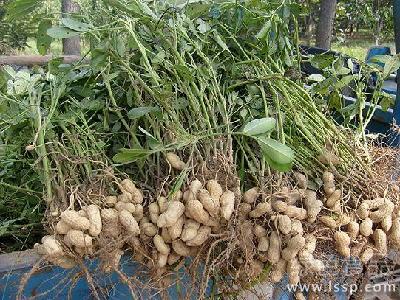
What are the key points for saving peanut seeds? Do these well for a bumper harvest and increased income next year
Ensuring a bumper harvest and increased income next year: key points for saving peanut seeds
-
How are common diseases of Silkie chickens diagnosed? With a detailed explanation of rearing methods
1. Newcastle disease (fowl pest) [Diagnosis] Sick chickens are listless, have reduced appetite, elevated body temperature, tremors, head tilted backward, opisthotonus, and circular movement, etc. Difficulty breathing, drooping wings, greenish watery droppings, death after 2 to 3 days, with a relatively high mortality rate. [Treatment] At 7 to 8 days of age, chicks are given Newcastle disease strain II vaccine by nasal or eye drops; at 28 days of age, the vaccine is administered once more; at 50 to 60 days of age, Newcastle disease strain I vaccine is injected intramuscularly. If the disease breaks out suddenly, Newcastle disease strain I vaccine should immediately be injected intramuscularly.
-
Swine anthrax is a bacterial disease of pigs
Anthrax is an acute septicemic infectious disease caused by Bacillus anthracis that affects various livestock, wild animals and humans alike. Clinically it presents with septicemia symptoms; necropsy findings include poor blood clotting, markedly enlarged spleen, and hemorrhagic gelatinous infiltration under the skin and serous membranes. In pigs it occurs sporadically, mostly in subacute or chronic form. Epidemic characteristics: Bacillus anthracis forms spores that can survive for a very long time in the external environment; pigs become infected through the digestive tract, and grazing pigs can be infected by rooting in the soil for food; pigs have relatively low susceptibility; cases are mostly sporadic or discovered at slaughter; there are slightly more cases in summer.
-
Swine obstetrics disease: What to do when a sow has a dead fetus retained in the uterus
[Cause] There are many causes of a dead fetus retained in the uterus, mainly inbreeding, breeding too early, damage to the fetus from falls, running, or catching, accidental ingestion of toxins, or acute infectious diseases, which cause fetal death and retention in the uterus. [Symptoms] The sick pig is listless, the vulva is red and swollen, a yellowish-brown foul-smelling liquid flows out, the udder is slightly enlarged and can discharge a small amount of colostrum, no fetal movement can be observed for a long time, the pulse is rapid, breathing is rapid, sometimes abdominal pain appears, and then the cervix closes tightly. If the dead fetus cannot be delivered
条件筛选